Beetroot juice is no longer exotic in endurance sport: marathon runners, cyclists, triathletes and cross-country skiers all use it. The reason is not taste or fashion but nitrates, which beetroot is especially rich in. In this article we look at how nitrates work in the body, who benefits most, why a powdered drink is more practical than shop-bought juice, and how to take 226ERS Nitro Pro before training and races so you get the dose and timing right.
What 226ERS Nitro Pro is
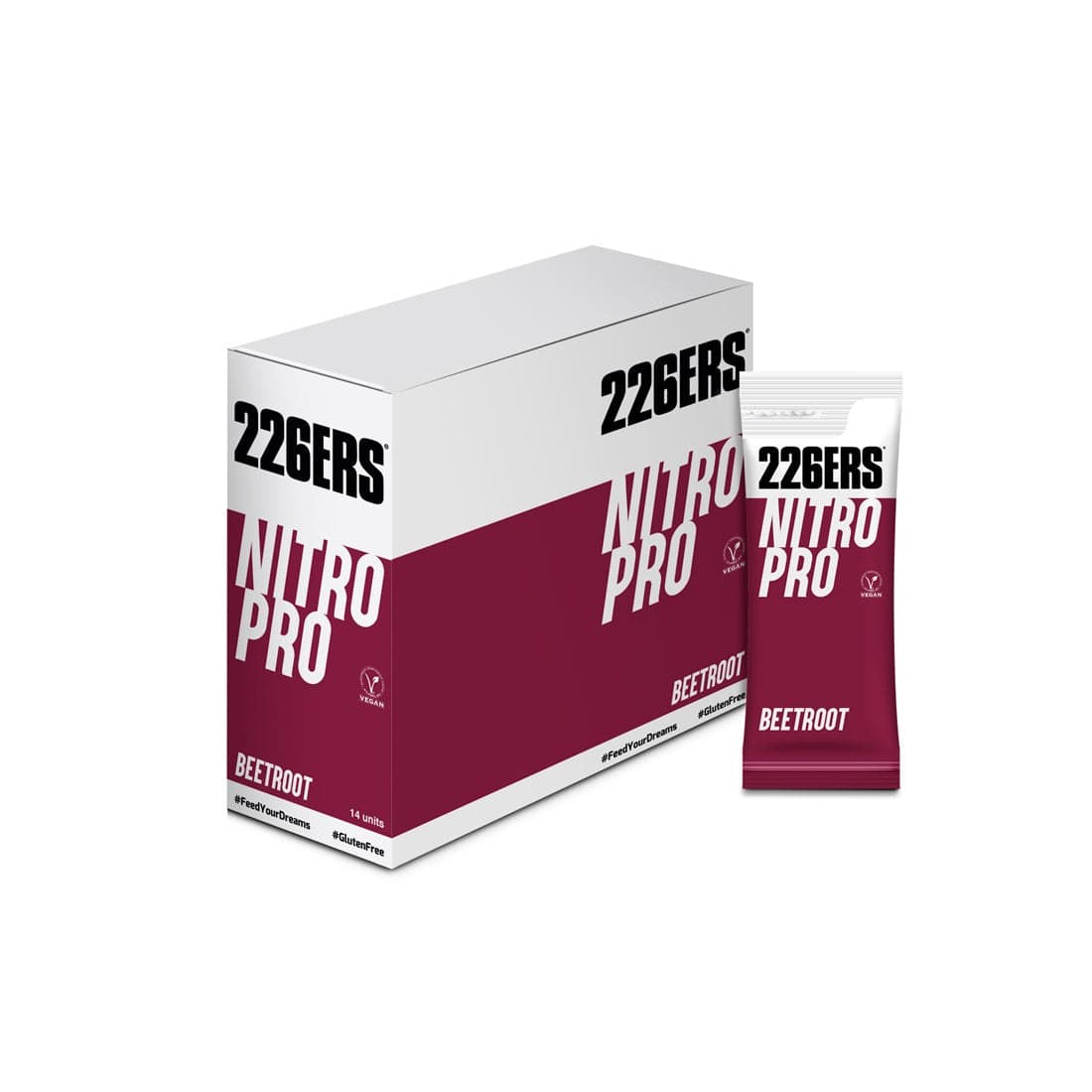
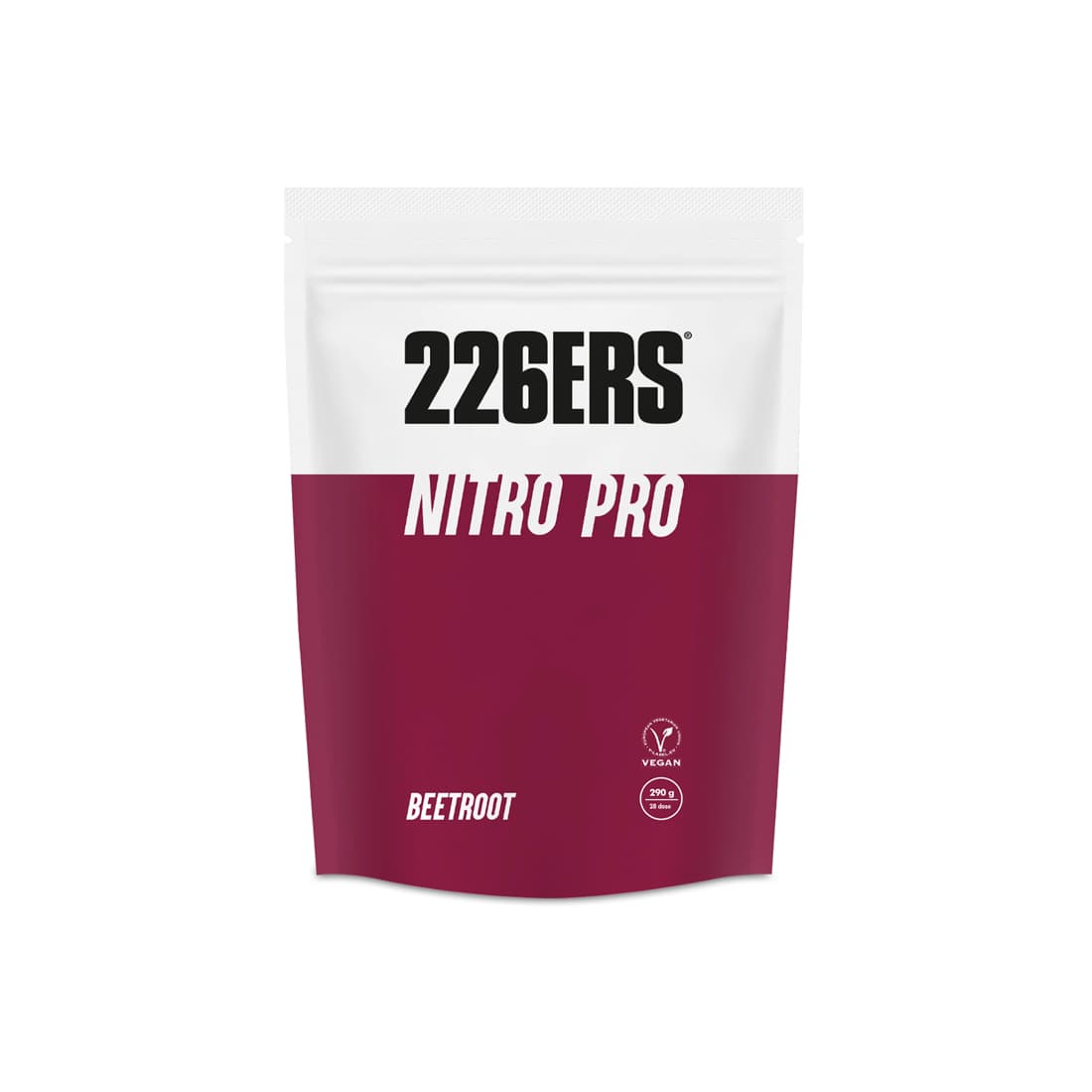
It is a drink made from beetroot concentrate and dry beetroot extract. One 10.3 g serving provides 400 mg of natural nitrates, with no chemical additives. The drink is vegan and gluten-free. It comes in a 290 g doypack with 28 servings and in single-serve sticks. You mix the powder into 150–200 ml of water; it tastes clearly of beetroot, with an earthy sweetness.
How beetroot nitrates work in the body
Nitrates do not “charge” your muscles on their own. First, bacteria in the mouth turn part of the nitrate into nitrite, and then the body converts nitrite into nitric oxide. Nitric oxide widens blood vessels, so more blood reaches working muscles. It also affects how muscles use oxygen: they do the same work at a lower cost. That is why nitrates are among the few endurance supplements with good scientific evidence.
What it gives you in a race
In studies, nitrate intake reduced the oxygen cost of exercise by a few per cent. In practice, the same pace feels a little easier and time to exhaustion at high intensity goes up. The effect is most noticeable when there is a lot of work above threshold: interval sessions, surges, climbs and the finishing sprint. Do not expect miracles: nitrates will not replace training, but they help you use the fitness you have built.
Who benefits most from a beetroot drink
In studies, recreational and moderately trained athletes gained the most. In elite athletes the effect is smaller, as their blood vessels and muscles already work close to peak efficiency. If you run half marathons or marathons, race on the road or on a mountain bike, train for a triathlon or play team sports with repeated sprints, nitrates are worth trying. You do not need them for easy recovery sessions.
How much to take: one 400 mg serving
The working dose in studies is around 400–500 mg of nitrates, and one serving of Nitro Pro covers it. More is not better: a double serving does not double the effect but does raise the risk of stomach discomfort. The scoop in the doypack is sized so that one serving is about one and a half scoops, that is 10.3 g of powder.
When to drink it: 2–3 hours before the start
After you take it, nitrite levels in the blood rise gradually and peak after about 2–3 hours. So Nitro Pro is taken in advance, not during the warm-up. If the race starts at 8:00, drink a serving at 5:30–6:00 with breakfast. For an 18:00 evening session, take it at around 15:00–16:00.
A 3–7 day loading plan before a race
A single dose works, but a short course gives a more consistent effect. The 226ERS protocol: take Nitro Pro for at least 3 and no more than 7 consecutive days during heavy training weeks or before competitions. For a Sunday marathon, for example, start on Monday or Wednesday and take one serving a day 2–3 hours before training, or in the first half of the day on rest days. The last serving is on race morning. One 28-serving doypack covers four such cycles.
Marathon week: a day-by-day example
Say the marathon starts on Sunday at 8:00. Tuesday: easy evening run, Nitro Pro at around 15:00. Wednesday: a short session at race pace, one serving 2–3 hours before. Thursday: rest or a jog, one serving in the first half of the day. Friday: a run with strides, one serving 2–3 hours before. Saturday: shake-out run and travel to the race, one serving in the morning. Sunday: one serving at 5:30–6:00 with breakfast. That is six days in a row, within the 3–7 day protocol.
How to fit Nitro Pro into race morning
Race morning is already busy: breakfast three hours out, water, warm-up, a gel on the start line. Nitro Pro simply goes with breakfast: mix a serving in a glass of water and drink it with your food. It does not replace pre-race carbohydrates; that is a separate job. We covered pre-race food in detail in the article “Breakfast before a race: what to eat three hours before the start”.
Shop-bought beetroot juice or Nitro Pro
Ordinary beetroot juice also contains nitrates, but the amount varies a lot with the beet variety, the soil and the production method, and it is usually not on the label. To get a comparable dose you sometimes have to drink half a litre of juice, which is hard before a race and awkward when travelling. The powder gives a known dose in a small amount of water, is easy to take to an away race and needs no fridge.
Nitrates in everyday food
Beetroot is not the only source of nitrates. Rocket, spinach, celery, lettuce and other leafy greens are rich in them too. A regular plate of greens is good for you in its own right, but you cannot work out a precise pre-race dose that way: nitrate content in vegetables varies several-fold. So in race week it is easier to rely on a drink with a known dose and keep greens as part of your normal diet.

What reduces the effect of nitrates
The main enemy of nitrates is antibacterial mouthwash. Nitrate is converted to nitrite by bacteria in the mouth, and a strong antiseptic breaks that chain. On the days you take Nitro Pro, stick to normal tooth brushing without antiseptic mouthwash. Second: do not drink it at the last minute before the start, as it simply will not have time to work.
Side effects and precautions
After beetroot drinks, urine and stools may turn pink or red. This is harmless and passes on its own. Like any nutrition, try Nitro Pro in training first, not on the day of your key race. If you take blood pressure or heart medication, or have kidney problems or a tendency to kidney stones, talk to your doctor before a course.
What to combine Nitro Pro with
Nitrates combine well with the rest of your race nutrition. Caffeine works by a different mechanism, and the two can be used together within the usual caffeine limits. During the race you still need carbohydrates: gels, an isotonic or an energy drink according to your plan. Nitro Pro is about how your muscles use oxygen, not about fuel.
Common mistakes with nitrates
First: drinking it half an hour before the start, when it has not had time to work. Second: trying it for the first time on the day of your key race. Third: doubling the serving in the hope of a double effect. Fourth: rinsing with antiseptic mouthwash on race morning. Fifth: expecting nitrates to replace carbohydrates during the race. Avoid these five mistakes and the beetroot drink will do its job.
Storage and how long a pack lasts
The doypack has a zip seal; keep it in a cool, dry place. Shelf life is two years. The 28 servings cover four weekly loading cycles or a season of several key races. For a single race with nothing left over, single-serve sticks are more convenient.
A beetroot drink is a simple, well-tested way to make your racing a little more economical: one 400 mg serving of nitrates 2–3 hours before the start and a 3–7 day course before a race. Start in training, see how your stomach reacts, and build Nitro Pro into your preparation for key races. 226ERS Nitro Pro is available at spacefuel.kz with delivery in Almaty and across Kazakhstan.
FAQ
When should I drink a beetroot drink before a race?
2–3 hours before the start: that is roughly when nitrite levels in the blood peak. If the race starts at 8:00, drink a serving of Nitro Pro at 5:30–6:00 with breakfast.
How much nitrate do I need for an endurance effect?
The working dose is about 400–500 mg of nitrates. One 10.3 g serving of Nitro Pro gives 400 mg, so there is no need to increase it.
How many days should I take Nitro Pro before a race?
The 226ERS protocol: at least 3 and no more than 7 consecutive days, one serving a day 2–3 hours before training. The last serving is taken on race morning.
Why is my urine pink after a beetroot drink?
It is beetroot pigment; it is harmless and passes on its own. It is not related to how nitrates work.
Read next