Breakfast before a race largely determines how the first kilometres will go. This article is about what to eat three hours before the start, what to drink forty minutes before, and why you should already be holding one gel on the line. It will be useful to anyone preparing for a half or a full marathon: the Turkistan Marathon, which took place on 25 October 2026, for example, and any early morning race where you have to get up long before the gun and still avoid a heavy stomach.
Why breakfast is eaten exactly three hours before the start
Three hours is a compromise between two goals. Overnight the liver spends part of its stored carbohydrate, and in the morning it needs topping up, otherwise the first kilometres will be run against a background of sluggishness. At the same time the food needs long enough to leave the stomach, so that during the race blood goes to the working muscles rather than to digestion. A mixed breakfast of porridge and fruit makes that journey in roughly two and a half to three hours. Hence the simple arithmetic: a seven o'clock start means breakfast at around four.
What to eat for breakfast before a race: porridge, a banana, tea
The classic combination looks modest, and that is precisely why it works: porridge, a banana, tea. The porridge supplies the main portion of carbohydrate without irritating the stomach, the banana adds fast sugars and fluid, and the tea covers the familiar morning ritual along with part of your drinking target. There is little fat in this set and a moderate amount of fibre, which means it will not sit in your belly like a stone during the warm-up. This is the breakfast Rinat Kulygin, ambassador for 226ERS, puts together before races: not for the sake of anything exotic, but because it has been tested across dozens of long runs.
The main rule: nothing new on race day
Every product on your race morning should have been tried in advance. A new brand of porridge, an unfamiliar hotel coffee, a generous “all inclusive” breakfast with fried eggs and pastries: these are the most common causes of stomach trouble out on the course. The body reacts unpredictably to unfamiliar food, and there is no way to test that reaction in the middle of a race. The rule is simple: on race day the table holds only what you have already eaten before long runs and run comfortably on afterwards.
A drink 40 minutes before the start: SUB9 Race Day or Nitro Pro
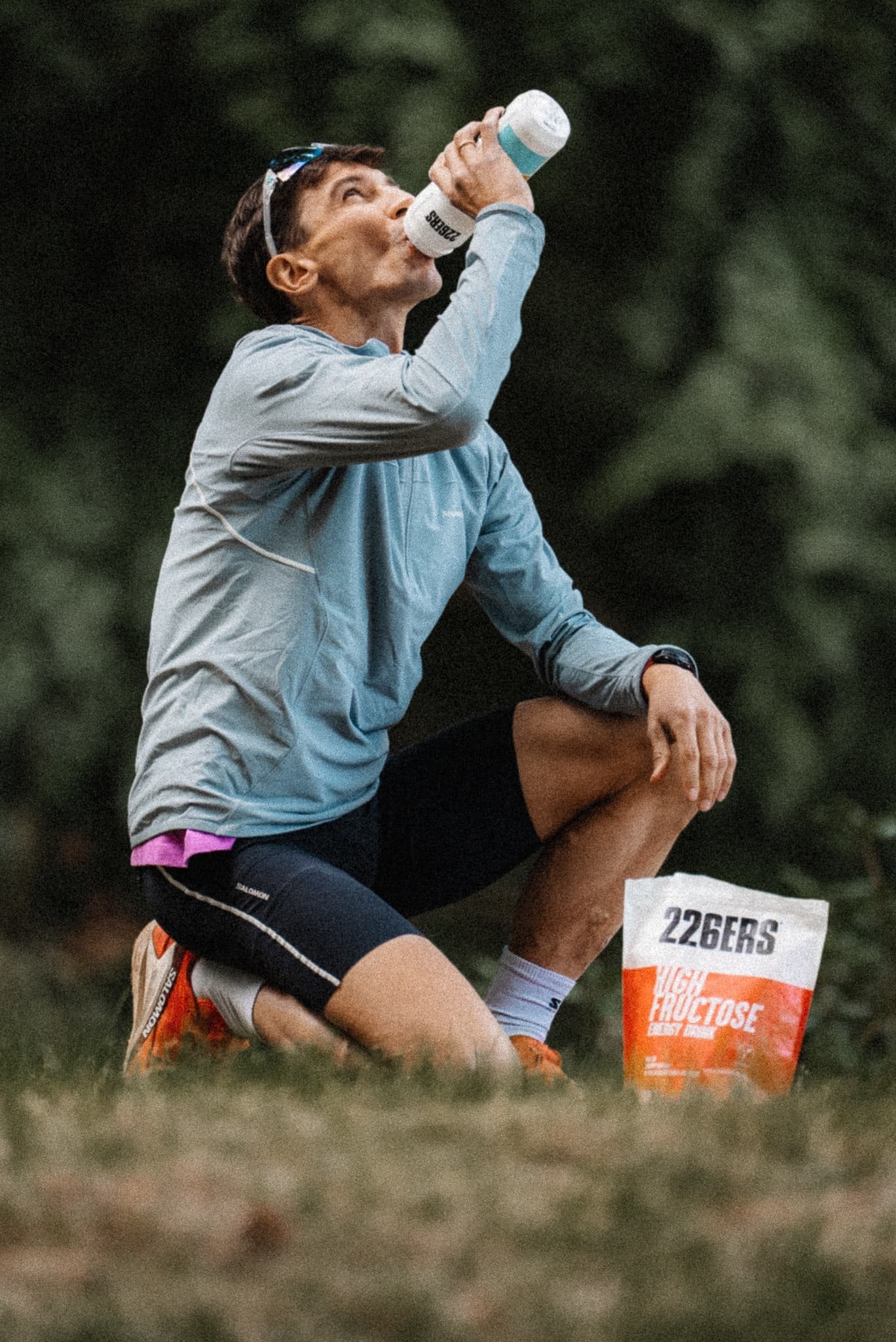
The last window before the gun is about forty minutes. That is where a drink fits, one that delivers a fresh dose of carbohydrate and fluid to the start: SUB9 Race Day or Nitro Pro, depending on what you have worked with in training. Do not choose between them on race day; the decision is made in advance, during your preparation. The point of this step is to reach the line without feeling hungry and without an overfull stomach, with normal fluid levels in the body.
A gel on the start line: why you need one in a half and a full marathon
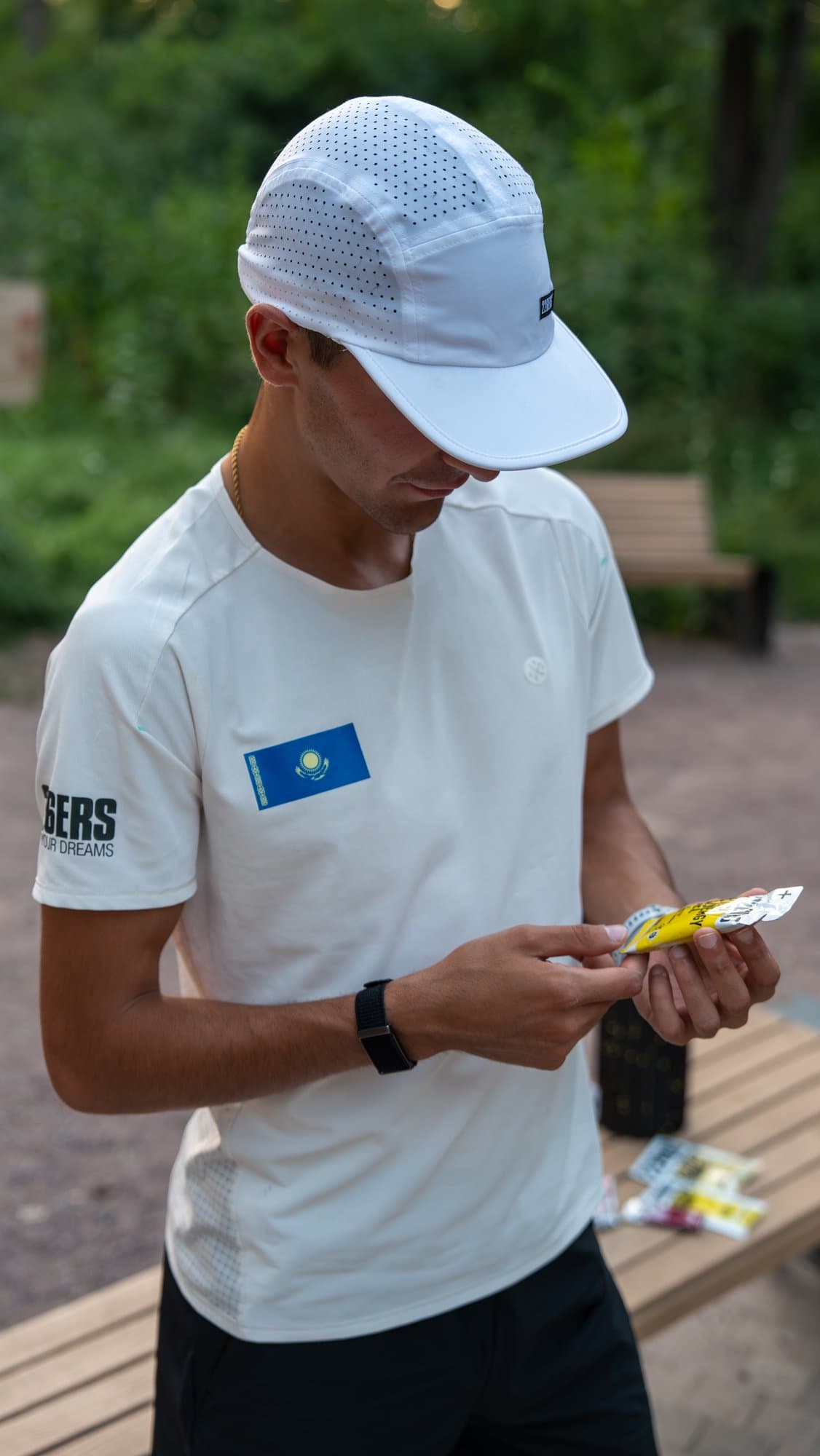
If the distance is a half marathon or longer, you hold one gel right in your hand on the line. This is not superstition but logistics: the first gel is better taken before any feeling of emptiness appears, because the carbohydrate from a gel does not reach the working muscles instantly. Over short distances such as a 10K your own stores are enough and fuelling on the move loses its purpose. In a half and a full marathon the fuelling plan starts almost immediately after the gun, and a gel in your hand simply saves the seconds you would spend hunting for a pocket in the crowd.
Typical race morning mistakes runners make
There are not many mistakes, and they repeat from race to race. Skipping breakfast altogether in the name of “feeling light” turns into a collapse in the second half of the race. Breakfast one hour before the start instead of three leaves food in your stomach during the warm-up. An extra cup of coffee on top of your usual amount irritates the gut. An excess of fibre and fat, nuts, butter, large portions of vegetables, slows gastric emptying. And a story of its own, litres of plain water before heading out: they add nothing to your reserves, but they do guarantee a queue for the toilet in the start area.
How to rehearse your race fuelling in training
Race morning is rehearsed on long runs. A couple of attempts in the month before the race is enough: get up at the same time, eat the same breakfast, keep the same interval and head out for a long run at your planned pace. That tests the food, the timing and your stomach's reaction to the drink and the gel while running. If something goes wrong in such a rehearsal, you still have time to swap a product. If it all goes smoothly, on race day you simply repeat a familiar sequence and make no new decisions.
An autumn race in Turkistan: what to allow for in your morning logistics
Autumn races have their own specifics. The early morning is cool, so between breakfast and the warm-up it is worth staying in warm clothing and not getting cold in the start pen. The journey to the start, registration and queues all add extra minutes to the plan, and it is better to account for them in advance so that the three hour interval does not shrink by accident. It helps to pack your fuelling the evening before: the drink, the gel for the line, whatever will go down during the race. On race morning every decision is harder than it seems, and a ready made kit removes half the fuss.
The short version
Race morning is built from three actions: your usual breakfast three hours out, a drink forty minutes before, and one gel in your hand on the line if the distance is a half marathon or longer. Nothing new, no experiments, everything rehearsed on long runs. The products for this plan, including SUB9 Race Day and Nitro Pro, are available at spacefuel.kz.


FAQ
How many hours before a race should you have breakfast?
The guideline is three hours before the start. That is enough time to top up the carbohydrate spent overnight and for the food to leave your stomach before the warm-up.
What should you eat for breakfast before a half marathon or a marathon?
A simple, proven set: porridge, a banana, tea. It has enough carbohydrate, little fat and a moderate amount of fibre, so it does not get in the way of running.
Do you need to take a gel to the start, and from what distance?
You hold one gel in your hand on the line if the distance is a half marathon or longer. Over 10K your own stores are enough and fuelling on the move loses its purpose.