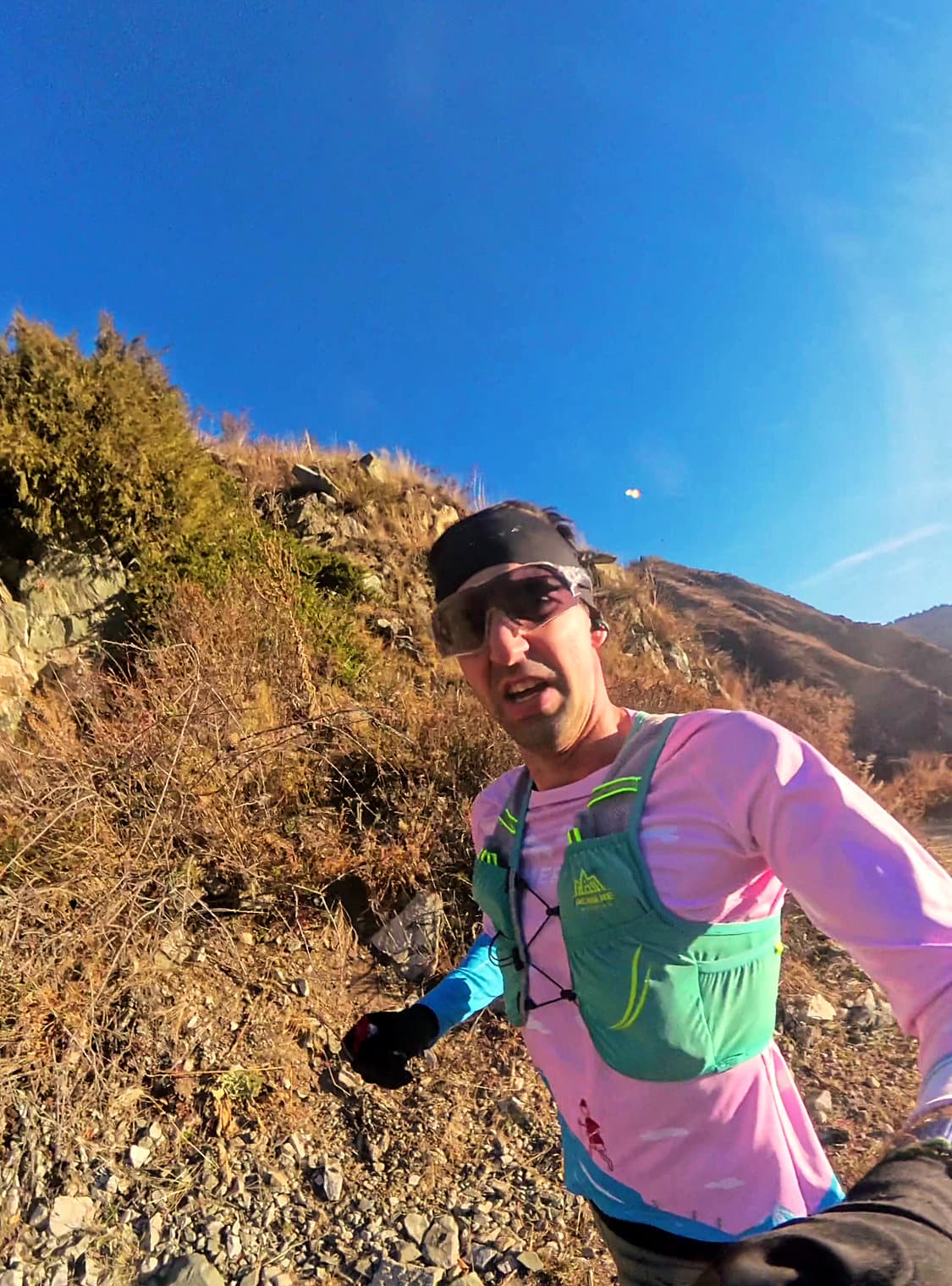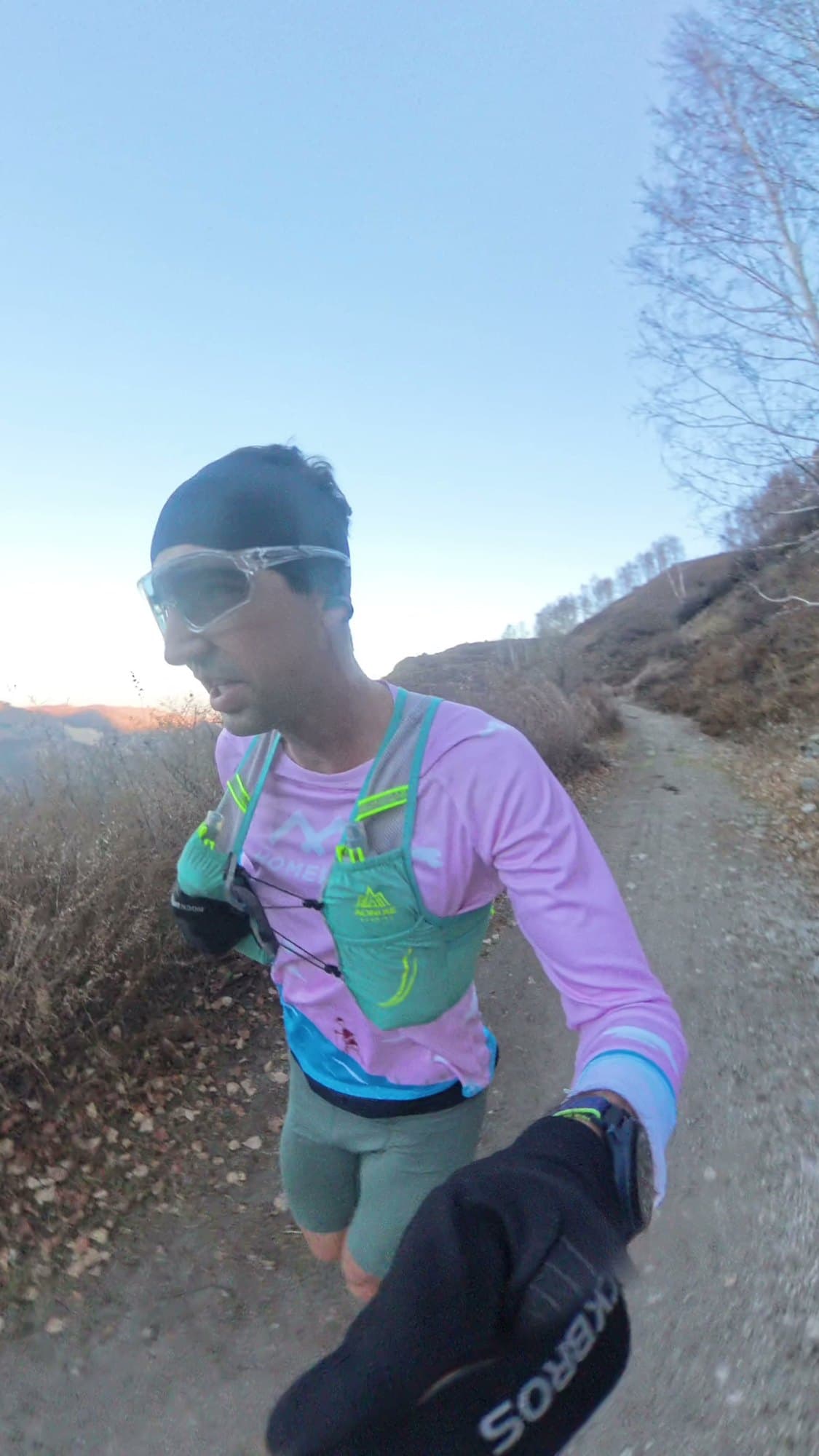
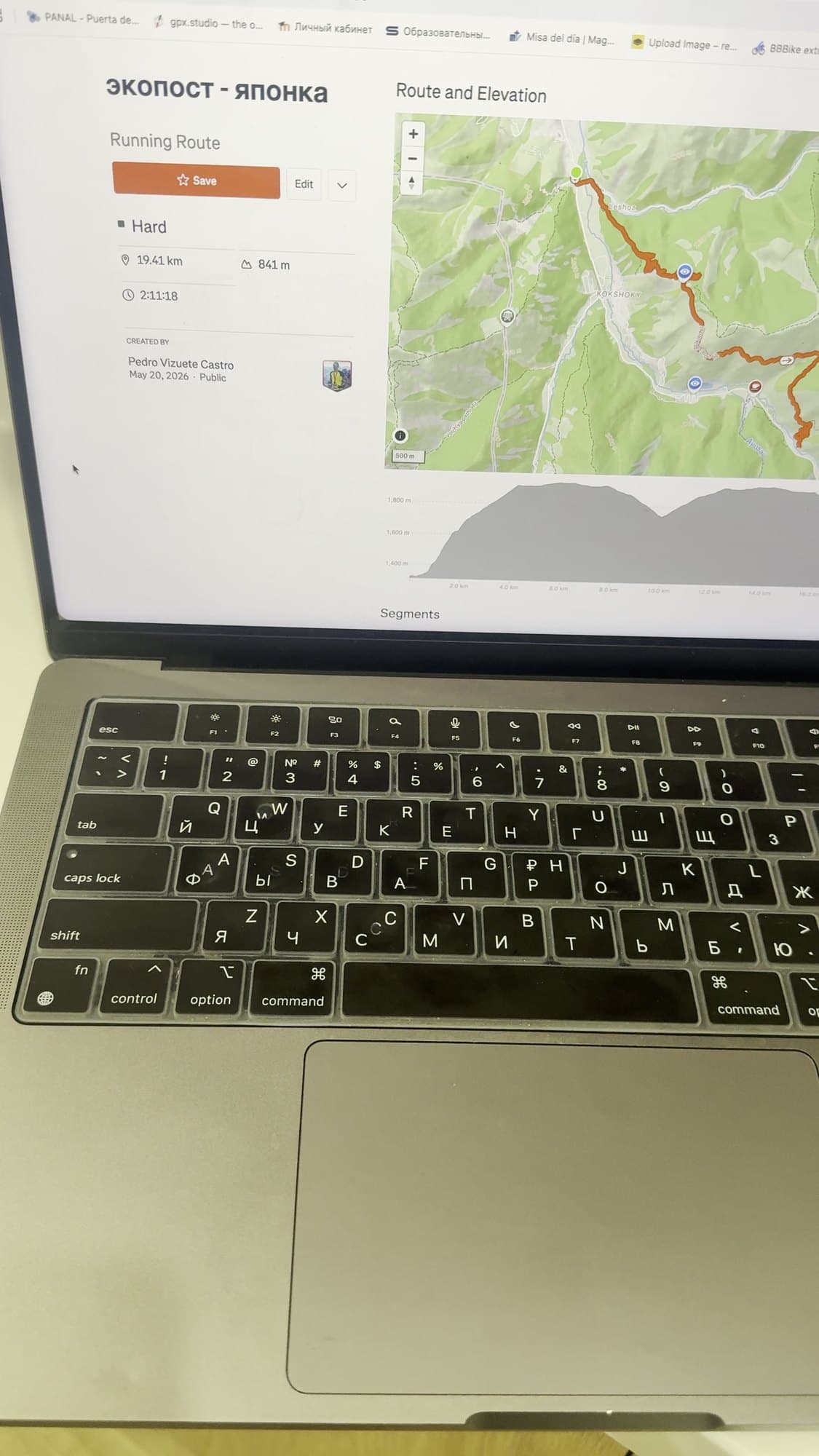
How many carbs you need per hour on a long session, how much water to carry and what to drink straight after the finish: let us work through the plan for a two-hour long session using the kit of Pedro Visuete, a 226ERS ambassador, as an example. In early November 2026 he posted his set-up for a Sunday session along the Japanese Road: 20 kilometres, 850 metres of climbing, around two hours of work. This piece will be useful for runners and cyclists who already head out for long sessions with climbing but still estimate their fuelling by eye.
The two numbers the whole plan is built from
Pedro bases his calculation on two figures: 0.5 litres of water per hour and 65–70 grams of carbohydrate per hour. After that it is simple arithmetic: two hours call for a litre of fluid and roughly 130–140 grams of carbohydrate, and the job of packing is to make those grams physically fit into the flask and the vest pockets. This approach saves energy out on the route: you are not deciding on the move whether to drink or not, you are following a plan you drew up in advance.
Why 60 grams of carbohydrate per hour is no longer the ceiling
For a long time around 60 grams of carbohydrate per hour was treated as the benchmark: that is how much glucose can pass through the gut using a single type of transporter. Fructose is absorbed by a different route, so a mix of glucose and fructose allows carbohydrate intake to go considerably higher without heaviness in the stomach. That is precisely why 65–70 grams per hour looks workable rather than extreme for a trained athlete. But everyone has their own ceiling, and it is trained just like pace.
Why you swap the isotonic drink for a concentrate in winter
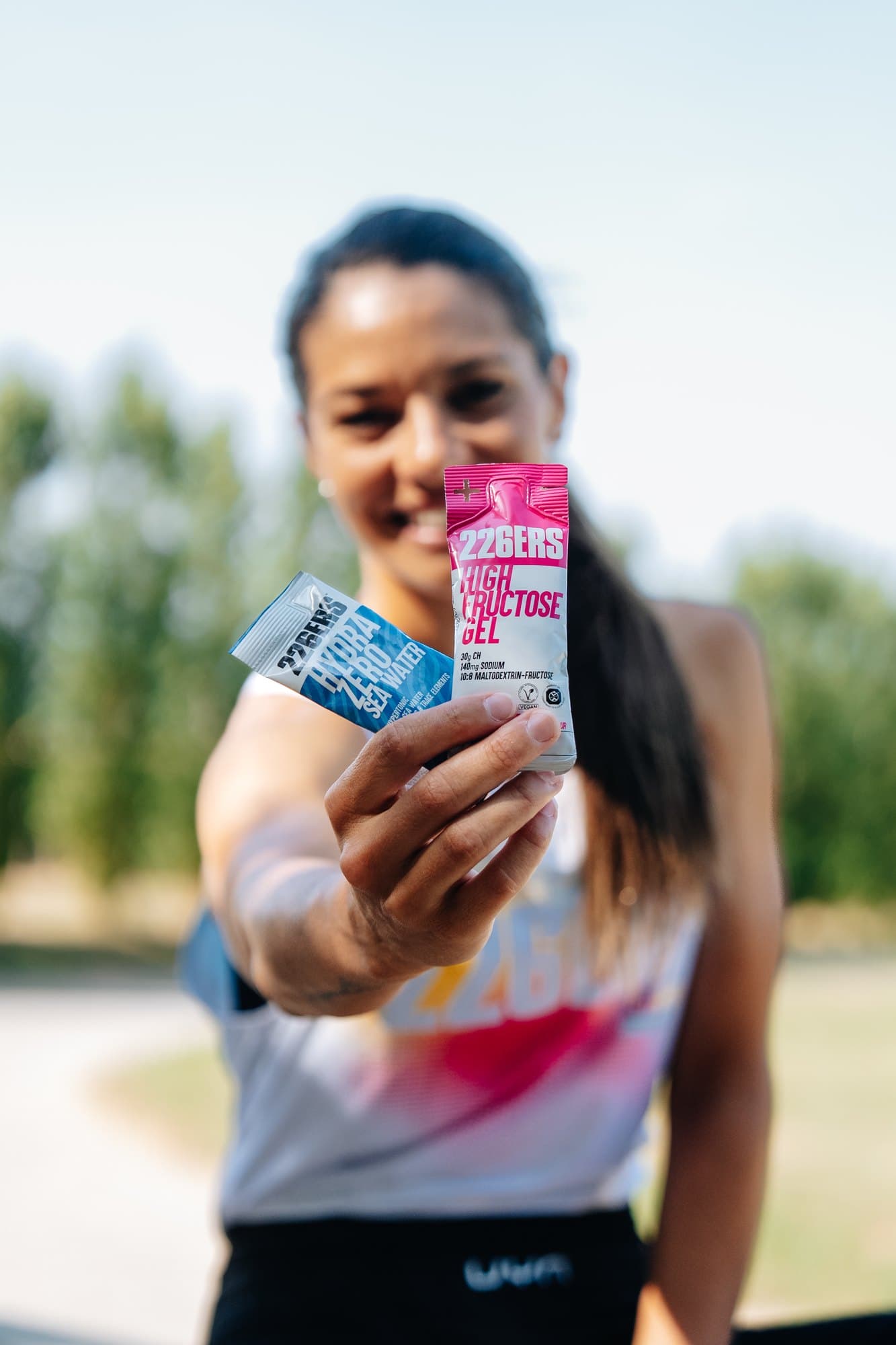
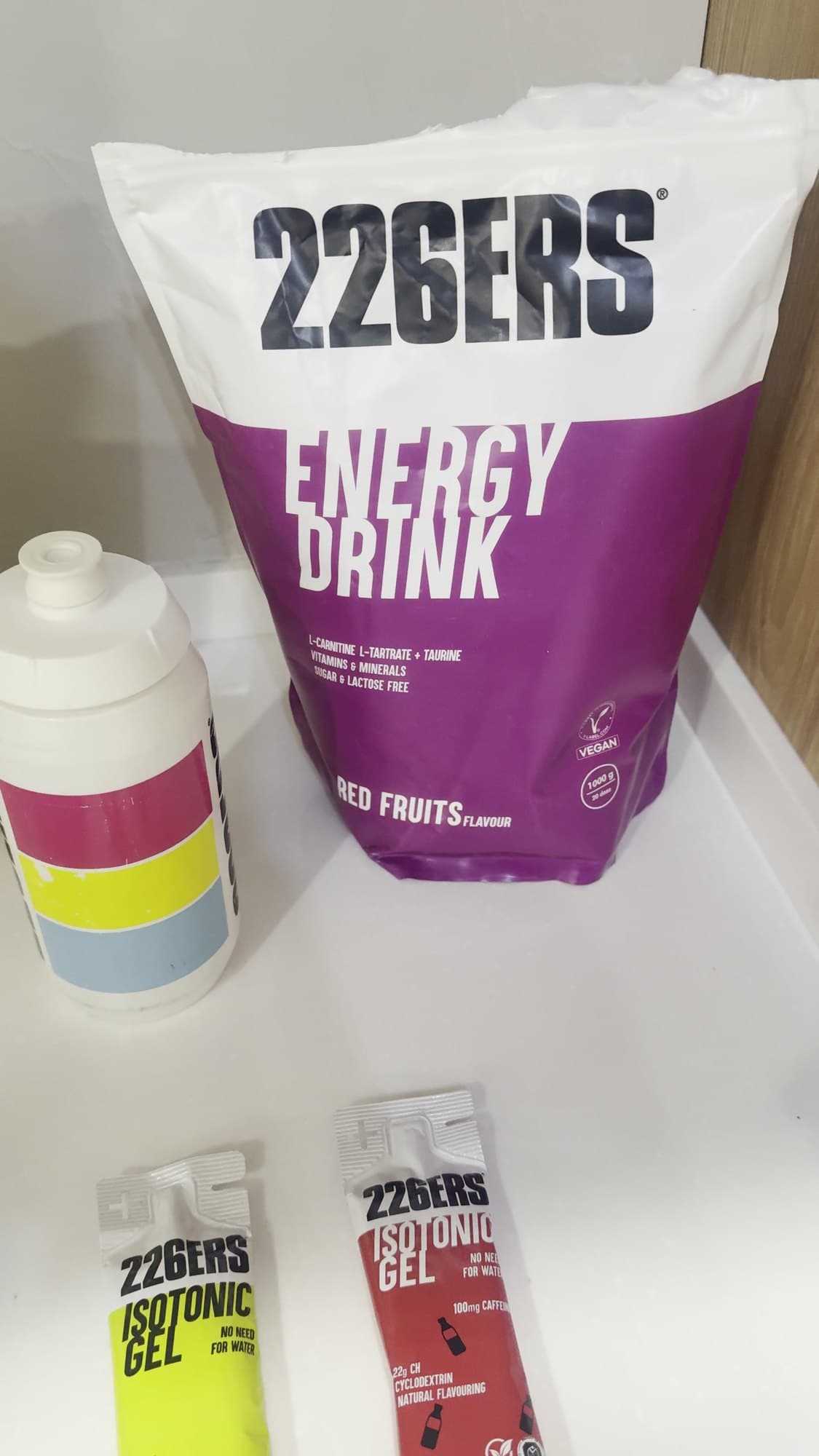
In winter Pedro's flask holds not an isotonic drink but Energy Drink: 45 grams of carbohydrate per serving. The logic is simple: you drink less and get the same amount of fuel. In the cold thirst is blunted, litres of water go down less easily, and if the concentration is low a warm drink will run out before you have taken on the grams of carbohydrate you need. A more concentrated drink solves the problem differently: the volume of fluid comes down while the carbohydrate stays. The flip side: you will have to top up water separately, and that needs to be in the plan rather than remembered on the final kilometre.
A gel you do not need to wash down
In his vest pocket Pedro carries Isotonic Gel: 22 grams of carbohydrate, with the water already inside the gel. It is a handy complement to the concentrate in the flask, especially on climbs where swallowing a thick gel and hunting for water is awkward. The general rule: the denser the gel, the more water it will need so that it does not create too concentrated an environment in the stomach. Isotonic gels settle that question in advance and work well where there are no feed stations at all.
850 metres of climbing change the energy cost, not just the pace
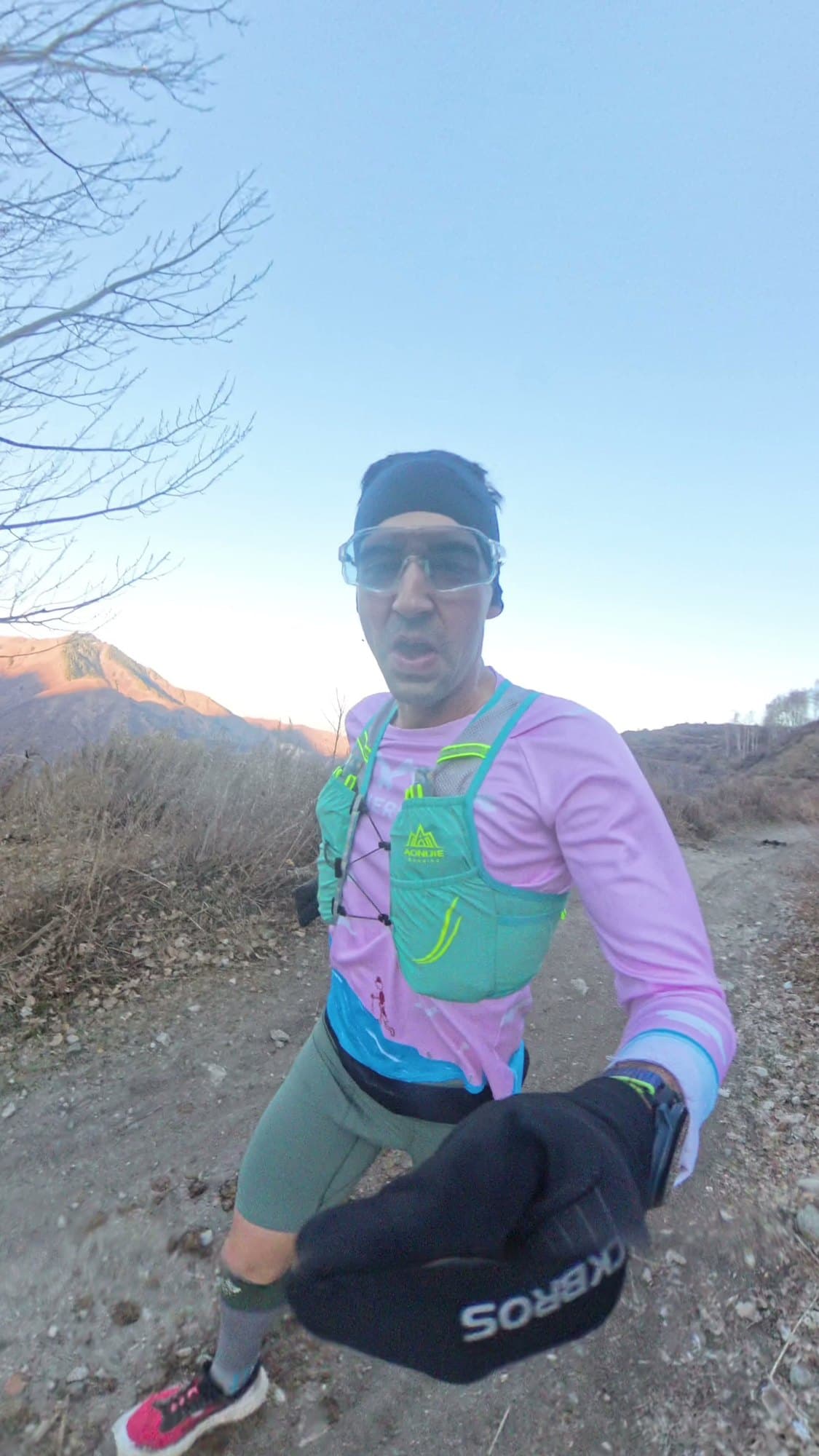
Twenty kilometres on the flat and twenty kilometres with 850 metres of climbing are two different sessions. On the climbs the heart rate is higher and time under load is longer, on the descents the muscles take more of a beating, and glycogen stores run down faster than the distance would suggest. So it makes sense to build the plan for a hilly long session around time rather than distance: two hours of work demand two hours of fuelling, no matter how many kilometres you managed to ride or run.
The recovery shake is made up in advance
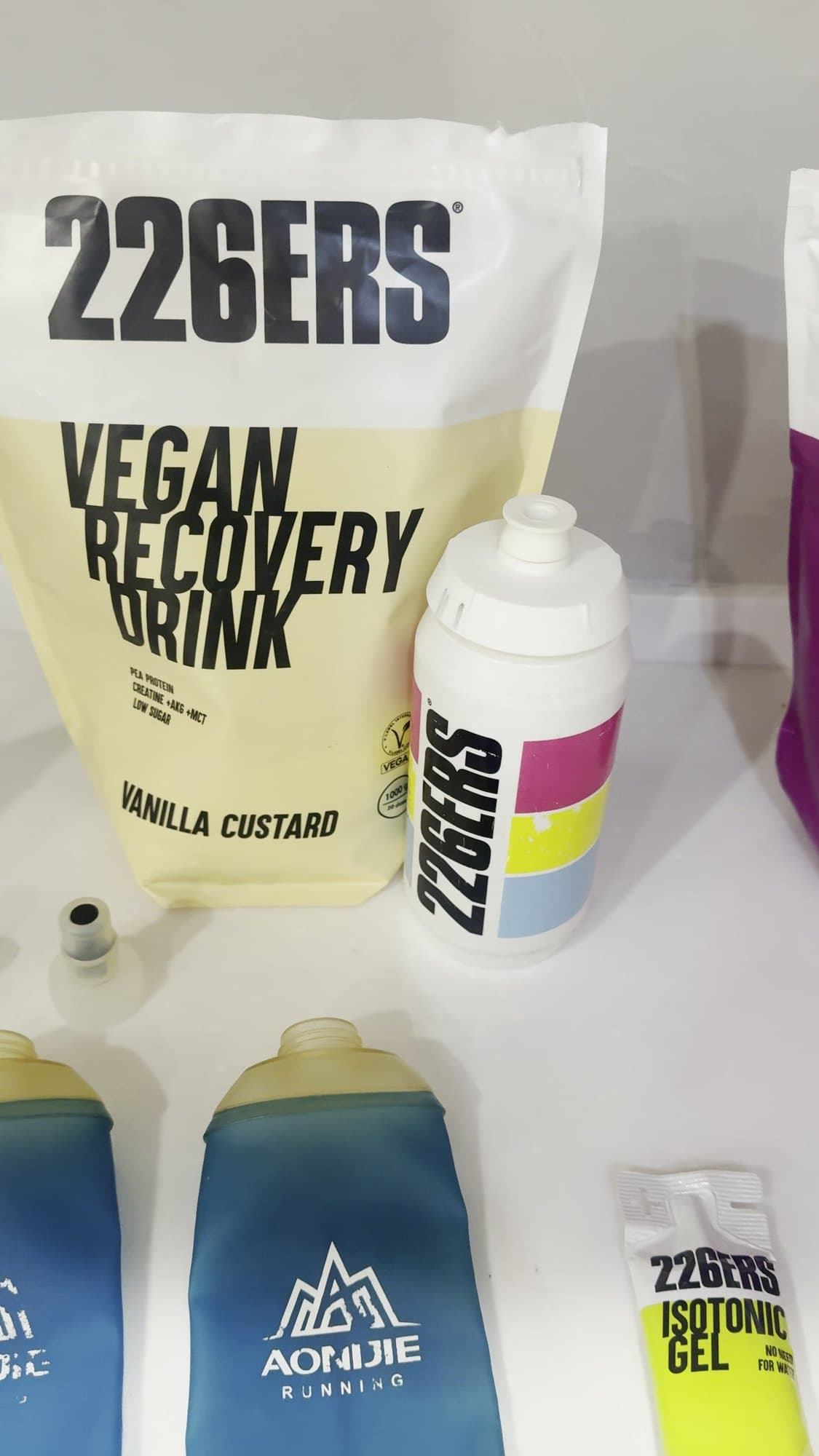
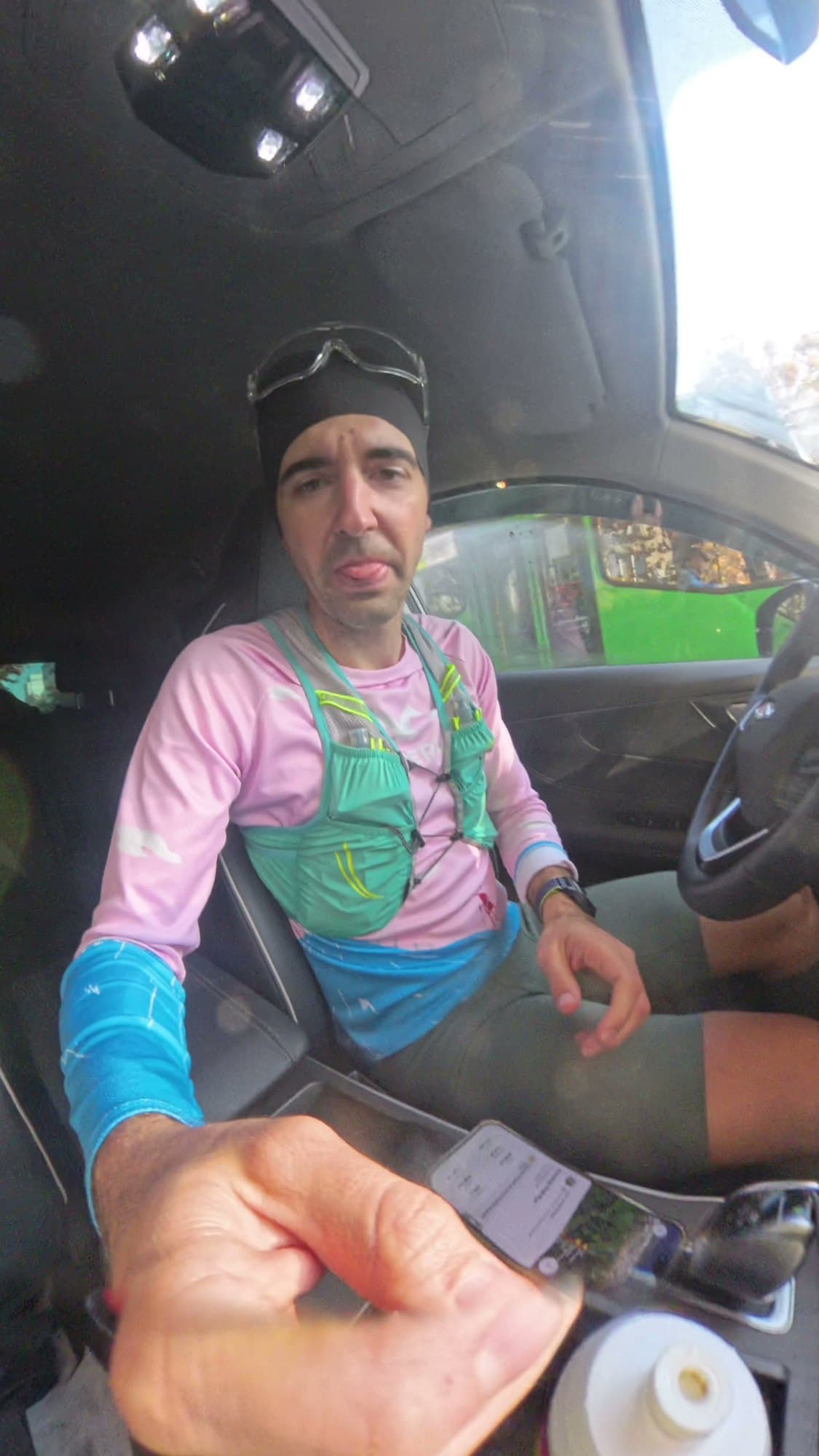
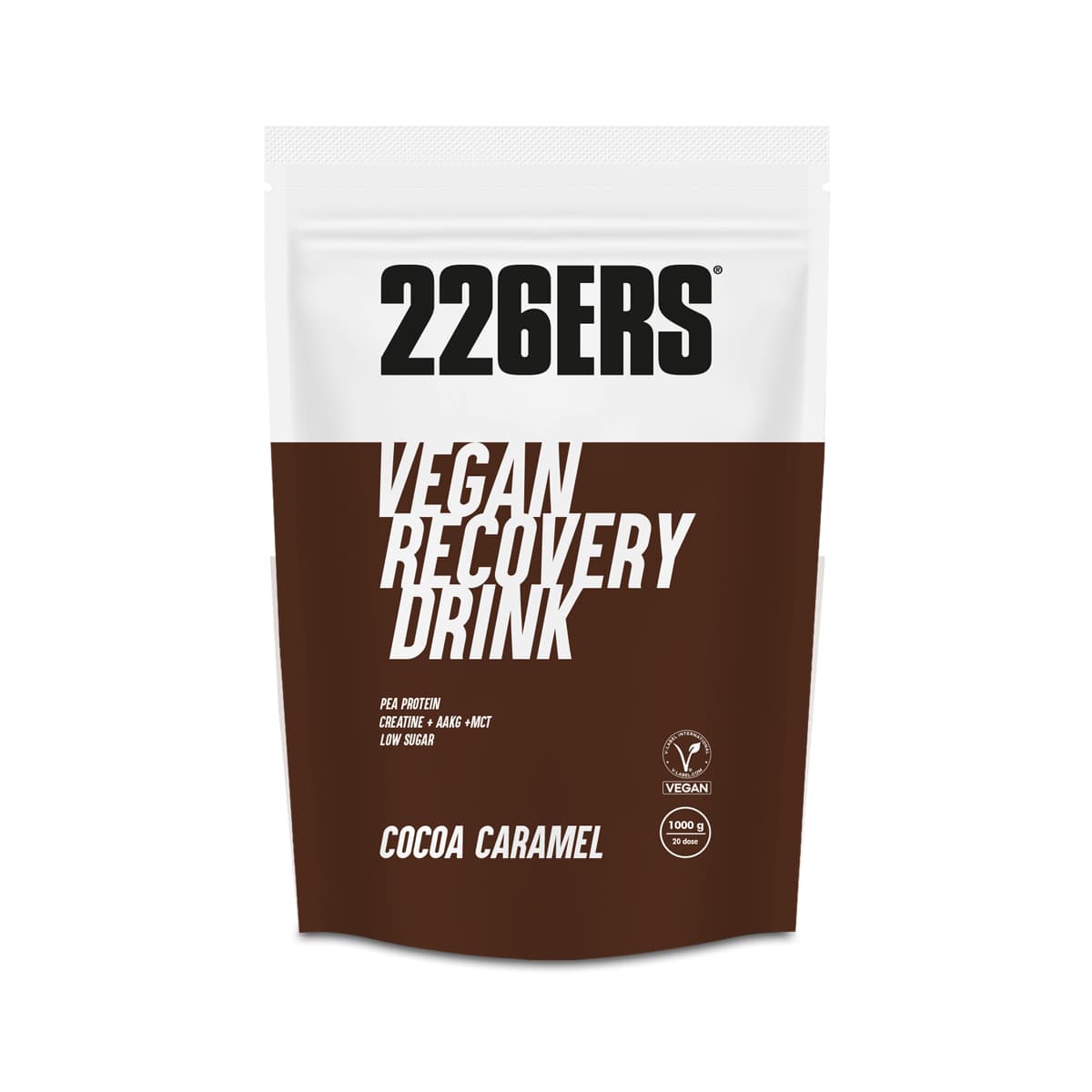
Pedro makes up his shaker of Vegan Recovery Drink the evening before and leaves it in the car so he can drink it right at the finish. This is an important detail: after a long session the body takes on carbohydrate and protein best in the first few tens of minutes, and you will be home in an hour at best. A shaker prepared in advance removes the main reason recovery gets skipped: laziness and having no food ready to hand. If the session was hilly and the muscles took a pounding on the descents, you notice this especially the following week.
Pack the evening before, not in a rush in the morning
Pedro packs his bag on Saturday evening, and that is not a ritual but a way of not making mistakes. In the morning before heading out it is easy to forget the second gel, to measure a serving of drink wrongly or to fill the flask with water instead of the energy drink. The evening checklist looks like this: work out the duration of the session, convert it into grams of carbohydrate and litres of fluid, mix the drink, distribute the gels between pockets, prepare the recovery shake. Pedro summed up that Sunday session briefly: the long session went to plan, plus a few Strava crowns on the segments.
Common mistakes on a long session
First: fuelling only in races and toughing it out in training. The stomach needs to be broken in under the same conditions and on the same products, otherwise 65 grams of carbohydrate per hour will come as an unpleasant surprise on race day. Second: drinking to thirst, especially in the cold, where thirst arrives far too late. Third: changing products and concentrations a week before the start. Fourth: ignoring the finish, when the fuelling stops on the last kilometre even though recovery begins right there.
What from this kit is available in Kazakhstan
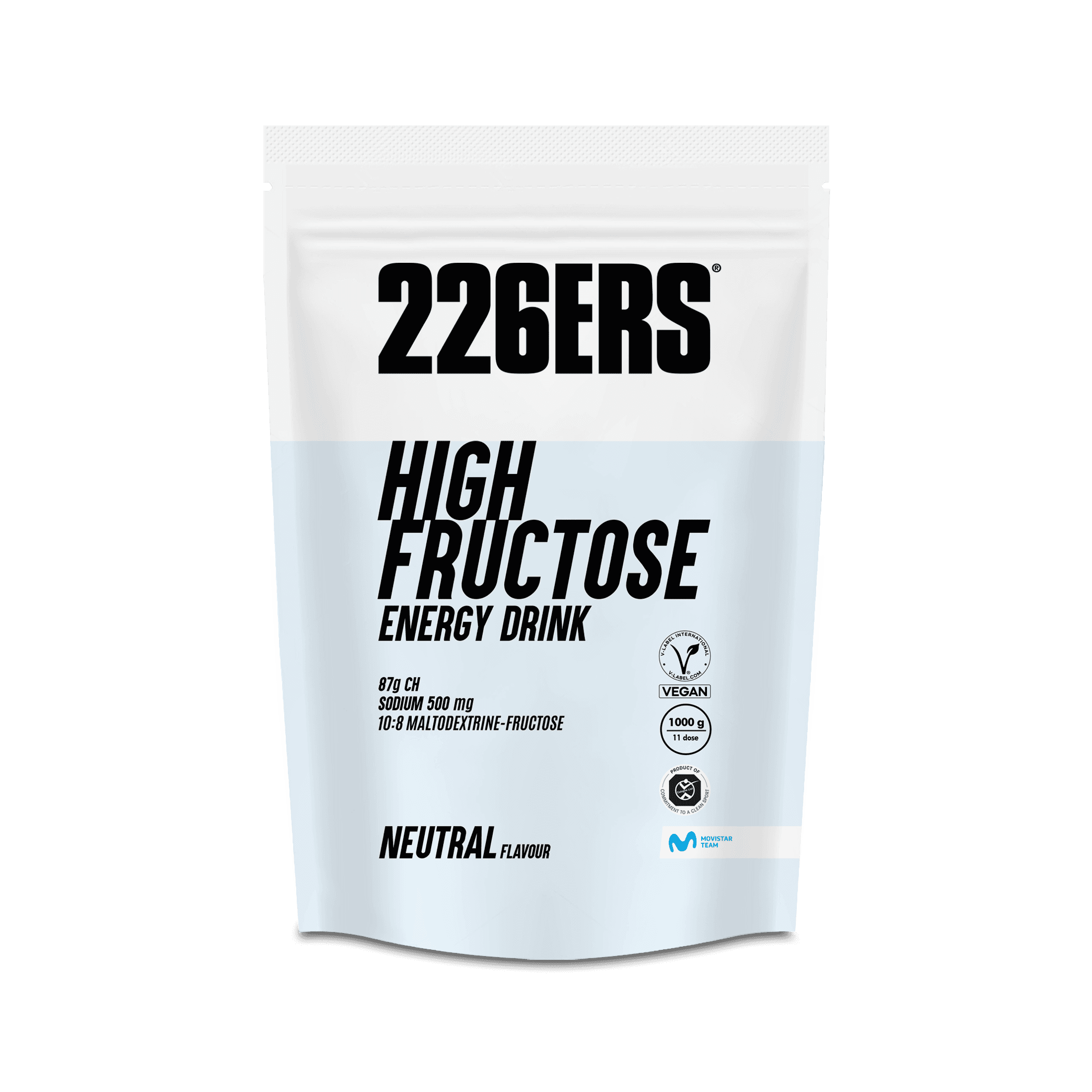
Following Pedro's scheme you can put together a similar kit on spacefuel.kz: SUB9 and High Fructose energy drinks for the flask and High Energy gels for the pocket. The point is not the specific packets but the principle: work out the duration of the session, convert it into grams of carbohydrate and millilitres of fluid, pack your bag the evening before and leave recovery in the car. Then “the fuelling works” stops being a line from someone else's post and becomes your own working plan.



FAQ
How many carbs do you need per hour on a long session?
Pedro Visuete builds his plan around 65–70 grams of carbohydrate per hour and 0.5 litres of fluid per hour. That level is achievable thanks to a mix of glucose and fructose, which are absorbed by different routes, but everyone has their own ceiling and it needs to be trained.
Why is a concentrated drink better than an isotonic one in winter?
In the cold thirst is blunted and a large volume of fluid is harder to get down. A concentrate such as Energy Drink, with 45 grams of carbohydrate per serving, lets you drink less while taking on the same amount of fuel; water then has to be planned separately.
When should you drink a recovery drink after a session?
Right at the finish: the body takes on carbohydrate and protein best in the first few tens of minutes after exercise. Pedro makes up his shaker of Vegan Recovery Drink the evening before and leaves it in the car so he does not have to wait for the drive home.