Hypotonic or isotonic: the question comes up once the season is over, long rides and long runs have given way to short sessions, and the bottle of sweet drink starts to feel like a leftover. The difference between a hypotonic and an isotonic drink is not marketing but the concentration of dissolved substances, and that determines how quickly the fluid leaves the stomach and reaches the bloodstream. This piece is for runners, cyclists and triathletes who spend the off-season in the gym, on the treadmill or on the turbo trainer and want to work out exactly what to put in the bottle when carbohydrate during training is no longer needed, even though they are sweating just as much as before.
How a hypotonic drink differs from isotonic and hypertonic
The whole classification rests on a comparison with blood plasma. A hypotonic drink is less concentrated than plasma, so it is lighter than plasma and leaves the stomach faster: its main job is delivering water and salts. An isotonic drink is roughly equal to plasma in concentration and usually carries carbohydrate, so it hydrates and feeds at the same time. Hypertonic solutions, gels and thick concentrated mixes for example, are more concentrated than blood, they need extra water and they sit in the stomach for longer. Hence a simple rule: the longer and harder the work, the more you need carbohydrate in the bottle, and the shorter and more technical the session, the more sense plain hydration makes.
How much water and sodium you lose in sweat
Sweat carries away between 0.5 and 2 litres an hour and between 200 and 2000 mg of sodium per litre. The spread is severalfold, and it explains why somebody else’s drinking plan almost never fits without adjustment: one athlete loses half a cup over a session in a cool gym, another leaves salt stains on their shirt after an hour on the turbo. Volume depends on temperature and humidity, ventilation, clothing, intensity and the degree of acclimatisation. Sodium concentration in sweat is far more stable and sits closer to an individual trait than to the weather.
Why plain water does not replace lost electrolytes
If you put back only water, it dilutes the blood and blunts thirst: you want to drink less at exactly the moment your body is still short of fluid. That is the trap. A person drinks, feels they have had enough, and the deficit remains. Sodium in a drink works differently: it helps retain the fluid you have drunk and keeps the urge to drink alive. That is why on long races in the heat the danger is not only dehydration but also the reverse situation, where an athlete pours litres of plain unsalted water into themselves.
When you do not need carbohydrate in the bottle
There is a whole layer of sessions where a sweet drink brings no gain at all. Work under an hour, strength and running drills, technique sessions, recovery runs and almost the entire off-season block, when volume is deliberately reduced. In sessions like these glycogen stores are more than enough, and carbohydrate arrives perfectly well with ordinary meals before and after training. What really does get lost, even over forty minutes in a stuffy gym, is fluid and salts. The logic here is not saving calories for the sake of weight but matching the tool to the task.
What Hydrazero is: composition and how to mix it
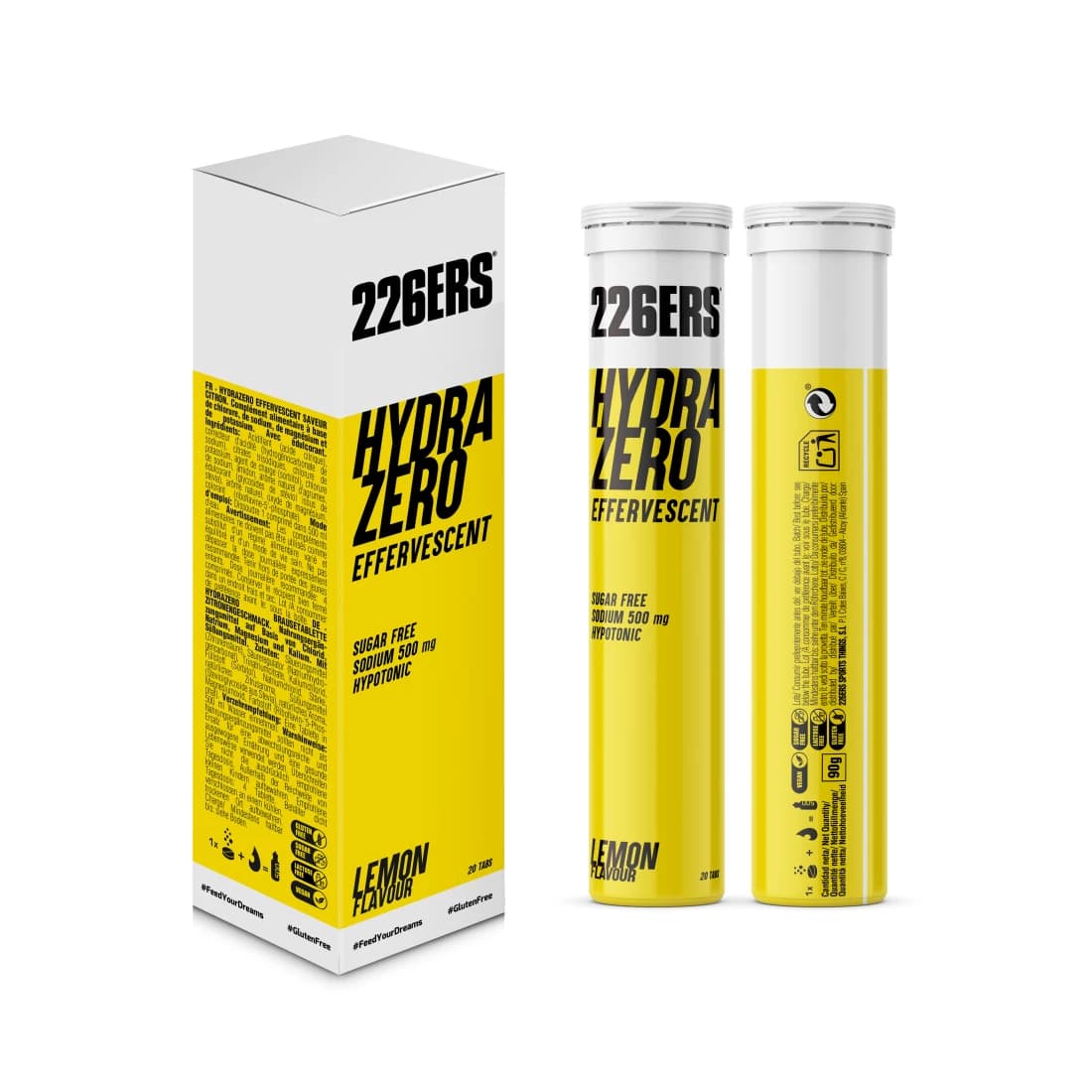
Hydrazero from 226ERS is built for exactly this job: 500 mg of sodium, plus potassium, chloride and magnesium in the proportions found in sweat, at 0 kcal and 0 sugar. It is a hypotonic drink, lighter than plasma and quicker out of the stomach than an isotonic one, so it does not slosh around while you work in the gym or on the treadmill. There are two formats: a 7.5 g sachet mixed into 500 to 750 ml of water, and an effervescent tablet for 500 ml. The more dilute version suits you when you want a neutral taste and a larger volume to drink, the more concentrated one when losses are clearly higher.
How to drink electrolytes in the gym and on the treadmill
The practice is simple: arrive at the session already properly hydrated rather than catching up along the way. During the work, small sips every 15 to 20 minutes are easier than one big gulp at the end: the fluid has time to be absorbed and does not leave the stomach feeling overfull. The bottle of electrolytes sits beside you on the turbo, on the treadmill or by the barbell rack, and you come back to it on a schedule rather than when thirst appears. After training it makes sense to top up the remaining volume, especially if the next session is that evening or the following morning.
Common mistakes with electrolytes and hydration
The first mistake: going by thirst alone, which during intense work almost always lags behind real losses. The second: drinking only water when salt losses are high, then being surprised by sluggishness and cramp at the end of the session. The third: making the mix stronger than the packet says in the hope of a bigger effect, and ending up with a heavy stomach. The fourth: trying a new drink for the first time on race day instead of running it in during easy sessions. And the fifth: copying a training partner’s plan while ignoring a severalfold difference in sweat rate.
Why electrolytes help in the sauna, on a plane and on your feet at work
Fluid and salt losses are not limited to training. A banya or sauna draws water out fast and with no exercise at all. On a plane the dry cabin air and a long flight pull in the same direction, and that is often the journey to a race you would rather arrive at in decent shape. Work on your feet, a shift in a hot room, a long summer day outdoors all leave a noticeable fluid deficit too. For all of these situations a drink with no sugar and no calories is convenient because you can sip it calmly without turning hydration into an extra meal.
How to find your own fluid and salt needs
The most accessible method: weigh yourself without clothes before and after a session and work out the difference, remembering that losing one kilogram corresponds to roughly one litre of fluid. It is worth doing this in different conditions: a cool gym, a stuffy room, outdoors in the heat. Indirect signs are informative as well: white salt stains on a dark shirt and cap, a distinctly salty taste to sweat, stinging eyes. If those signs show up regularly, the concentrated dilution and close attention to salt are justified. If losses are modest, moderate drinking to a schedule is enough.
The bottom line: what to put in the bottle in the off-season
When a session is under an hour and carbohydrate in the bottle is not needed, the choice between hypotonic and isotonic goes to the former: it leaves the stomach faster, returns water and salts and adds no extra sugar. Working out your own losses, choosing a dilution and testing it in easy sessions is worth doing before the new season begins. Hydrazero and other 226ERS, PILLAR and SiS products are available at spacefuel.kz.

FAQ
How does a hypotonic drink differ from an isotonic one?
A hypotonic drink is less concentrated than blood plasma, so it is lighter than plasma and leaves the stomach faster, which makes delivering water and salts its job. An isotonic drink is roughly equal to plasma in concentration and usually carries carbohydrate as well.
How much sodium do you lose in sweat over an hour of training?
Sweat carries away between 0.5 and 2 litres an hour and between 200 and 2000 mg of sodium per litre. The severalfold spread is individual, so it is best to assess your own needs by weighing yourself before and after a session and by the salt stains on your clothing.
Do you need electrolytes if the session is under an hour?
Carbohydrate in the bottle brings no gain in work like that, while fluid and salts are lost even over forty minutes in a stuffy gym. That is why a sugar-free drink with sodium, potassium, chloride and magnesium fits better here than an isotonic one.