The post-workout recovery window is the topic that causes the most confusion among runners, cyclists and triathletes. Some drink a recovery shake after every single jog, others never drink one at all and then wonder why their legs still feel heavy two days later. Let us look at what actually happens in the body in the first minutes after exercise, which drink composition makes sense, and how to fit the whole thing into a normal training week. This is written for anyone training four or more times a week who is already feeling accumulated fatigue.
What the recovery window is and why the hurry
After long or intense work the muscles stay in a heightened state of readiness to pull nutrients out of the blood: insulin sensitivity is above normal, the transport mechanisms for glucose are active, and muscle protein repair is already under way. That is what people call the recovery window. It does not slam shut on a stopwatch, but the first few dozen minutes really are the most productive. The practical guideline is simple: try to get some nutrition in within the first 45 minutes after you finish training. If your next session is a day away or sooner, this habit makes a noticeable difference to how you feel.
What is in the sachet: 21.5 g of protein, 20 g of carbohydrate and creatine
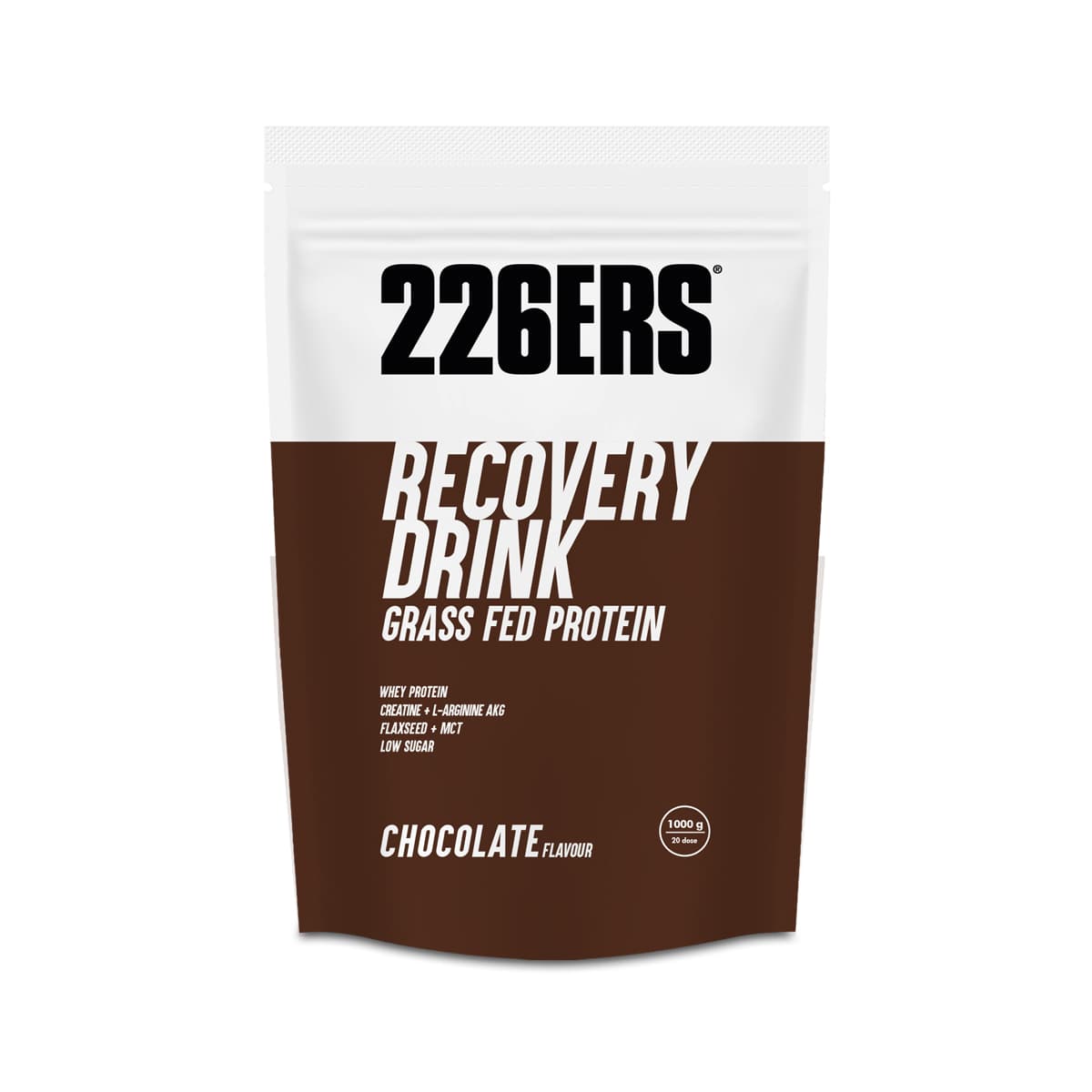
A single 50 g sachet contains 21.5 g of protein, 20 g of carbohydrate and 1,500 mg of creatine. That combination covers three jobs at once: it supplies amino acids for repairing muscle tissue, it puts back part of the glycogen you have burned through, and it adds creatine, which works on a cumulative basis. The serving is designed specifically for post-training use rather than as food during the day, which is why the protein and carbohydrate here sit close to a one to one ratio.
Why post-workout protein works better alongside carbohydrate
A common mistake is drinking plain protein after a long run or an interval session. Protein handles the repair side, but it does not put back the fuel the muscles have burned. Glycogen refills faster the sooner carbohydrate arrives after exercise, and in endurance sport it is usually empty glycogen stores that feel like being wrecked the next day. That is why a recovery drink for a runner or a cyclist differs from the usual gym protein shake: it always has a carbohydrate component.
Why there is creatine in a recovery drink
Many people still associate creatine with strength sports only, but its role is broader than that. It takes part in rapidly regenerating energy, which means it matters for everything you do at high intensity in running and cycling: surges, climbs, finishing stretches, work on short intervals. The key point is that creatine does not act in one go, the way caffeine does. It builds up in the muscles with regular daily intake, so the 1,500 mg in a sachet make sense as part of a steady habit rather than as a rescue after one hard session.
How to mix it: one sachet into 500 ml of water
The whole sachet goes into 500 ml of water and is drunk within the first 45 minutes after training. The half litre of fluid is not a random number: along with the nutrition, you are also partly covering the dehydration that can be substantial after an hour of work in the heat. If the session was a sweaty one, carry on with plain water or an electrolyte drink afterwards. There is no need to mix it more concentrated: an overly thick solution takes longer to leave the stomach and can cause discomfort for anyone who already tolerates food poorly straight after exercise.
Saltanat Arstanbekova on the Recovery drink
Saltanat Arstanbekova left a review on the site: “Recovery is super! I have bought it more than once and drink it after training, and I feel much better. An excellent source of protein.” The 1 kg tub was her own purchase. That detail matters: this is not a one-off trial but repeat buying, which means a product that has become part of a normal training routine. The most useful thing here for the reader is not the rating itself but the pattern of behaviour: a recovery drink makes sense when it is taken systematically after hard sessions, not once a month.
Sachet or tub: which suits a runner better
The format follows your lifestyle rather than the maths. A 50 g sachet is easy to take with you: into a rucksack for a group session, into the car, on a trip to a race where you need nutrition quickly after the finish and have no way to measure out servings. The 1 kg tub works out better if most of your training ends at home or at the club and there is somewhere to scoop out a measure in peace. Many people end up keeping both: the tub for everyday use and a few sachets in reserve for travel.
Typical mistakes in recovery nutrition
Mistake one: drinking a recovery shake after every easy 40-minute session. There, an ordinary meal does the job completely. Mistake two: putting nutrition off for two or three hours after a hard long run and then being surprised by the quality of the next session. Mistake three: treating the drink as a replacement for a proper meal. It is a bridge between the end of training and real food, not food in itself. And mistake four: expecting a quick effect from creatine and stopping after a week, when it only works over the long haul of several weeks of regular use.
How to fit it into a training week
The rule that works best: the recovery drink comes after sessions that genuinely loaded the body. That means long runs and rides, interval and tempo sessions, a second session in the day, and days when the next workout is less than 24 hours away. On full rest days and after easy recovery work, ordinary food and sleep take priority. This approach saves money and, more importantly, stops the supplement turning into a ritual with no purpose.
Recovery after training is made of boring things: eating on time, going to bed on time, not skipping water. A drink with 21.5 g of protein, 20 g of carbohydrate and creatine makes the first of those easier on the days when you have no energy to cook straight after the finish. You can choose a format and order at spacefuel.kz, where the code SALTA10 also gives 10 % off.
The short version
It is worth using the first 45 minutes after a hard session: protein to repair muscle, carbohydrate for glycogen, fluid to restore water balance. The creatine in the formula works along its own longer timeline and needs consistency. Everything else comes down to sleep and ordinary food.


FAQ
How long after training do I have for recovery nutrition?
The practical guideline is the first 45 minutes after you finish training. The window does not slam shut on a stopwatch, but this is when the muscles pull nutrients out of the blood most actively.
Why do I need carbohydrate after a run, not just protein?
Protein covers the repair of muscle tissue but does not put back the fuel you have burned. Glycogen refills faster when carbohydrate arrives soon after exercise, and it is usually empty glycogen stores that feel like being wrecked the next day.
How do I mix a sachet of the recovery drink?
The whole 50 g sachet goes into 500 ml of water and is drunk within the first 45 minutes after training. Do not make the mix more concentrated: a thick solution takes longer to leave the stomach.