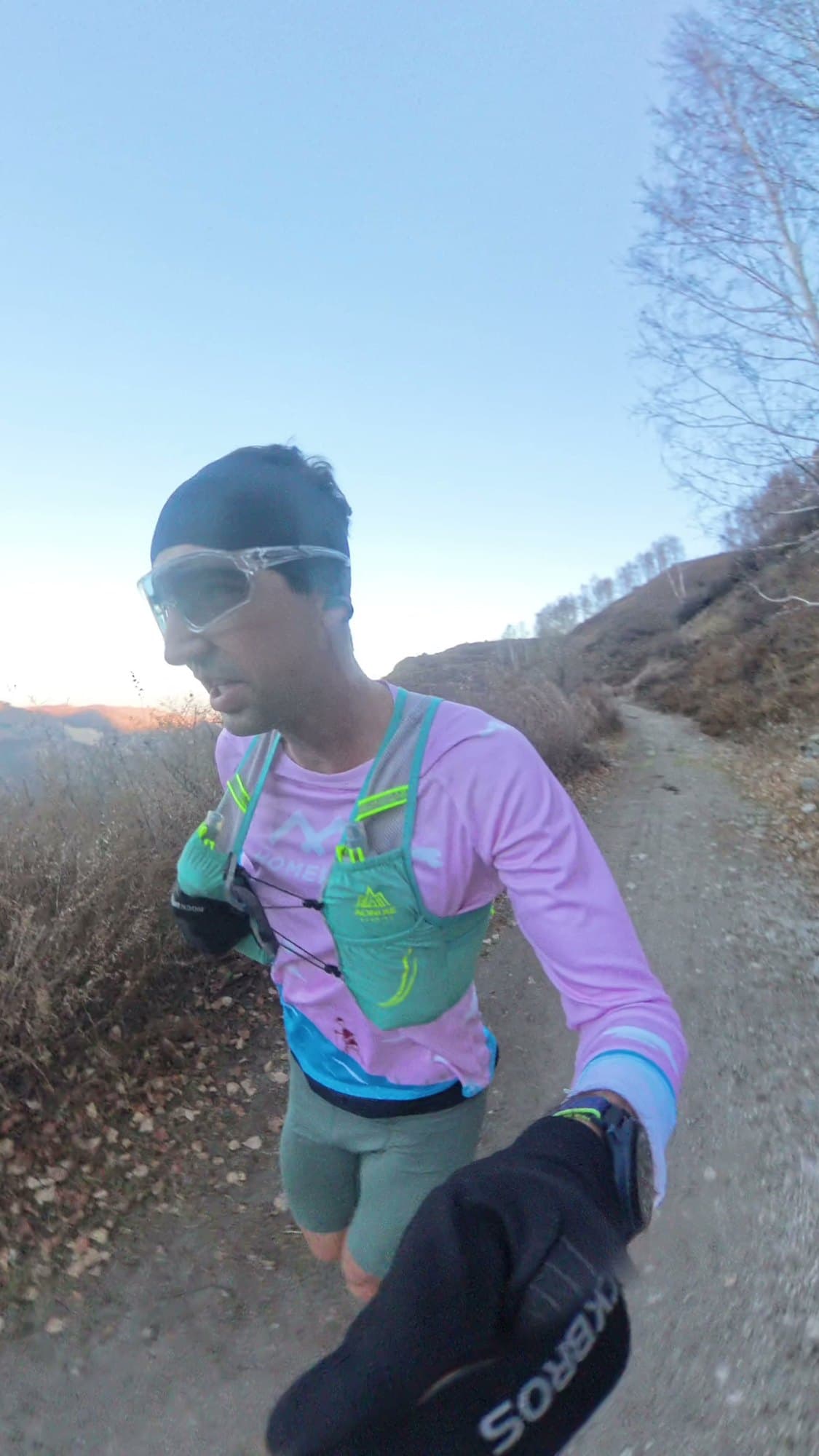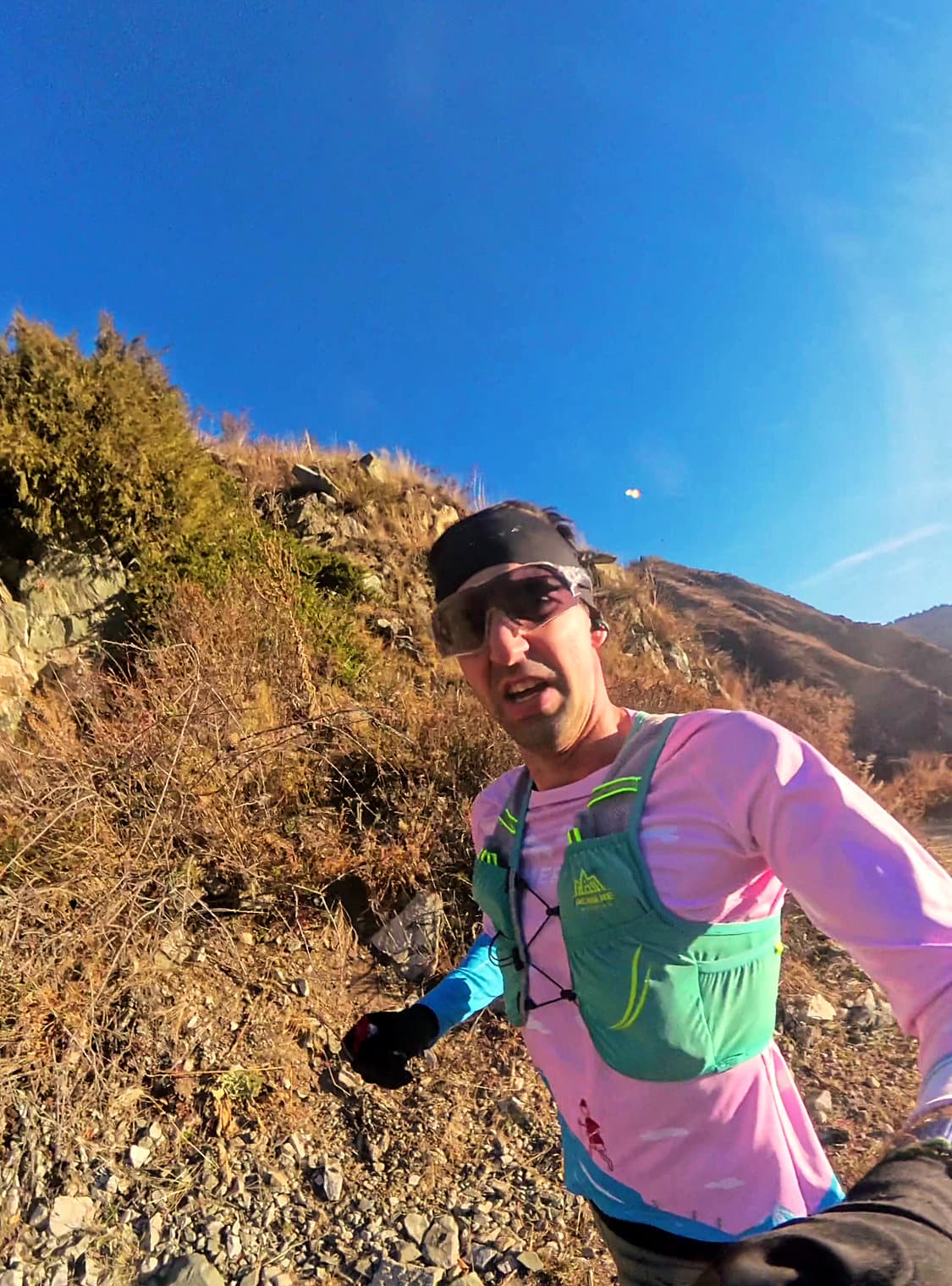
Fuelling a long session with climbing works differently from a flat long session: the climbs lift your heart rate, the descents make it hard to drink calmly, and the time on the move stretches out. It is easier to unpick this with a concrete example. In November 2026 the 226ERS ambassador Pedro Visuete put together his fuelling for a Sunday long session on the Japanese Road: 20 km, 850 metres of climbing, two hours of work. His calculation: 0.5 l of water and 65–70 g of carbohydrate per hour. This piece will be useful for runners, cyclists and triathletes who regularly head out for hilly two-hour sessions and want to stop guessing how much to take with them.
Why climbing changes the fuelling plan
850 metres of climbing over 20 km means that a significant part of the session is spent going uphill, and that means a higher intensity at the same speed on the map. The higher the intensity, the bigger the contribution of carbohydrate to energy production and the faster the glycogen store is used up. At the same time the convenient windows for fuelling shrink: on a steep climb it is hard to breathe and hard to drink, and on a technical descent your hands are busy. That is why on a hilly long session fuelling is planned in advance and tied not to how you feel, but to the terrain and the clock.
How much carbohydrate per hour you need on a hilly long session
Pedro worked from two numbers: 65–70 g of carbohydrate and 0.5 l of fluid per hour. For work lasting longer than an hour and a half this is the usual working range: sports science has long talked about 60–90 g of carbohydrate per hour during prolonged efforts, with the upper part of the range available to those who have trained their gut for it. If you have previously eaten little or nothing during sessions, it makes sense to start at the lower end and raise the volume gradually. Counting in grams, rather than “a gel and a drink”, gives you a clear reference point and the chance to change things deliberately.
The drink in the bottle: 45 g of carbohydrate and water in one serving
Pedro put the bulk of his carbohydrate into the drink: the bottle held Energy Drink, 45 g of carbohydrate. This is a convenient logic for hilly sessions: one mouthful solves two jobs at once, hydration and energy, and it does not require stopping or digging out a wrapper. The second advantage: the carbohydrate arrives in small portions rather than in one 50 gram hit, and the stomach copes with that more easily. There is one drawback worth bearing in mind: you can no longer use the water from such a bottle simply to splash your face or wash something else down, so for long outings you take a separate container of plain water.
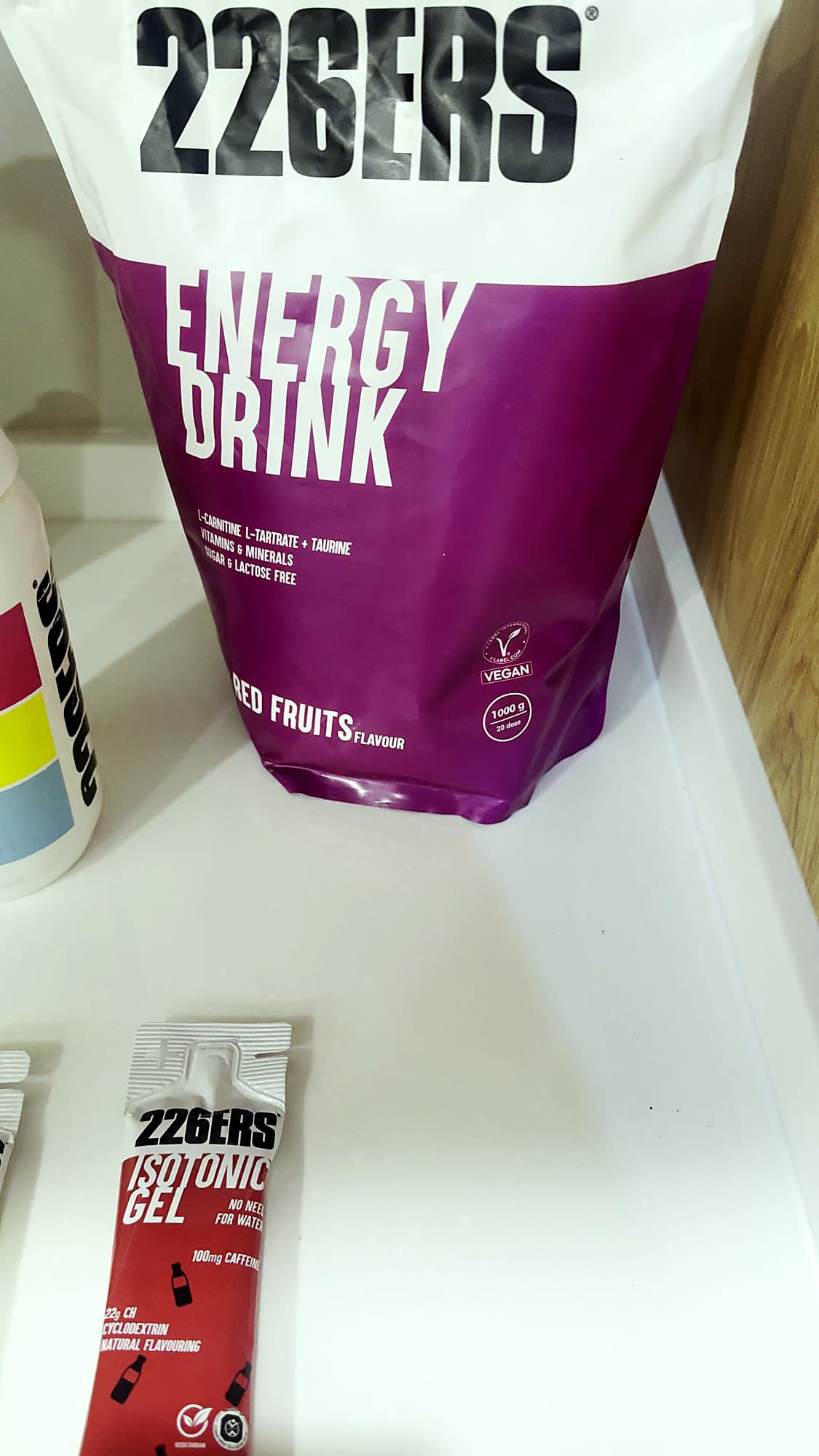
The gel in your pocket: why top up by 22 grams
The gap to the target number was closed by an Isotonic Gel with 22 g of carbohydrate in his pocket. The arithmetic is simple: 45 plus 22 gives 67 g, which is exactly the middle of the stated range of 65–70 g per hour. If the session lasts longer, you simply repeat the set, and that is the beauty of counting in grams: it scales to any duration. A gel in the pocket also works as a flexible tool: you can move it to the start of a long climb, or to the last twenty minutes, when holding the pace is hardest.
Fuelling in winter: how not to end up with a frozen bottle
In winter the sense of thirst is blunted, and athletes regularly drink less than they planned, even though sweat losses in warm kit remain considerable. So in cold weather a drinking schedule matters more than sensation: it is handy to tie a mouthful to landmarks on the route or to every ten or fifteen minutes. In frosty weather the bottle and the gel are kept close to the body, under the outer layer: that way they do not turn into a block of ice by the middle of the session. A warm drink in an insulated flask also works better than a cold one in winter, simply because people actually drink it.
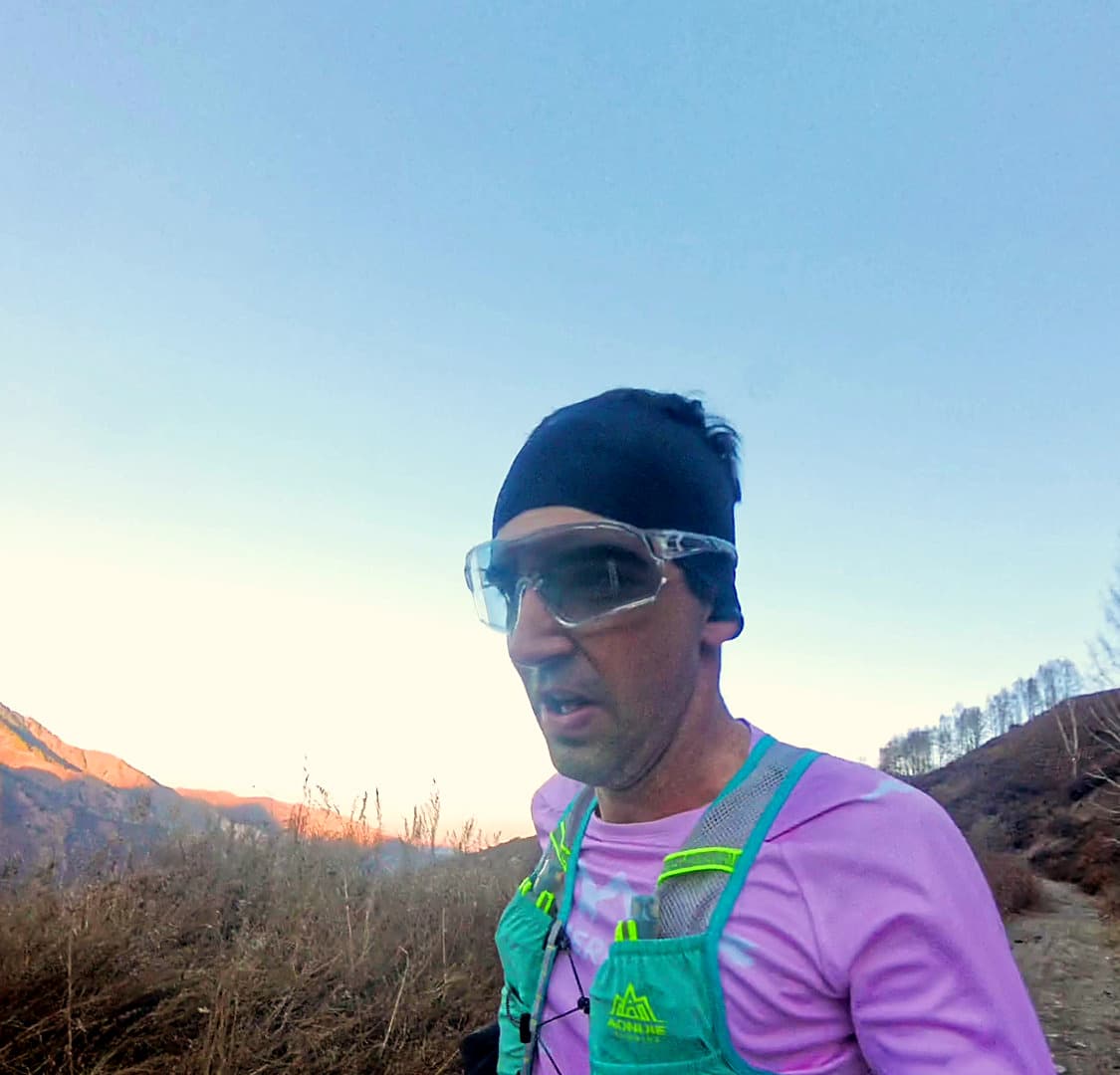
Recovery after a long session: the shaker waits in the car
One separate detail of Pedro’s plan: the Recovery shaker was waiting in the car. This is an important principle: recovery starts not in the evening, but in the first tens of minutes after the work, while the muscles are most receptive to carbohydrate and protein. If you first have to drive home and make the drink, that window is usually lost. A shaker prepared in advance and left in the car or in a bag removes the question of willpower and turns recovery into an automatic action, as automatic as taking off your trainers.
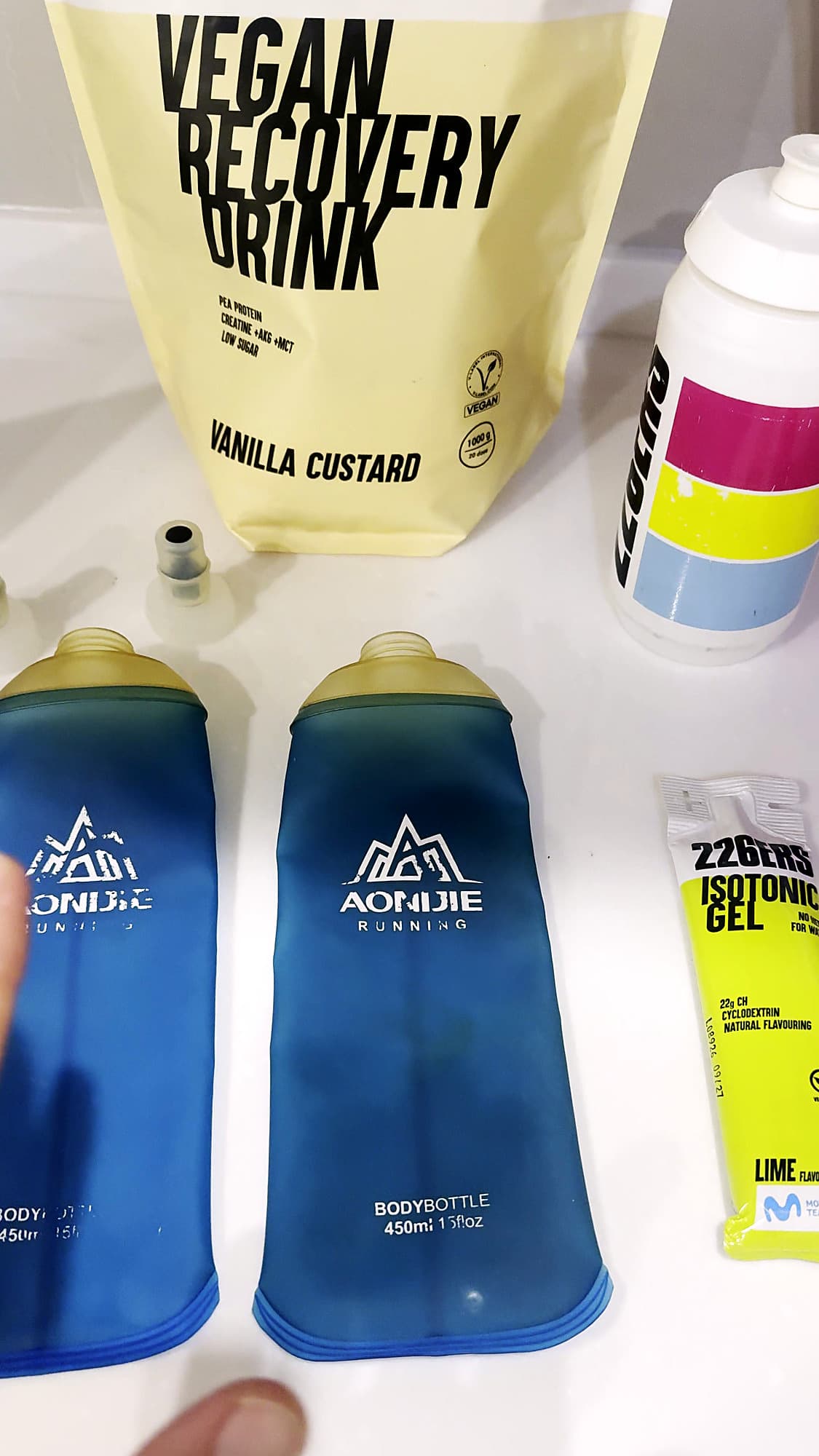
Typical mistakes on a long session with climbing
The first: fuelling by feel, that is, remembering the gel when you are already running on empty. The second: heading out on a hilly long session with a single bottle of plain water and hope of a shop along the way. The third: trying a new product on the day of an important race instead of in training. The fourth: counting only what you eat on the move as fuelling, and skipping recovery. For Pedro the scheme worked predictably: the long session went to plan, a few Strava crowns, and a short conclusion that “the fuelling works”. A result like that comes not from a particular wrapper, but from the fact that the numbers were worked out before he left the house.
How to bed in your own fuelling plan in training
The gut trains just like the legs. First you choose a target number of grams of carbohydrate per hour, then for several weeks in a row you repeat the same plan on your long sessions, recording what was eaten, when, and how well you tolerated it. Change one parameter at a time: the amount of carbohydrate, the concentration of the drink, or the timing of the gel. By race day you should be left with a plan that contains not a single unfamiliar element, including the flavour of the drink and exactly how you get the gel out of your pocket on the move.
What in the 226ERS range suits a plan like this
For the logic of “carbohydrate in the drink plus a gel in the pocket”, 226ERS has ready-made options: the SUB9 and High Fructose energy drinks for the bottle, and High Energy gels for topping up the grams as you go. The choice between them depends on duration and intensity: the longer the work and the higher your target carbohydrate intake per hour, the more it matters that the carbohydrate sources in the drink and in the gel work together and do not overload the stomach. Choose during training in the same conditions you are planning to race in: the same terrain, the same temperature, the same kit.
The conclusion is simple: you go into a hilly two-hour long session with a calculated plan, not with intuition. Pick your target grams of carbohydrate and volume of fluid per hour, split them between the bottle and the gel, and leave your recovery drink somewhere it will definitely be waiting for you. The 226ERS energy drinks and gels that make up a plan like this are available at spacefuel.kz.


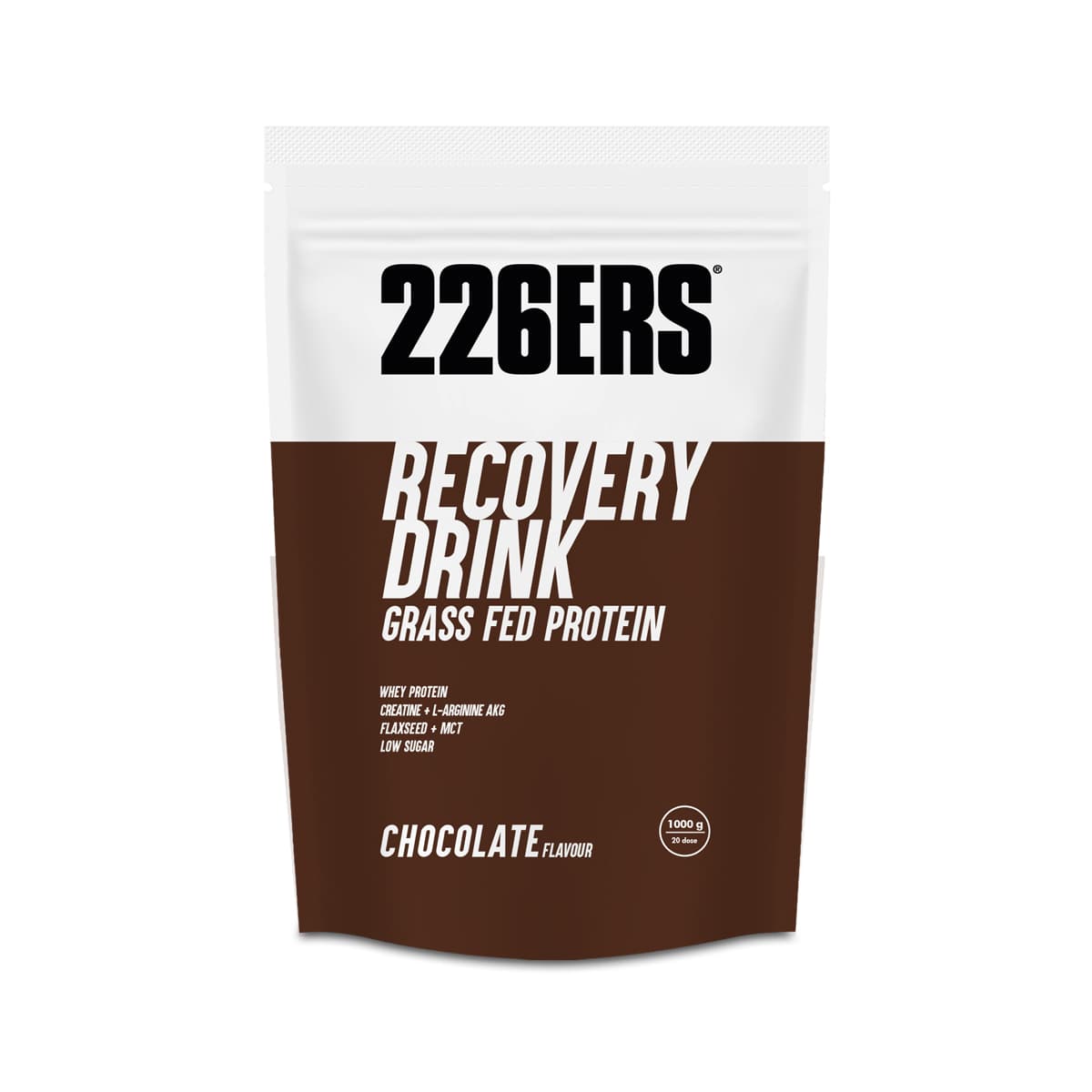



Photo: Кадры из видео Педро Висуэте, амбассадора 226ERS
FAQ
How much carbohydrate per hour should you take on a long session with climbing?
For work lasting longer than an hour and a half, the usual guide is 60–90 g of carbohydrate per hour. On a 20 km long session with 850 metres of climbing, Pedro Visuete worked to 65–70 g of carbohydrate and 0.5 l of fluid per hour.
Which is better: carbohydrate in the drink or in a gel?
It is more convenient to combine them: the drink covers hydration and the bulk of the carbohydrate in small portions, while the gel tops up the rest to your target number. In Pedro’s plan that is 45 g of carbohydrate in the bottle and 22 g in the gel, which makes 67 g per hour.
When should you drink a recovery shake after a long session?
In the first tens of minutes after the work, while the muscles are most receptive to carbohydrate and protein. The easiest approach is to leave a ready-made shaker in the car or in a bag, so you do not lose that window on the way home.
Read next