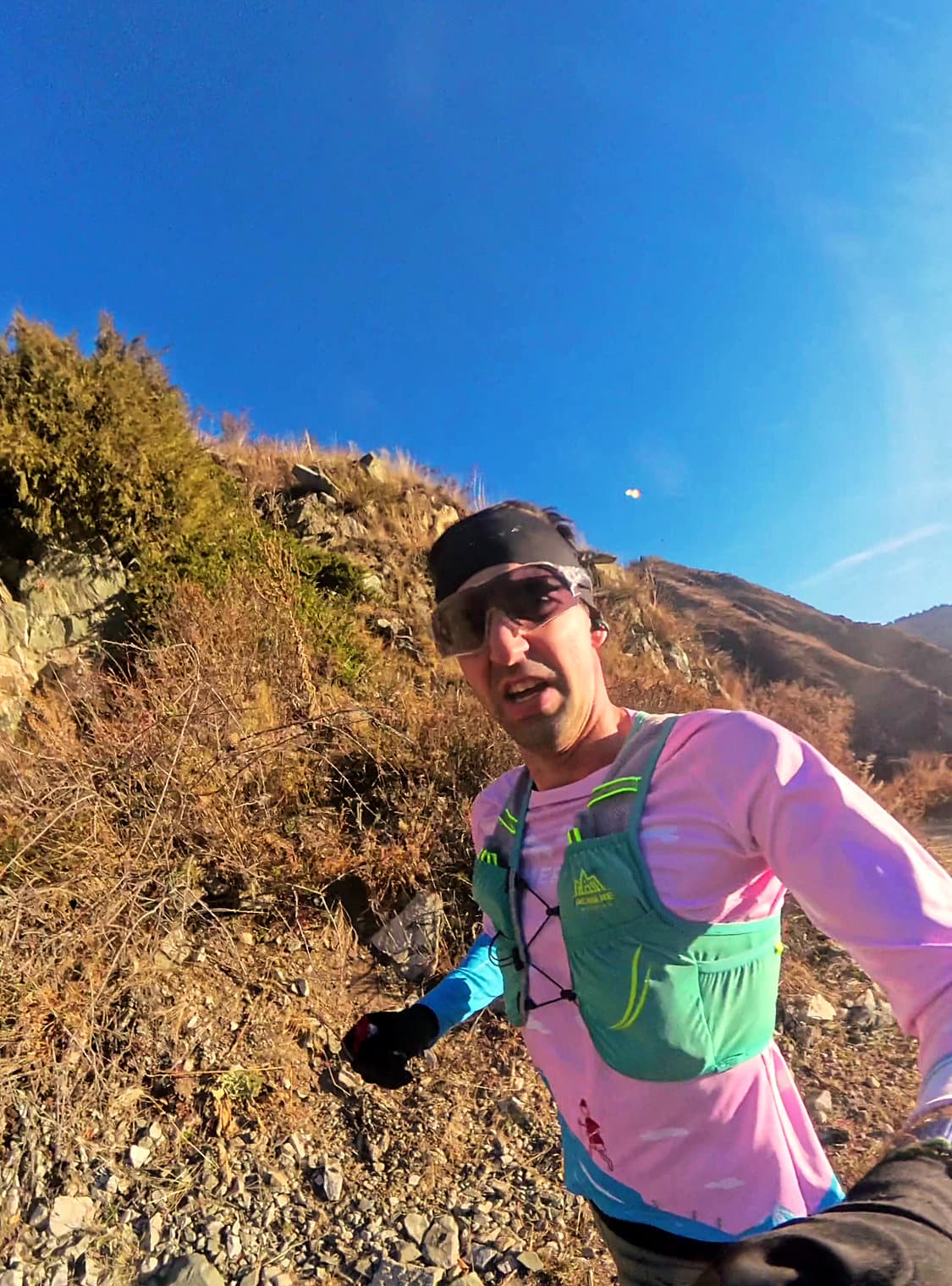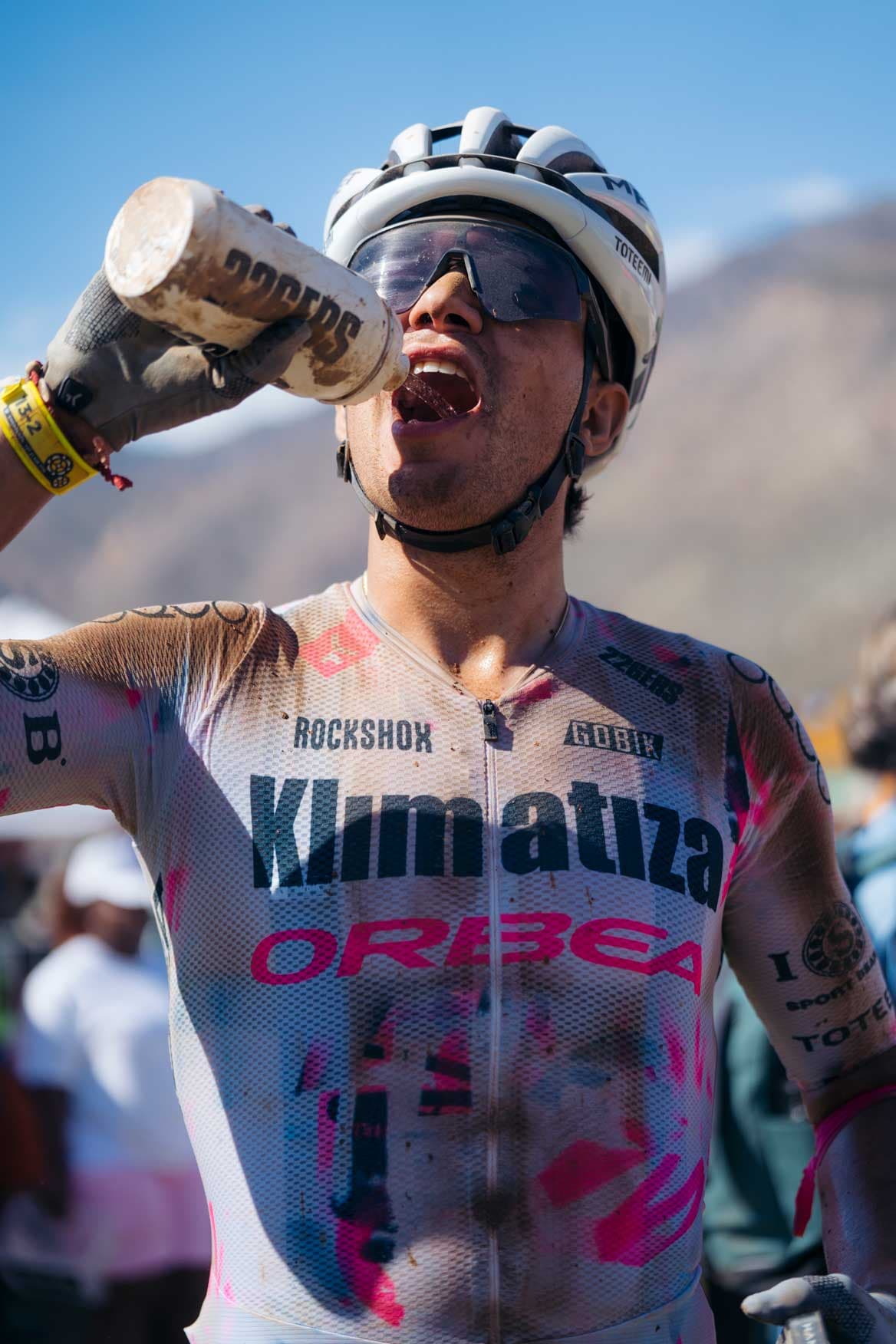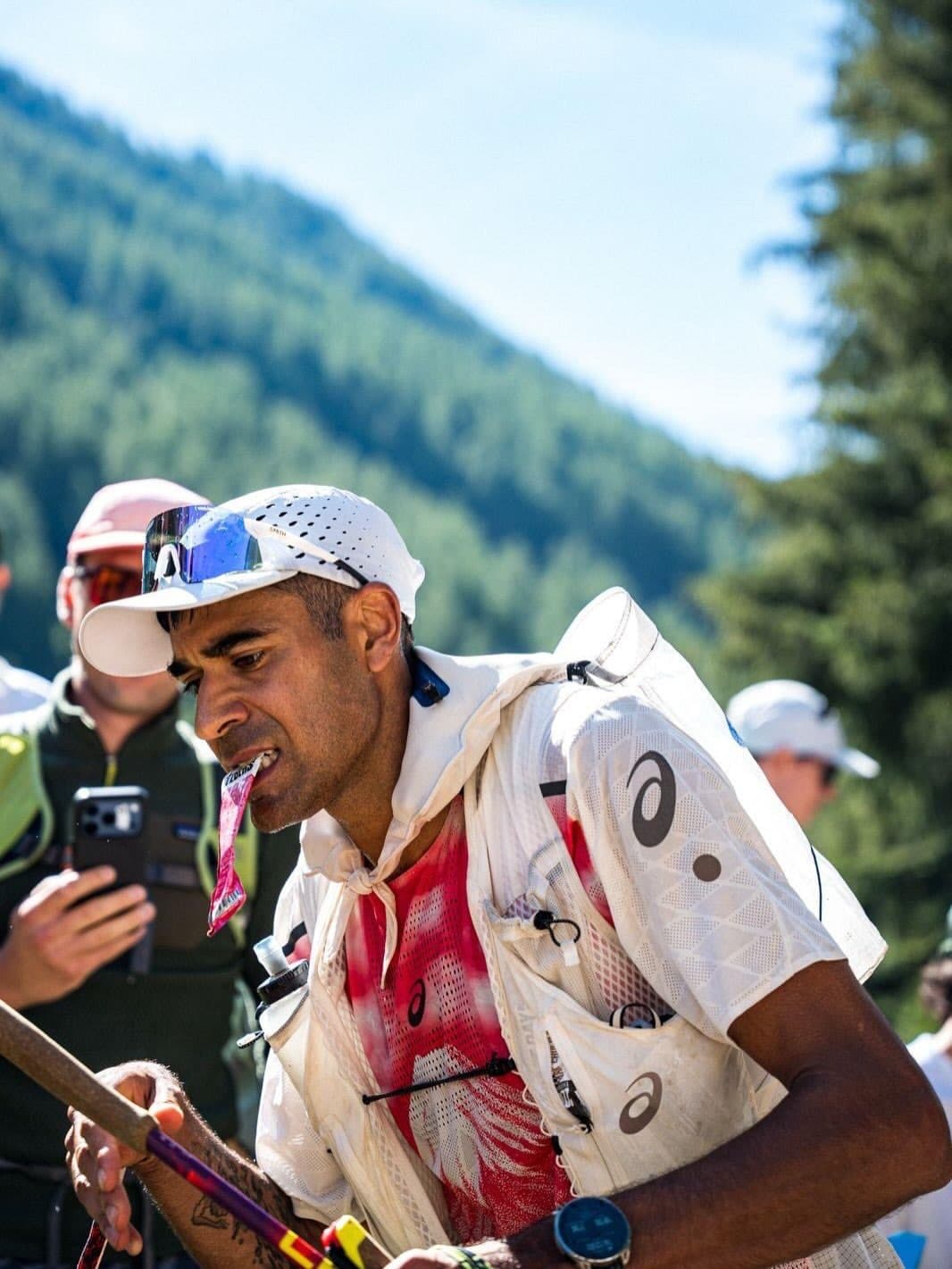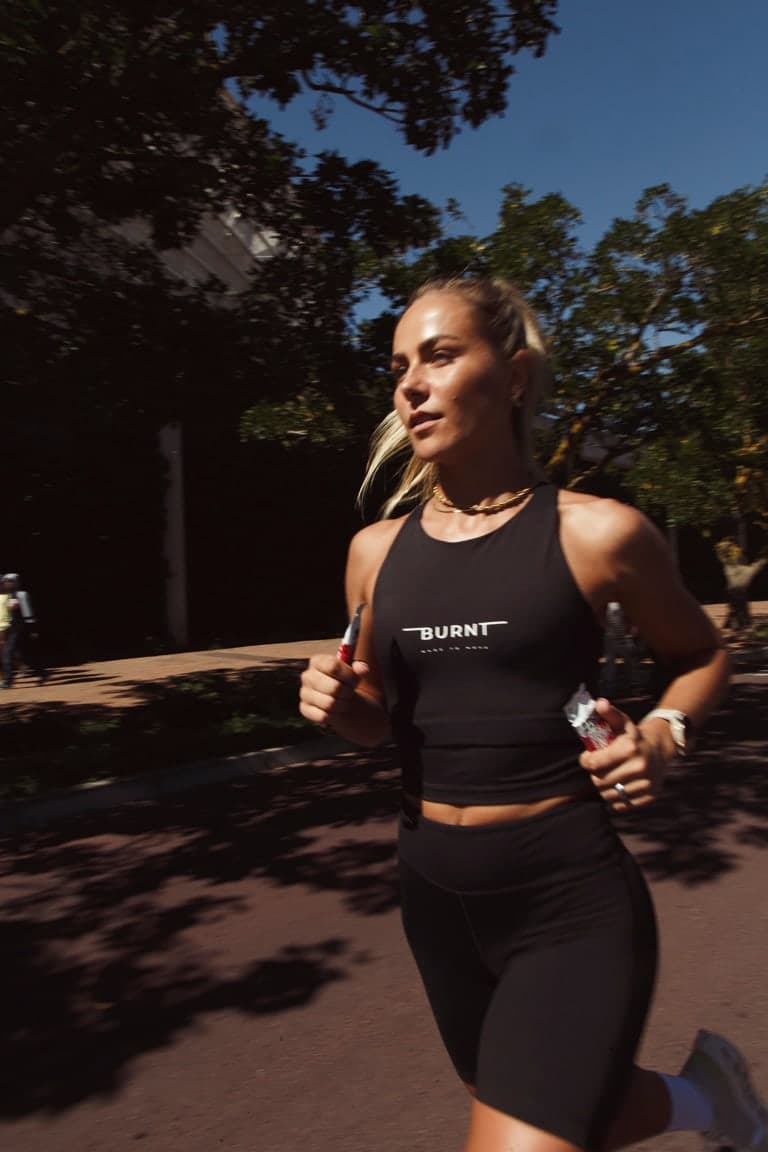
If you are training for a marathon, a half marathon or a trail race, the most common question before the weekend is a simple one: what to take on a long run and how much of it you actually need. Let us work through a specific example. On 7 November 2026, 226ERS showed how brand ambassador Pedro Visuete packs his fuelling for a Sunday long run along the Japanese Road. The distance is 20 km with 850 metres of elevation gain, and the estimated time is around two hours. This piece will be useful for runners who do their long runs in the cold months and want to stop taking fuel at random.
Work out the session first, then pack the bag
Pedro's logic is the reverse of the usual one: not “what is in the box” but “what the session demands”. The parameters of the long run are known in advance: 20 km, 850 metres of climbing, two hours of work. From those comes the calculation: 0.5 l of water and 65–70 g of carbohydrate per hour. Only then does he choose the format of the product, that is, a drink and a gel. This order saves you from two extremes: taking far too much and carrying dead weight, or heading out for two hours empty handed.
Why grams per hour is more precise than going on feel
Your stomach and your muscles do not work in kilometres; they work in time under load and in grams. That is why sports nutrition counts carbohydrate in grams per hour and fluid in millilitres per hour. For prolonged aerobic work the usual guide sits roughly between 60 and 90 g of carbohydrate per hour, and tolerance of the upper end is trained separately. Pedro's 65–70 g per hour falls inside that corridor, and it works precisely because it was calculated in advance rather than guessed at mid run.
A flask of energy drink covers both fluid and carbs at once
The base of the kit in winter is Energy Drink in a flask, 45 g of carbohydrate. The convenience of a drink is that it solves two tasks in one movement: you drink and at the same time you take on carbohydrate and electrolytes. On a long run that cuts down the number of decisions. You do not need to think about water separately and food separately; it is enough to stick to a sipping routine. A practical trick: split the volume of the flask into equal portions and drink to a schedule, for example every 10–15 minutes, rather than when you feel thirsty.
A gel in the pocket: topping up carbs in the second half
The second item in the kit is an Isotonic Gel with 22 g of carbohydrate, and it sits in a pocket. Together with the flask that comes to 67 g of carbohydrate, exactly the 65–70 g corridor the session was built around. An isotonic gel is convenient because you do not have to wash it down with a large volume of water, and that matters when your fluid is limited to a single flask. The way it is carried works too: what you need later sits separately and comes out with one hand, with no stopping and no fumbling in a pack.
850 metres of climbing change the pace of intake, not the fuel
Elevation shifts the load: on the climbs your heart rate is higher, your breathing is harder and your stomach has a tougher time. The general practice is simple: drink and eat on the flatter sections and the descents, not halfway up a long climb. If the route has long stretches of climbing, it is worth marking in advance the points where it is comfortable to take a few sips or a gel. That is planning rather than improvisation, and it is exactly what turns grams on paper into grams actually taken in.
A winter long run: keep the flask and the gel warm
In the cold the mechanics of fuelling change. Fluid in an open flask cools quickly, drinking something cold is unpleasant, and the amount you get through quietly drops. In freezing temperatures a gel becomes thicker and is harder to squeeze out. Hence a simple rule: the flask and the gel travel close to the body, under your outer layer, not in an outside pocket. And a second one: in winter thirst is felt less than in summer, even though losses through sweat and breathing continue, so a sipping schedule matters more than a subjective urge to drink.
A shaker in the car: recovery starts in the car park
The third element of the plan is not on the route at all: a Recovery shaker waits in the car. That makes particular sense in winter, when the body cools quickly after two hours of work and the drive home can take a while. The general principle of recovery is carbohydrate and protein in the first hour to hour and a half after prolonged work, while the body is most receptive to refilling its stores. A shaker prepared in advance removes the main reason recovery gets skipped, namely not having a ready option to hand.
Strava segments on a long run: how not to wreck the session
The outcome of that outing: the long run went to plan, and a few Strava crowns were picked up along the way. The order of those words matters. A long run stays an aerobic session, and crowns appear as a side effect of good form, not as the goal. If you do want to work on segments, those efforts are planned in advance and fitted into the aim of the day. The typical mistake looks different: someone heads out for an easy long run, sees another athlete's time on a climb and turns two aerobic hours into ragged interval work.
Common mistakes on a long run
The first: assuming you can run two hours “on water” and setting off with no carbohydrate. The second: drinking only once your throat is dry, especially in the cold. The third: trying a new gel or a new drink for the first time at an important race rather than on a long run. The fourth: not calculating at all, when fuel is chosen on the principle of “whatever is left in the bag”. A long run exists precisely so you can test the plan: taste, tolerance, how convenient the packaging is, whether the flask cap works in gloves.
The conclusion is simple: a long run bag is packed from a calculation, not from habit. Work out the time and the elevation, convert them into millilitres and grams per hour, lay everything out so it can be reached with one hand, and leave recovery waiting in the car. The 226ERS products this plan runs on, including the SUB9 and High Fructose energy drinks and the High Energy gels, can be found at spacefuel.kz.



FAQ
How much water and carbohydrate should you take on a two hour long run?
For his 20 km long run with 850 metres of climbing, Pedro Visuete worked to 0.5 l of water and 65–70 g of carbohydrate per hour. His kit delivered 67 g of carbohydrate: 45 g in the Energy Drink in his flask and 22 g in an Isotonic Gel.
Why take a drink with carbohydrate rather than just water?
A drink covers both fluid and carbohydrate in one movement and adds electrolytes on top. On a long run that reduces the number of decisions: you simply stick to a sipping routine instead of thinking about water separately and food separately.
Where should you keep the flask and the gel on a winter session?
Close to the body, under your outer layer, rather than in an outside pocket: in the cold fluid cools quickly and a gel thickens and is harder to squeeze out. Drink to a schedule as well, because thirst is felt less in winter.