Fuelling in the cold works differently from summer, even though the body's needs barely change. Thirst is blunted in the cold, a bottle goes cold within half an hour, and a gel in an outer pocket turns into a dense lump you simply cannot squeeze out on the move. Yet on a ski or running session in sub-zero weather you keep losing fluid and burning carbohydrate at roughly the same rate as in the warm season. This piece is for anyone heading out onto the snow in November and December: how to organise your drinking and fuelling in the cold, what to keep close to your body, and why in winter it is safer to live by a schedule rather than by feel.
Why you drink less than you need in the cold
Cold reduces the sensation of thirst: peripheral blood vessels constrict, blood is redistributed towards the core, and the brain gets the signal that fluid levels are fine. Two less obvious routes of loss are at work alongside this. The first is breathing. Freezing air holds almost no moisture, and every exhalation carries away water the body has spent on warming and humidifying the air you breathe in. The second is sweat under the layers of clothing, which evaporates unnoticed while the volume lost is entirely real. As a result, by the end of a two-hour session an athlete can be just as dehydrated as in summer heat, only without any subjective warning.
Carbohydrate is not burned more slowly in winter
A winter session often costs more energy than it appears to. Clothing and kit add weight, the skiing action brings in the torso and arms, and the body spends extra heat on keeping warm. The general guideline for work lasting longer than an hour stays the same: around 30 to 60 g of carbohydrate per hour, increasing on long high-volume sessions if your stomach is trained for it. The main winter problem is not the amount but the access: fuel that has frozen, or that you can only reach by taking off your gloves and undoing three layers, effectively does not exist.
A gel in your inner pocket: how to keep it from setting
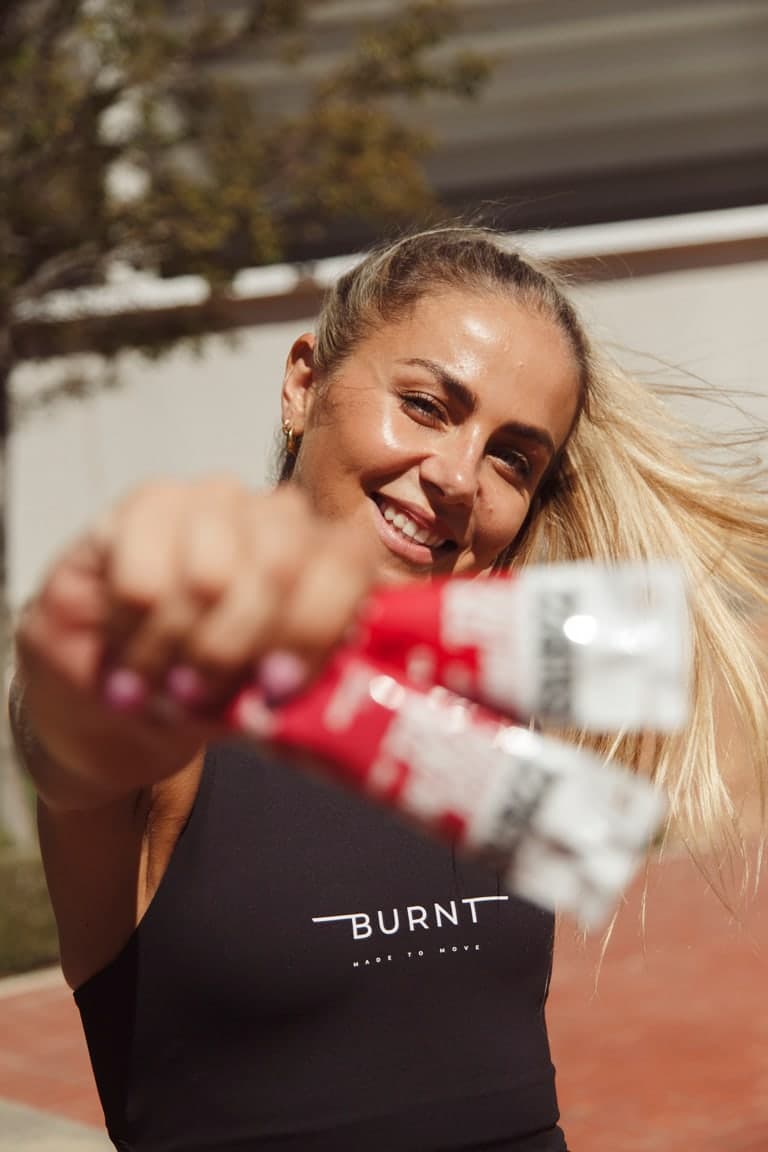
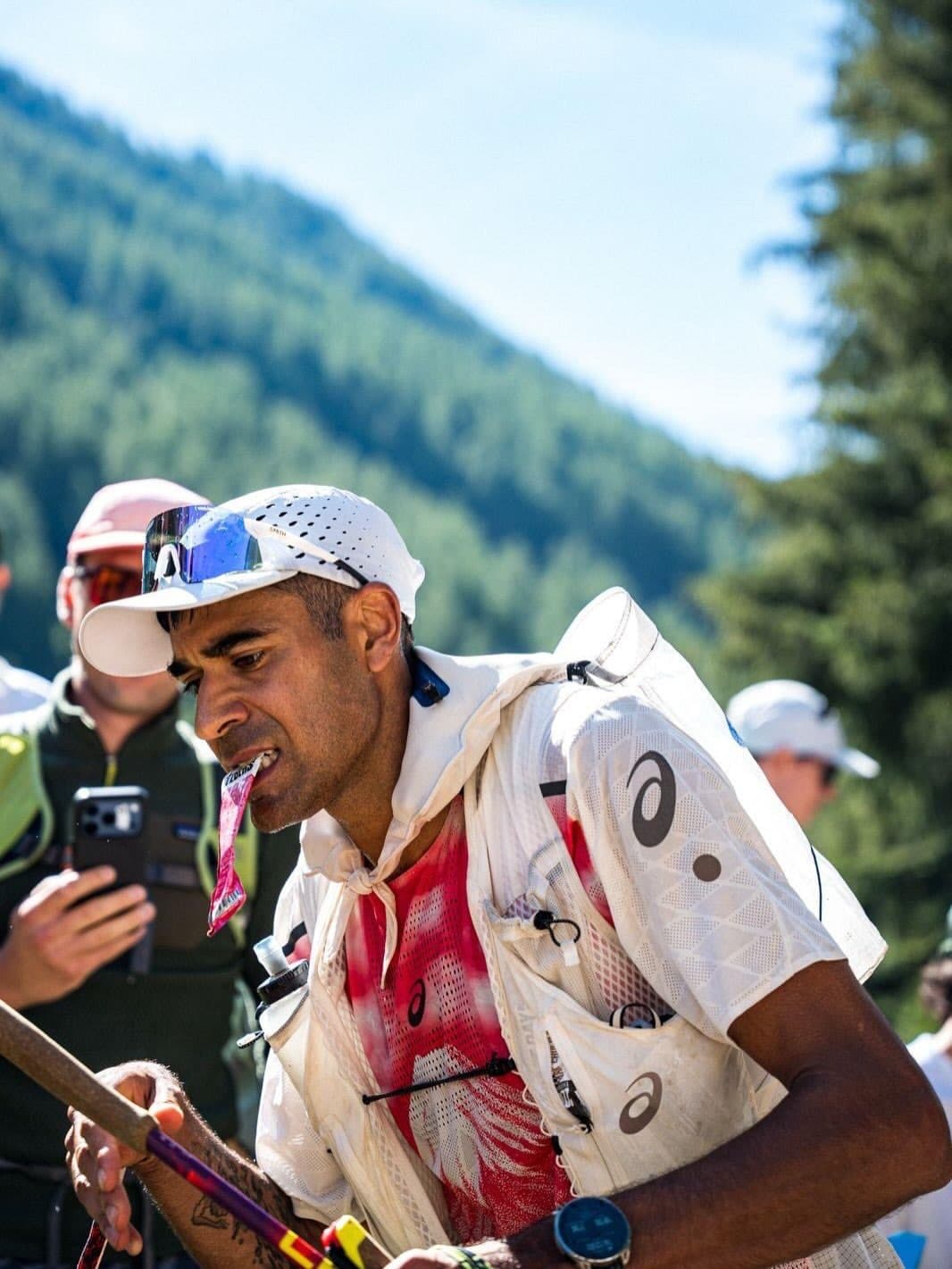
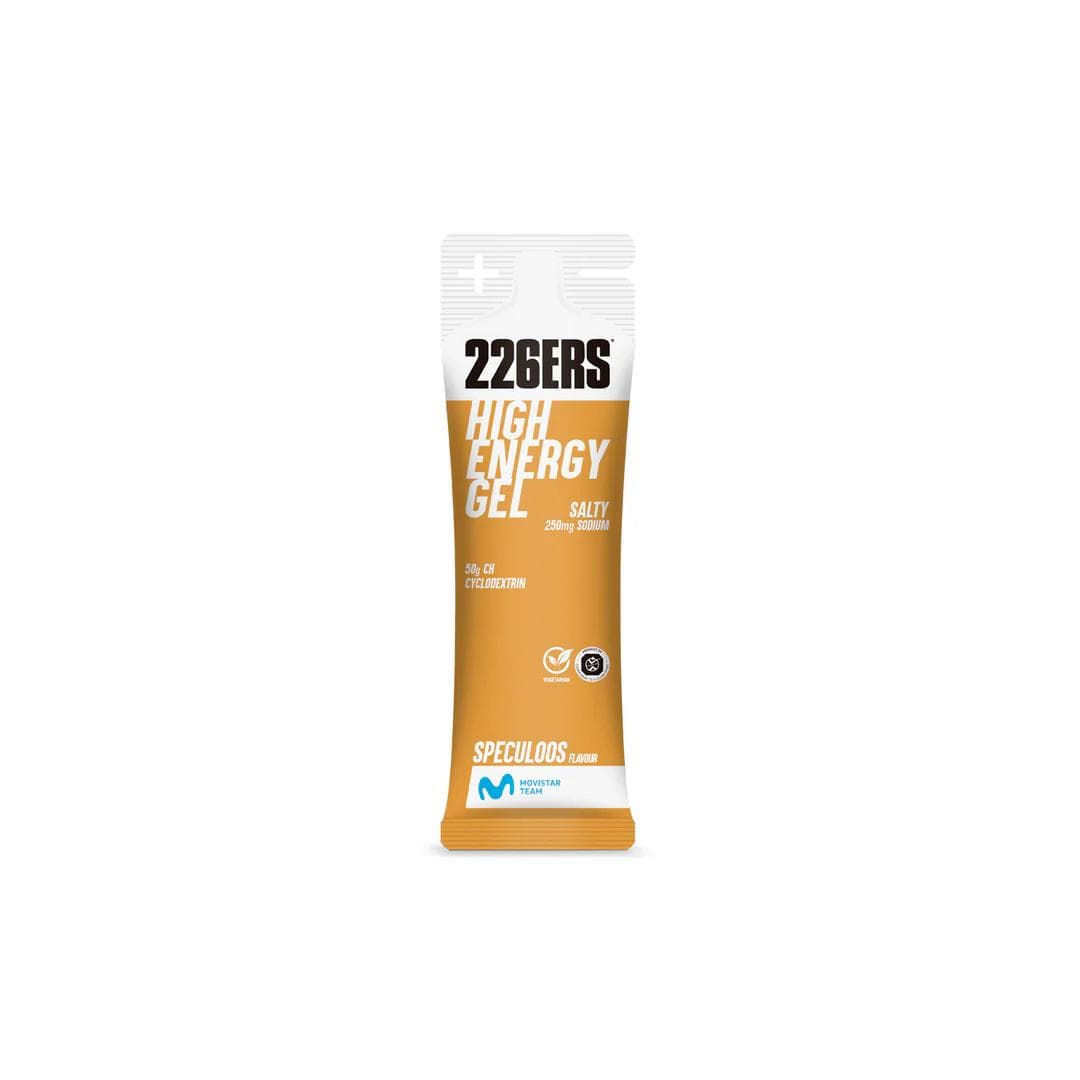
A simple rule that saves a lot of frustration out on the trail: gels live in an inner pocket, close to the body. Body heat keeps the product soft, so at the feed point the gel squeezes out in one movement instead of having to be chewed. In an outer jacket pocket, or in a waist pack worn over your clothing, the same gel thickens and stretches in the cold, becomes hard to swallow and even harder to wash down. The mechanics are worth rehearsing separately: opening a sachet in thick gloves is almost impossible, so many athletes tear the corner in advance or choose a format that opens with one hand.
A warm isotonic drink in an insulated flask
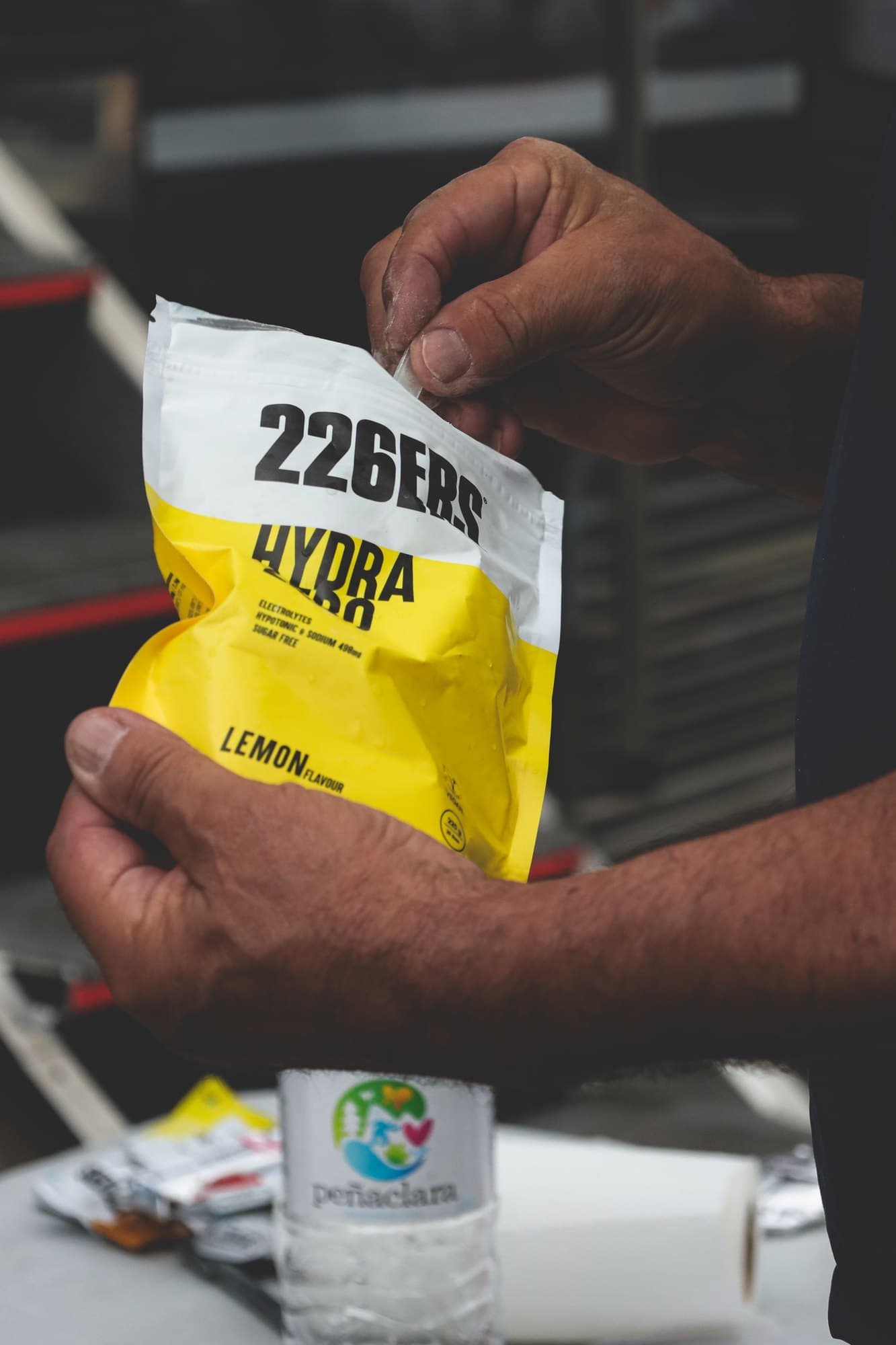
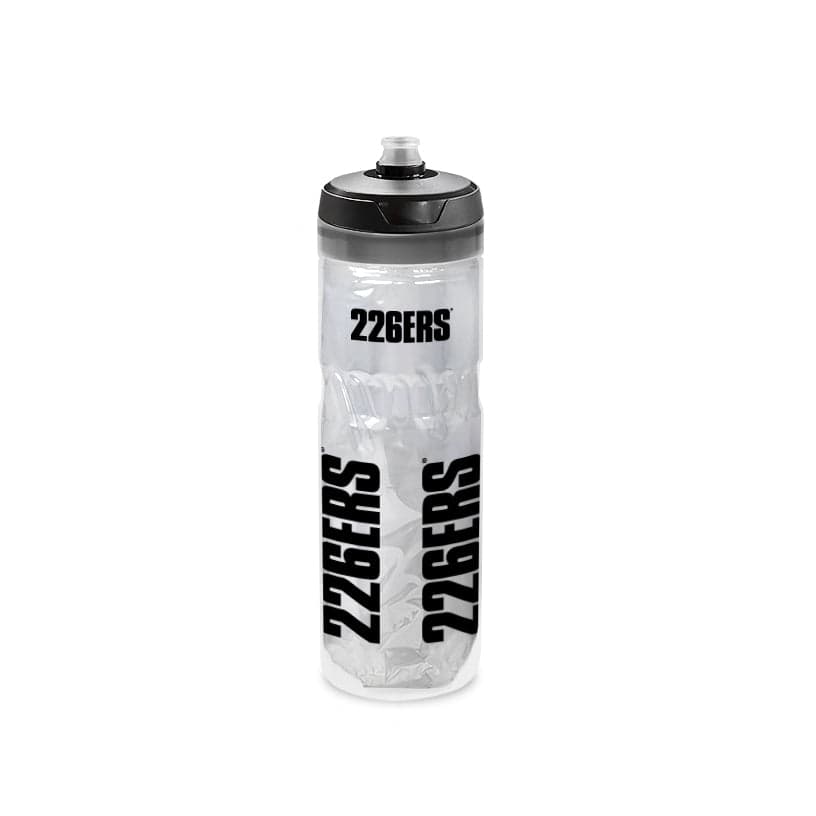
The second half of the winter plan is drinking. A warm isotonic drink in a thermal flask solves three problems at once: it does not freeze, it does not trigger that unpleasant cold spasm in the throat, and you genuinely want to drink it, which means you will get through the volume you planned. The temperature should be moderately warm rather than hot: boiling water scalds you on the move and is awkward in motion. Soft flasks and hydration systems are vulnerable at the valve and the tube in winter: after every sip, blow the tube clear so the remaining liquid does not turn into a plug. The flask itself is better kept inside your pack or under your outer layer rather than outside in the wind.
Drink by the clock, not by feel
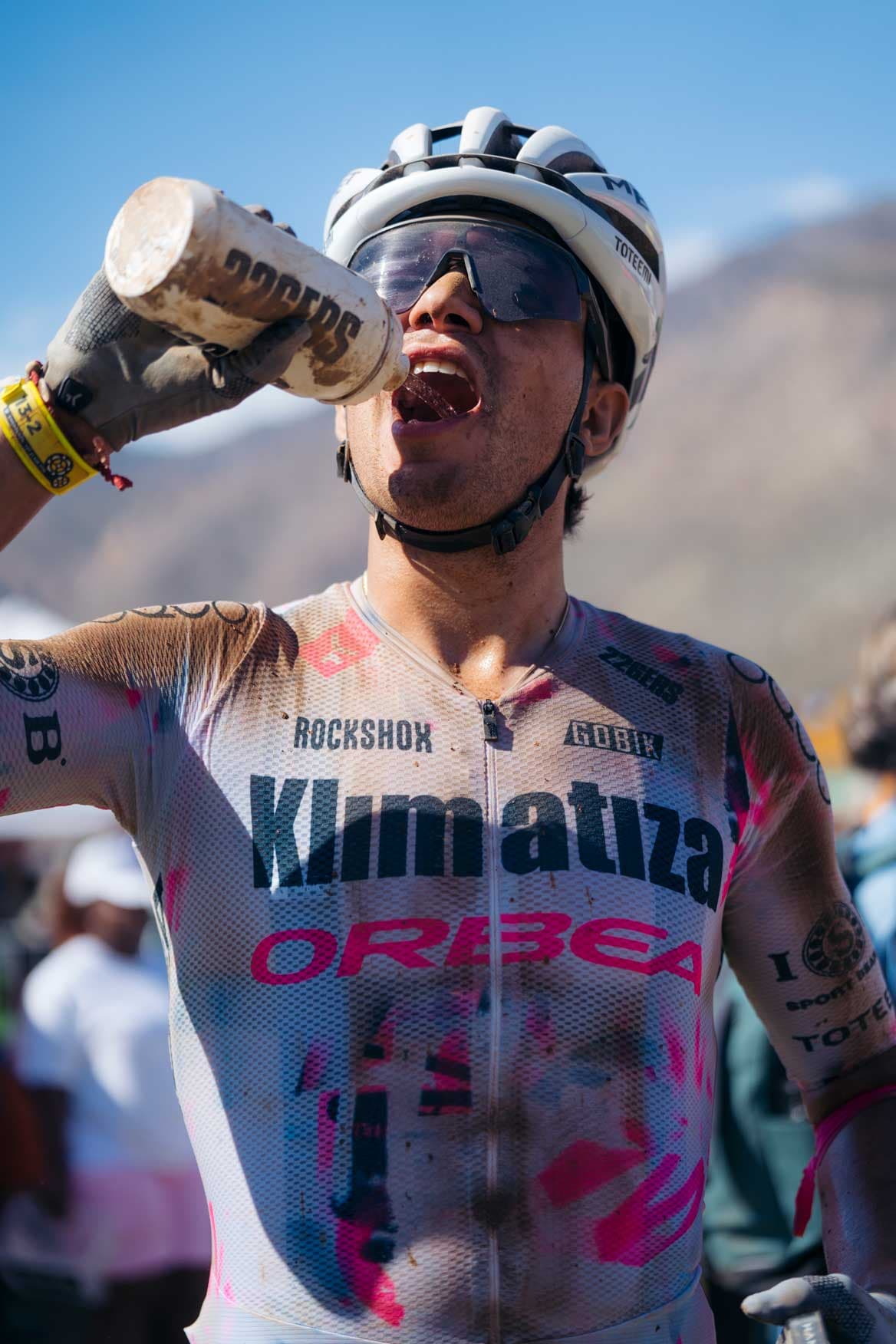
Skier Ilyas, who is supported by 226ERS, is putting in his pre-season base work in Ridder in the autumn of 2026 and builds his fuelling strictly to a schedule: he drinks by the clock, even when it feels unnecessary. That is a sound principle for any athlete on snow. Thirst runs late in winter, so the timer takes over as the sensor: a few sips every 15 or 20 minutes, a gel at a minute chosen in advance. This approach removes the familiar picture where an athlete drinks nothing for the first hour and a half, then tries to make up the volume in one go and ends up with a heavy stomach.
Pre-season base work: the best time to rehearse your fuelling plan
The base period and the first high-volume weeks on snow are not only about technique and glide. This is the window in which you can test the whole winter logistics without putting a result at risk: which pocket the fuel sits in, how many seconds it takes you to get a gel out on the move, whether the flask leaks, how your stomach handles a warm sweet drink in the cold. By race day all of these decisions should be automatic. Experimenting with a new gel texture or an unfamiliar isotonic flavour during a race is an unnecessary risk, especially when the cost of a mistake is higher in freezing conditions: a five-minute stop means getting chilled.
Typical winter fuelling mistakes
Four come up most often. First: fuel and water are carried on the outside, in the wind, and are unusable by the middle of the session. Second: the athlete heads out into the cold on an empty stomach, assuming that cold suppresses appetite, and hits an energy slump in the second hour. Third: drinking only starts once thirst appears, which is to say too late. Fourth: cutting carbohydrate out of winter sessions altogether on the grounds that it is only volume work; on long outings this leads to getting chilled, because the body does not have enough fuel to maintain its heat.
What to pack before heading out onto the snow
The minimum winter kit looks like this: a warm isotonic drink in a thermal flask, one or two gels in an inner pocket, spare fuel in case the session runs longer than planned, and a clear intake schedule talked through before you set off. It helps to decide in advance exactly where you will drink if the route crosses open, wind-exposed sections: better to take a sip somewhere sheltered than to stop on a summit. After the session the recovery window closes faster in the cold, because the first thing you want is to change and warm up, so it makes sense to keep a drink or a snack ready in the car or in the changing room.
In winter it is not the athlete who endures who wins, but the one whose fuelling is sorted before they step onto the track: a warm drink, an accessible gel and a watch instead of sensations. Rehearse this plan during your base work and it will run itself by the time you race. 226ERS products, including gels and isotonic drinks for winter volume, are available at spacefuel.kz.


FAQ
Why do you not feel like drinking in freezing weather, yet still need to?
In the cold the blood vessels constrict, blood is redistributed towards the core and the sensation of thirst is blunted. Meanwhile fluid keeps leaving through sweat under your clothing and with every exhalation into dry, freezing air, so you need to drink to a schedule rather than by feel.
How do you keep a gel from freezing on a ski session?
Keep your gels in an inner pocket, close to the body: body heat stops the product thickening, and at the feed point the gel squeezes out in one movement. In an outer pocket in freezing weather it becomes dense and hard to swallow.
Which isotonic drink should you take on a session in sub-zero weather?
A warm isotonic drink in an insulated flask: it does not freeze, it does not cause a spasm in the throat and you genuinely want to drink it. The temperature should be moderately warm, and if you use a tube, blow it clear after every sip so no plug forms.