Sugar-free electrolytes are becoming the main drink of the off-season: the racing season is over, sessions have dropped below an hour, yet the gym and the turbo trainer still make you sweat. This article is about why you need salt in your bottle once carbohydrate is no longer necessary, and how to choose a convenient format: a sachet for 500 ml or an effervescent tablet. It will be useful for runners, cyclists and triathletes who have moved into their base period and want to keep drinking deliberately rather than now and then.
Why salt matters when a session is under an hour
Carbohydrate in a bottle solves one problem: keeping glycogen stores topped up when the work lasts a long time or runs at high intensity. In an easy session under an hour your own stores are usually enough, and the extra calories in a drink simply are not needed. Fluid and sodium losses are a different story: they start in the first few minutes and depend not on duration but on how hot you get. Sodium holds water in the body, helps fluid be absorbed and takes part in nerve signalling and muscle function, so in the off-season it makes sense to keep electrolytes in the bottle rather than sugar.
Why you sweat more in the gym than it feels
An indoor space removes the main cooling mechanism: airflow. Outdoors the oncoming air evaporates your sweat and carries the heat away, whereas in the gym or on the turbo trainer you are effectively training in windless heat, often above a comfortable temperature and in heavy clothing. Sweat drips onto the floor and the frame, yet it subjectively feels as though the session was easy. Add to that the dry air of the heating season and a thirst response that is blunted in cool weather: in winter people drink less even though they lose a comparable amount to summer.
How sugar-free electrolytes differ from an isotonic drink
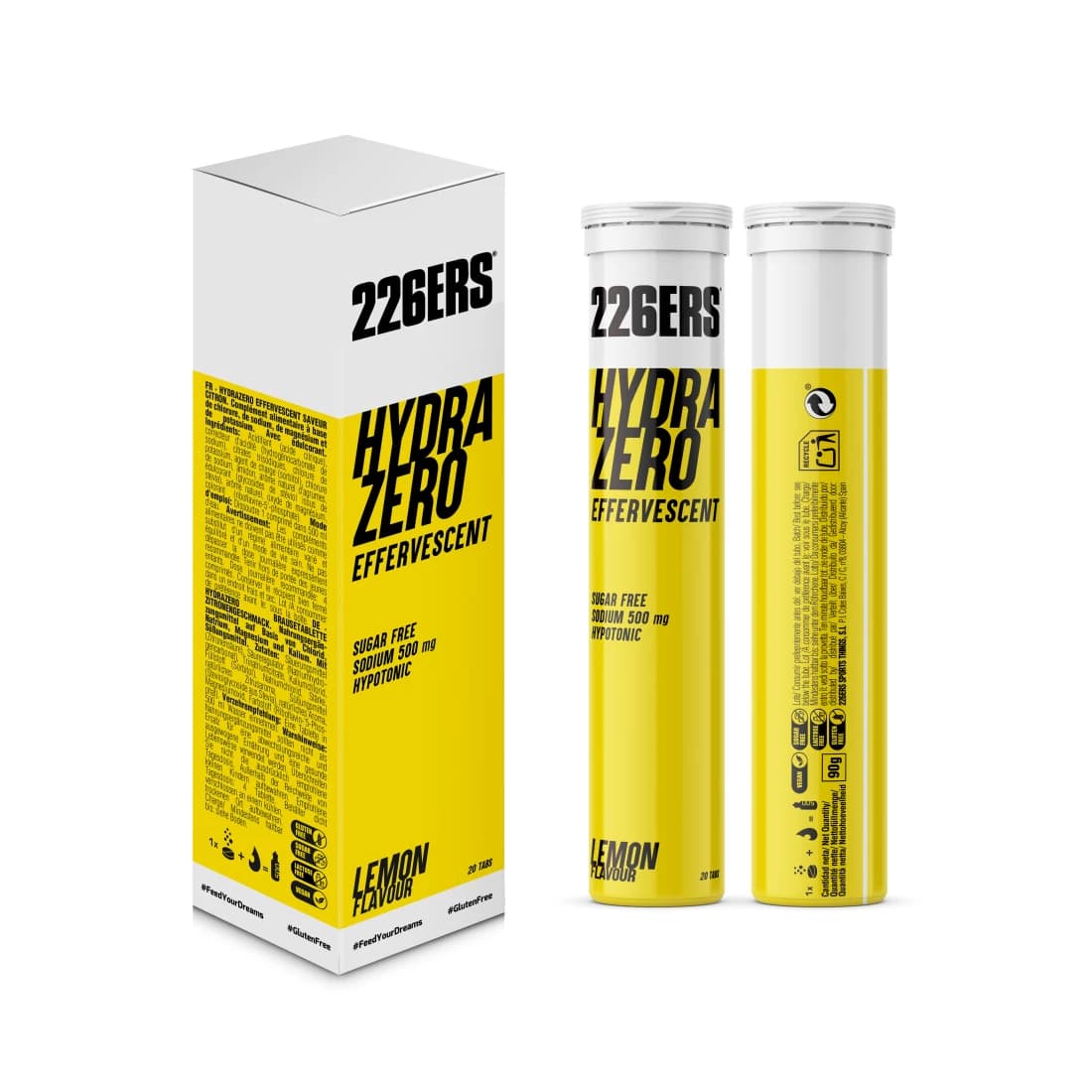
An isotonic drink and an electrolyte drink solve different problems. An isotonic carries carbohydrate along with minerals, and its point is energy on course and in long sessions. Hydrazero is electrolytes with no sugar and no calories, that is, the mineral part alone with no fuel. A drink like this lets you separate two things many people mix up: hydration and fuelling. In the base period, when volumes are modest and you comfortably get your calories from food, water with electrolytes covers the need completely, and in season the same principle helps you count carbohydrate precisely, separately from fluid.
Hydrazero: a 500 ml sachet or an effervescent tablet
There are two formats, and people choose between them for practical reasons. The sachet is measured for 500 ml: handy when you prepare your bottles in advance and do not want to measure anything out. The effervescent tablet drops into any bottle of water and is easier to keep in a sports bag, a rucksack or a suitcase, where powder risks spilling. The flavours are lemon, orange and tropical, and that is not a cosmetic detail: people drink more of what tastes good to them, and over several months of the off-season sameness gets tiring, so it is worth rotating flavours.
How much to drink in off-season sessions
The working principle is simple: drink to a schedule, not to thirst. A few sips every 10 to 15 minutes keeps losses within sensible limits and does not leave your stomach feeling heavy. To work out your own rate, weigh yourself before the session and immediately afterwards, without wet clothing: the difference in weight is mostly lost fluid. The spread between people is enormous, and a heavy sweater loses several times more than the person next to them in the gym under identical conditions. So somebody else's drinking plan is only a reference point, and your own emerges after a few measurements.
Signs that you are losing a lot of salt in sweat
There are simple everyday markers. Sweat tastes noticeably salty, it stings the eyes, white marks are left on dark kit and on a cap once they dry, and a crust appears on the bike frame. People like this usually notice that on plain water they feel worse towards the end of a long session: sluggishness sets in, the head feels heavy, sometimes there is nausea. That is not a diagnosis, but it is a reason to add electrolytes to the bottle and see whether how you feel changes at the same workload.
Common mistakes with electrolytes
The first: drinking only plain water in large volumes during long, sweaty sessions, flushing out sodium and making the problem worse instead of solving it. The second: carrying on through the off-season pouring a race carbohydrate drink into the bottle, adding calories the body never asked for in the base period. The third: not drinking at all in winter because you do not feel like it. The fourth: trying electrolytes for the first time on the morning of an important race and getting an unfamiliar gut reaction. The fifth: mixing the drink stronger than the packet says in the hope of speeding up the effect: a concentrated drink is harder to get down and causes discomfort more often.
How the off-season prepares you for next season
A period of short sessions is cheap time for experiments: the cost of a mistake is zero, because nobody is counting the result. Now is exactly when to work out which flavour you are willing to drink for an hour straight, which format is easier to take to the gym and which one on a trip, and how much fluid you actually lose in your usual session. By spring you will have a settled habit and a clear plan, and all that remains is to build carbohydrate on top of it for long sessions and races, rather than inventing it in a panic three days before the start.
The off-season does not cancel hydration, it only changes what goes into it: carbohydrate leaves the bottle, salt stays. Sugar-free electrolytes cover that job in the gym, on the turbo trainer and on short runs, while the two formats, sachet and effervescent tablet, mean you do not have to bend your habits to fit the packaging. You can find Hydrazero and other endurance nutrition at spacefuel.kz.

FAQ
Do you need electrolytes if the session is under an hour?
Carbohydrate in the bottle is usually unnecessary in a session like that, while fluid and sodium losses start in the first few minutes and depend on how hot you get. That is why it makes sense to keep sugar-free electrolytes in the bottle during the off-season.
How do sugar-free electrolytes differ from an isotonic drink?
An isotonic carries carbohydrate along with minerals, and its job is to provide energy in long or intense work. Hydrazero is electrolytes with no sugar and no calories, that is, the mineral part alone, which covers hydration separately from fuelling.
What formats does Hydrazero come in and which flavours are there?
There is a sachet measured for 500 ml and an effervescent tablet that you drop into a bottle of water. The flavours are lemon, orange and tropical.