How many isotonic gels can you take in an hour: the question comes up the moment your vest pocket holds fuel that needs no water to wash it down. Let us work through it with 226ERS Isotonic Gel: how many carbohydrates are in one stick, why different flavours carry different limits and how to build a winter long session plan around gels like these. This will be useful for runners, cyclists and triathletes who train in the cold and would rather not carry extra water.
Isotonic gel: the water is already inside the stick
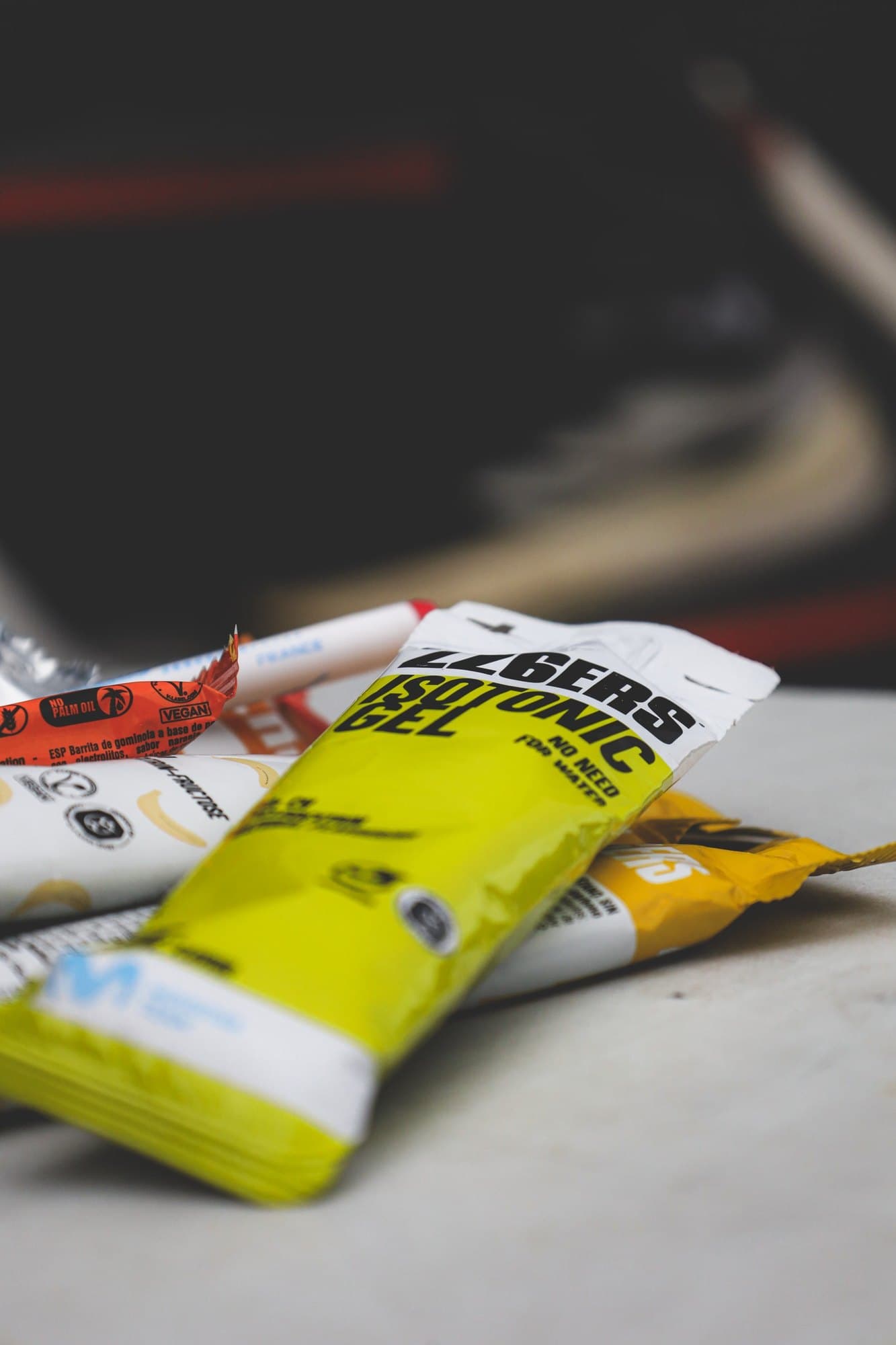
Isotonic Gel from 226ERS is a 68 g stick with the water built into the formula itself. One stick holds 22 g of carbohydrates, of which only 1.4 g is sugar, and the base of the formula is cyclodextrin. Hence its main practical feature: you do not have to drink water with this gel, because in the stomach it is already close to an isotonic solution. A thick, concentrated gel does not behave that way: it almost always needs a few sips of water, otherwise the body pulls fluid into the gut by itself and heaviness sets in.
How many sticks per hour: up to three on watermelon and lime
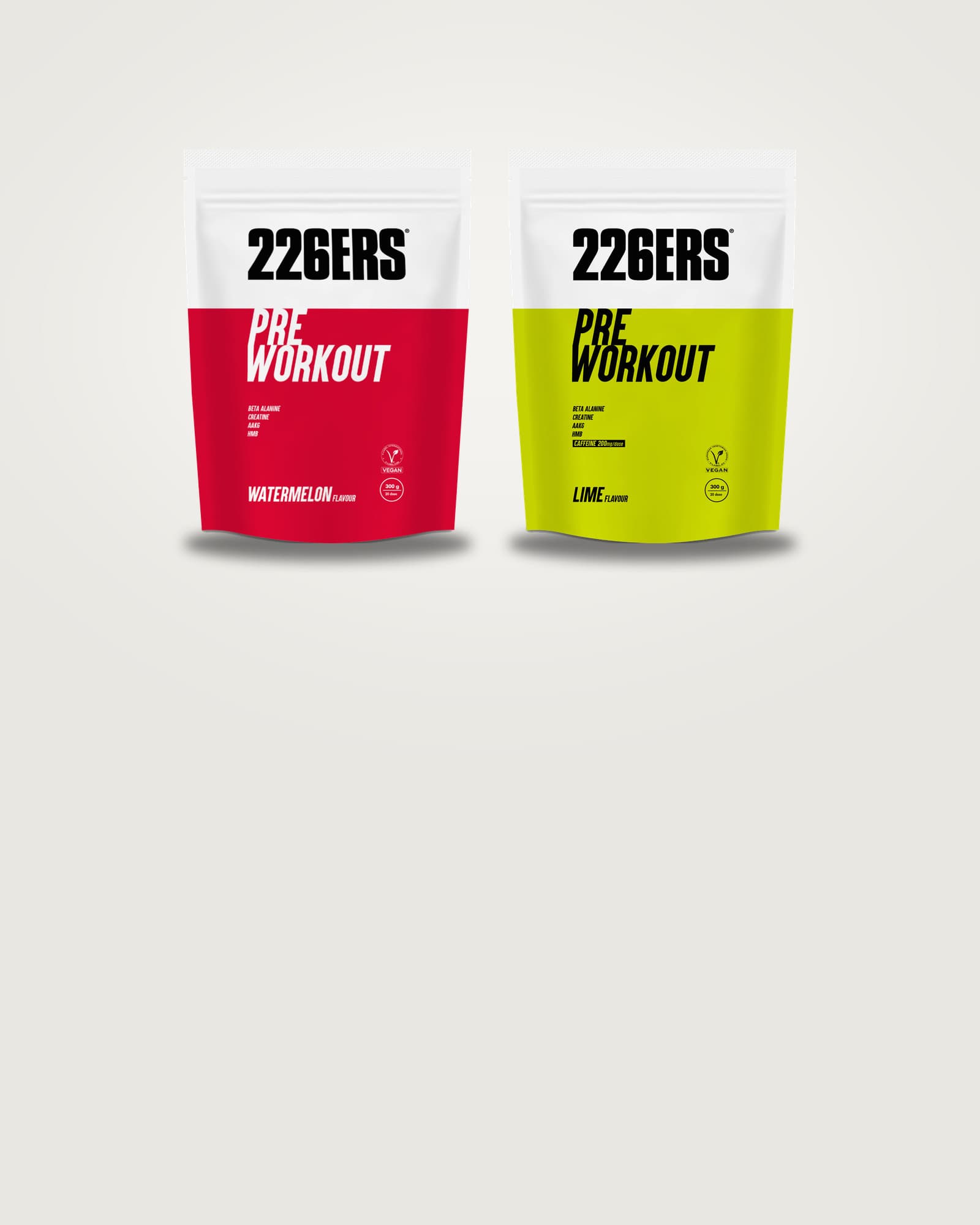
For the watermelon and lime flavours the manufacturer states up to three sticks per hour. Three sticks give around 66 g of carbohydrates, which is practically the whole working intake for a long session or a race: in sports practice, for work lasting more than two hours the usual target is 60 g of carbohydrates per hour and above, provided the stomach is trained for it. What matters is counting grams rather than packets: if your bottle holds an isotonic or an energy drink, its carbohydrates count towards the total too, and then three gels per hour are no longer needed.
The caffeinated Cola gel: one stick per hour and 100 mg of caffeine
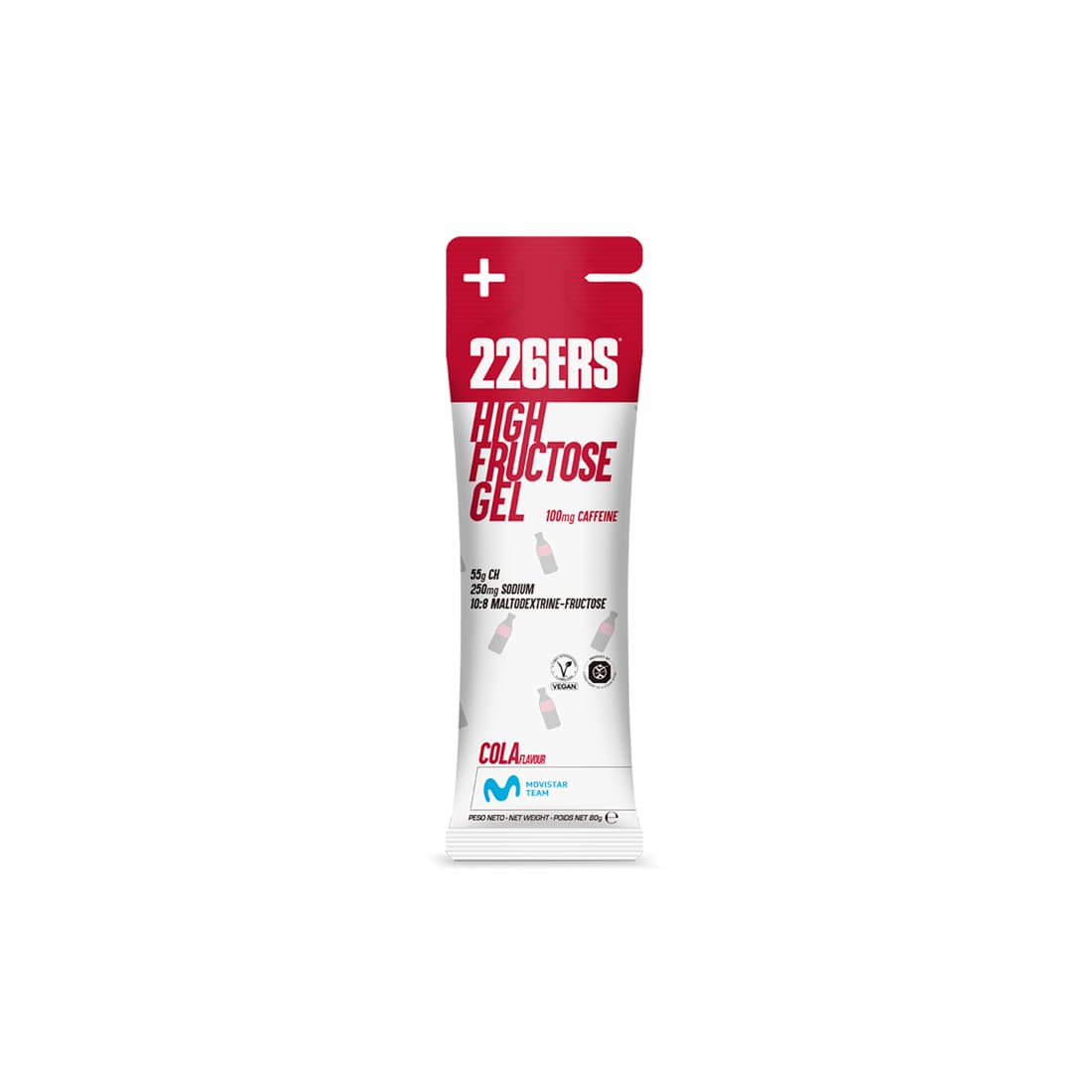
The Cola flavour stands apart: it contains 100 mg of caffeine, so the guideline is different, one stick per hour. That is a sensible limit, because caffeine adds up with everything taken before the start: the coffee at breakfast, the pre-race drink, the tablets and powders where it also turns up. The general logic of working with caffeine is simple: do not stack several sources back to back, and never take it for the first time on race day. Caffeinated gels are most often saved for the second half of the distance, when fatigue has built up and what you need is not so much sugar as a clear sense of pace.
Why the gel uses cyclodextrin instead of sugar
Cyclodextrin is a carbohydrate with a high molecular weight: it yields few particles per unit of volume, so the solution is not overly concentrated and passes through the stomach more easily. For an athlete the practical value comes down to two things. First, less cloying sweetness and less risk of feeling queasy from sugar by the third hour of work. Second, the stomach empties more calmly, and that is exactly what separates a gel you can take at tempo from a gel you only want to take at walking pace.
Fuelling on a winter long session: you do not feel like drinking, yet you still lose fluid
In the cold the sensation of thirst is dulled, while breathing dry air and working in several layers of clothing still take water out of you, and a bottle on the handlebars or in a vest can freeze. The result is a typical winter picture: the carbohydrates stay unused because there is nothing to wash them down with. A gel that needs no water removes that problem: it works as a self contained portion of fuel rather than a concentrate waiting for a sip from the bottle. That is why in winter the isotonic format usually turns out to be the most convenient.
How Pedro Visuete carries his gels
On a winter long session along the Japanese Road, Pedro Visuete uses a simple scheme: Isotonic Gel sits in a vest pocket and an energy drink goes in the bottle. It is a combination that works in the cold, because the jobs are split. The drink covers fluid and part of the carbohydrates, while the gel adds carbohydrates at the right moment and does not depend on whether you managed to drink or not. The same scheme transfers well to a long run: a pocket with gels for the whole session, and a bottle for what actually gets drunk.
Typical mistakes with isotonic gels
The first mistake: assuming an isotonic gel can replace drinking. It removes the need to wash the gel down, but it does not cover your need for fluid and electrolytes, especially in work lasting more than two hours. The second: stacking the maximum number of gels with the maximum amount of drink and ending up with a concentration the stomach cannot handle at tempo. The third: doubling up on caffeine when a pre-race drink is added on top of a caffeinated gel. The fourth: trying a new format for the first time on race day, when the price of a surprise is at its highest.
How to test the gel in training before a race
The stomach trains just like muscles do. On long sessions it is worth taking, in advance, the same hourly amount of carbohydrates you plan to use in the race, and in the same form. For an isotonic gel a loop test works well: one stick every twenty or thirty minutes at target pace, with the same flavours and in the same order you will use on the course. That is how you find your personal ceiling: some people are comfortable with all three sticks per hour, others with two sticks plus a drink. Test the caffeinated flavour separately, because the response to caffeine is individual and shows up in your heart rate.
An isotonic gel solves a narrow but common problem: delivering carbohydrates where drinking is awkward or simply unappealing. With 226ERS Isotonic Gel that means 22 g of carbohydrates in a 68 g stick, up to three sticks per hour on watermelon and lime, and one stick per hour on Cola because of its 100 mg of caffeine. The rest comes down to preparation: count the grams, spread the caffeine across the distance and test the scheme in training. The 226ERS range is available at spacefuel.kz.


FAQ
How many 226ERS isotonic gels can you take per hour?
For the watermelon and lime flavours up to three sticks per hour are stated, which is around 66 g of carbohydrates. The Cola flavour is limited to one stick per hour, because it contains 100 mg of caffeine.
Do you need to drink water with an isotonic gel?
No, water is already part of the stick, so washing it down is not necessary. But the gel itself does not replace drinking: fluid and electrolytes are still needed in long sessions.
How many carbohydrates are in one 226ERS Isotonic Gel stick?
A 68 g stick contains 22 g of carbohydrates, of which 1.4 g is sugar. The base of the formula is cyclodextrin, a carbohydrate with a high molecular weight.