Runners usually buy a pre-workout supplement in winter for one reason: during the off-season running volume drops and the plan starts to fill up with strength sessions, squats, lunges, core and back work. The body is not used to that kind of load, and the first few weeks in the gym are hard. Let us look at what pre-workouts normally contain, how 226ERS Pre Workout is put together, when it makes sense for a runner, a cyclist or a triathlete, and when you are better off without it.
Why a runner needs the gym in the winter base period
Strength work in the off-season covers what running on its own does not: it strengthens the foot, the lower leg and the glutes, evens out left to right imbalances and increases tendon stiffness. All of that translates into better running economy and a lower risk of overuse injuries during the season. But a strength session is short and intense by nature: a set of a few reps, rest, another set. The energetics here are different from a long steady run, and different nutrients support them.
What is in a 15 gram serving of 226ERS Pre Workout
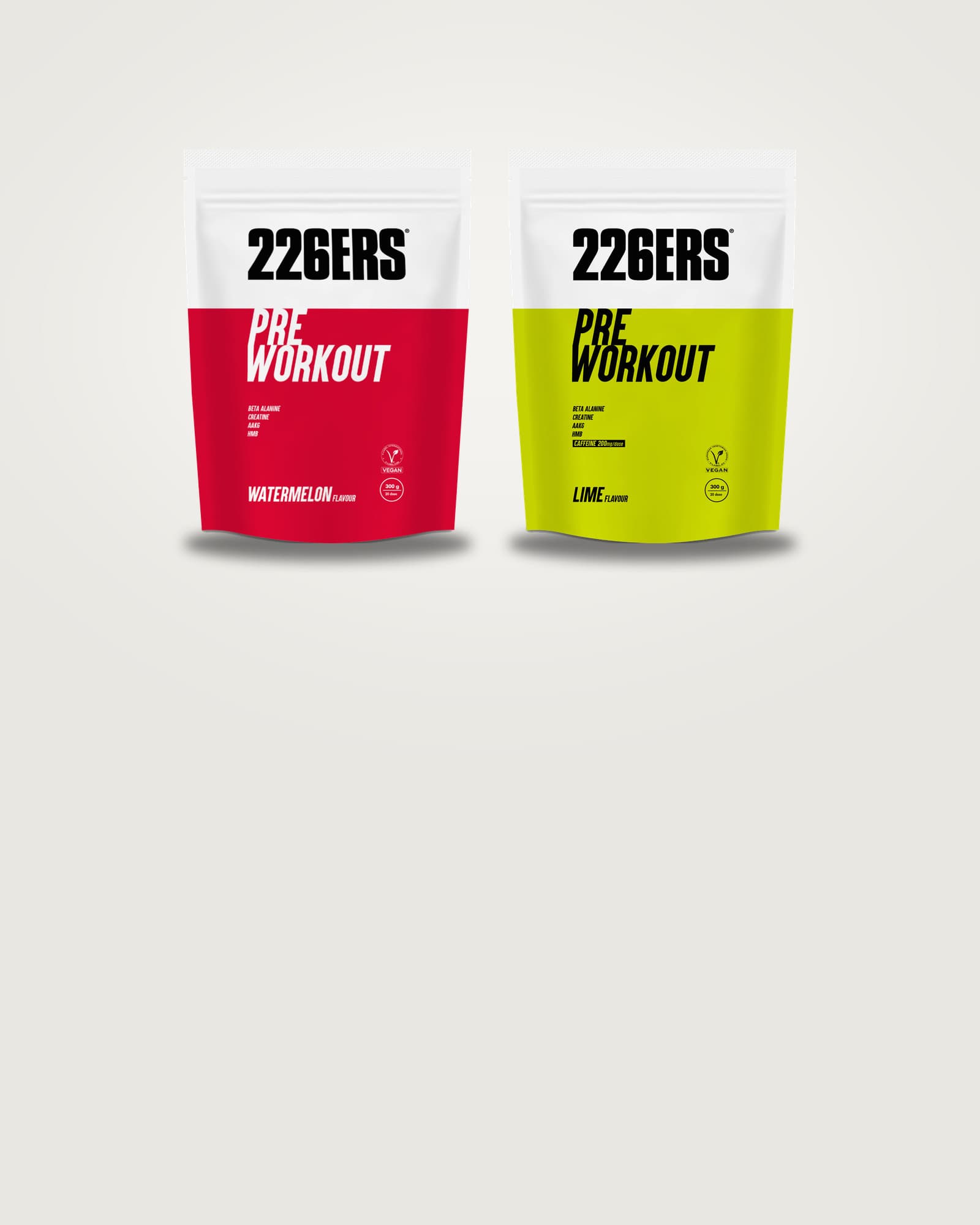
A 15 g serving contains 3 g of creatine, 3 g of HMB, 2 g of beta-alanine and 500 mg of arginine AKG. This is a blend aimed specifically at strength and speed-strength work rather than long endurance: there is no carbohydrate base of the kind you take on a long session, because the product has a different job. The logic is simple: support short powerful efforts, help you tolerate the burn in high-rep sets and give the body the raw material for adaptation.
Creatine and HMB: why they belong in a strength session
Creatine takes part in the resynthesis of phosphocreatine, the main energy source for efforts lasting a few seconds: a jump, an acceleration, a heavy set. For a runner that means better quality strength sessions and short hill reps, not a direct boost to marathon pace. HMB, a derivative of the amino acid leucine, has traditionally been used during periods of heavy load, when it matters to keep the balance between the breakdown and the repair of muscle tissue. Both components work cumulatively: you judge the effect after weeks of consistent training, not by how the first serving feels.
Beta-alanine and that tingling skin: what it means
Beta-alanine is a precursor of carnosine, which helps buffer acidity in efforts lasting roughly from one to several minutes. Those are exactly the efforts a runner meets in intervals and in long strength sets. In some people beta-alanine causes mild tingling in the skin of the face, neck and forearms some 10 or 20 minutes after taking it. This is a well known and harmless reaction that passes on its own, but if you are trying the product for the first time it is better to know about it in advance than to wonder what is happening mid-session. The arginine AKG in the formula belongs to the group of ingredients linked to nitric oxide pathways, and it is added to pre-workouts for that feeling of fullness in the muscles during work.
How to take it: three scoops in 200 or 300 ml of water
The protocol is simple: mix three scoops into 200 or 300 ml of water and drink it before training. That same amount is also the daily maximum, so there is no need to add a second serving before an evening session. A practical tip: do not drink it in a rush in the changing room, take it around 20 or 30 minutes before you start, so it has time to be absorbed and does not slosh around in your stomach during the first sets. If you are sensitive to taking things on an empty stomach, eat beforehand: a light snack with carbohydrates an hour before the gym sits better than an empty stomach plus stimulants.
Caffeine in a pre-workout: lime with caffeine, watermelon without
The lime flavour contains 250 mg of caffeine per serving, while the watermelon flavour contains none. That is an important detail if you track your total daily intake: morning coffee, a caffeinated gel on a long session and a pre-workout in the evening add up easily to the kind of dose that brings tremor, a raised resting heart rate and poor sleep. Caffeine is not cleared instantly, its effect stretches over several hours, so an evening serving of the caffeinated version can push your sleep onset back by an hour or more, and lost sleep eats up all the benefit of the session itself.
Evening sessions in winter: why people choose the caffeine-free flavour
In winter many people train after work, at seven or eight in the evening, which is exactly why watermelon is the logical choice for the evening. You still get creatine, HMB, beta-alanine and arginine, but without the stimulant that would get in the way of sleep. It makes sense to save the caffeinated version for morning and daytime sessions, for hard key workouts and for the days when your head and legs genuinely refuse to switch on. Rotating by time of day rather than by mood helps you keep your sensitivity to caffeine for the moment you need it on the start line.
When you do not need a pre-workout: easy days and recovery
On easy days you do not need it. A recovery run, an easy spin, technique work and stretching call for neither stimulation nor extra support for the strength pathways: the whole point of such a session is the low load, and pushing yourself here is counterproductive. If you feel the urge to take a pre-workout before every run, that is more often a sign of accumulated fatigue than of a supplement shortage. Check your sleep, your weekly volume and your nutrition before you add stimulants.
Common mistakes with pre-workout supplements
First mistake: trying a new product on the day of an important race or a key test session without knowing how your body reacts. Second: exceeding the serving in the hope of a stronger effect, even though the manufacturer has already stated the daily maximum. Third: ignoring caffeine from other sources, including coffee, tea and race gels. Fourth: expecting instant results from ingredients that work cumulatively and giving up after a week. Fifth: using a pre-workout as a substitute for the basics, meaning the warm-up, food and sleep, which deliver noticeably more than any powder.
The conclusion is straightforward: a pre-workout makes sense during the winter strength block, on key and hard sessions, in a single serving and with the time of day in mind, while on easy days it is surplus to requirements. Choosing a flavour here is not a matter of preference but of scheduling: the caffeinated version is fine in the morning, the caffeine-free one makes more sense in the evening. 226ERS Pre Workout and the rest of the range for runners, cyclists and triathletes are available at spacefuel.kz.
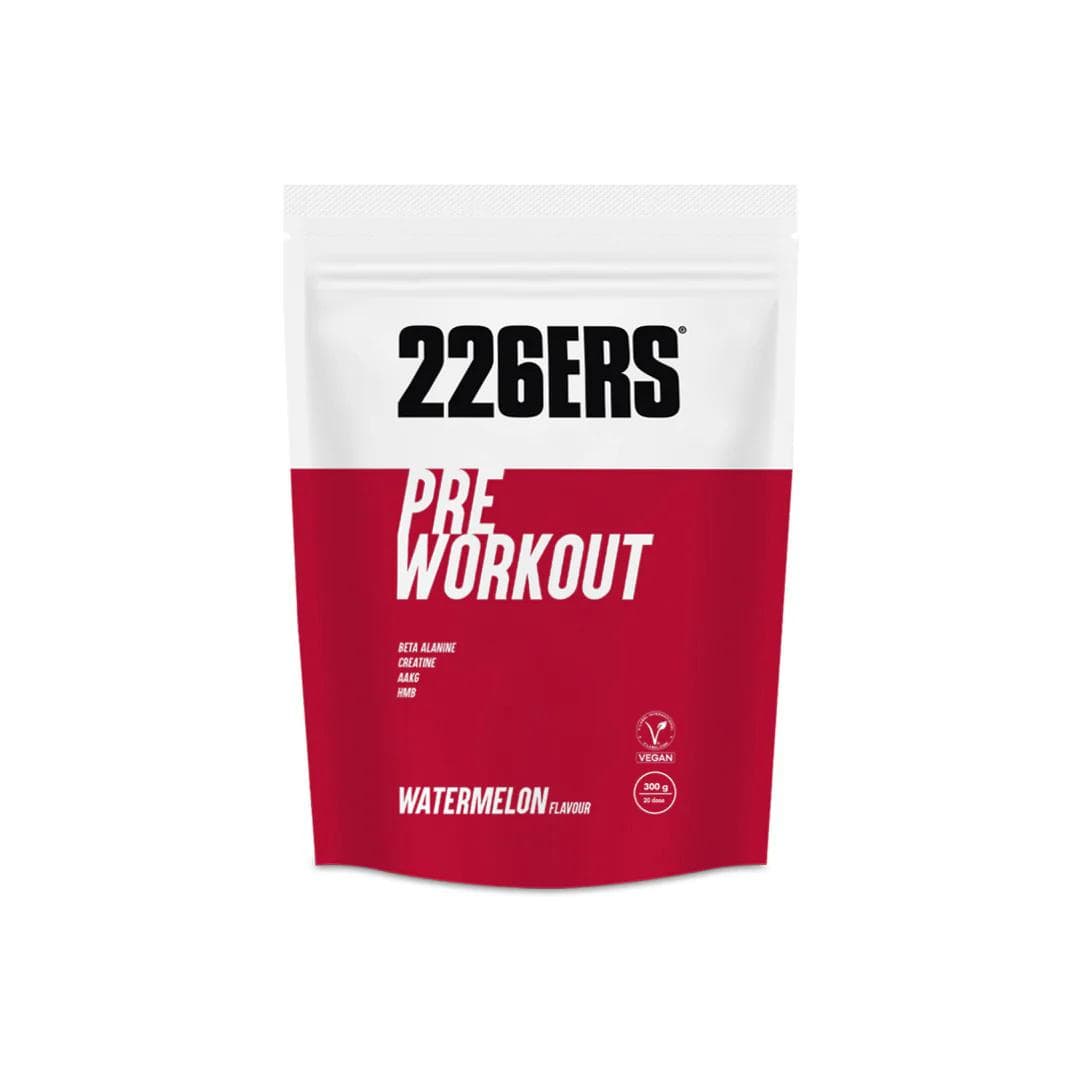
Photo: Фото продуктов: 226ERS
FAQ
How much caffeine is in 226ERS Pre Workout?
The lime flavour contains 250 mg of caffeine per serving. The watermelon flavour contains no caffeine, which is why it is usually chosen for evening sessions.
How do you take 226ERS Pre Workout?
Mix three scoops into 200 or 300 ml of water and take it before training. That same amount is the daily maximum, so there is no need to add a second serving.
Do you need a pre-workout for an easy run?
No, on easy recovery days you do not need it. Such sessions are meant to stay low in intensity, and stimulation here only gets in the way of recovery.