If gels make you feel sick on a long distance, that is no reason to give up fuelling and get by on water alone. The problem is almost never the carbohydrate itself, but the form it arrives in your stomach in, and how that form fits with your pace, the heat and the amount of fluid you have drunk. In this article we look at what to use instead of gels in a race, which solid formats SiS offers and how to build a plan that keeps your stomach calm all the way to the finish.
Why gels make you feel sick on a long distance
The typical cause: a sweet mass that is too concentrated arrives in the stomach faster than the stomach can pass it along. At a high heart rate blood flow is redistributed to the working muscles, gastric motility slows down, and the next gel simply sits on top of the previous one. Add the monotonous, cloying taste that by the third hour starts to feel repulsive in itself, and you get that familiar lump under the diaphragm. This is a question of tolerance and habit, not of weakness.
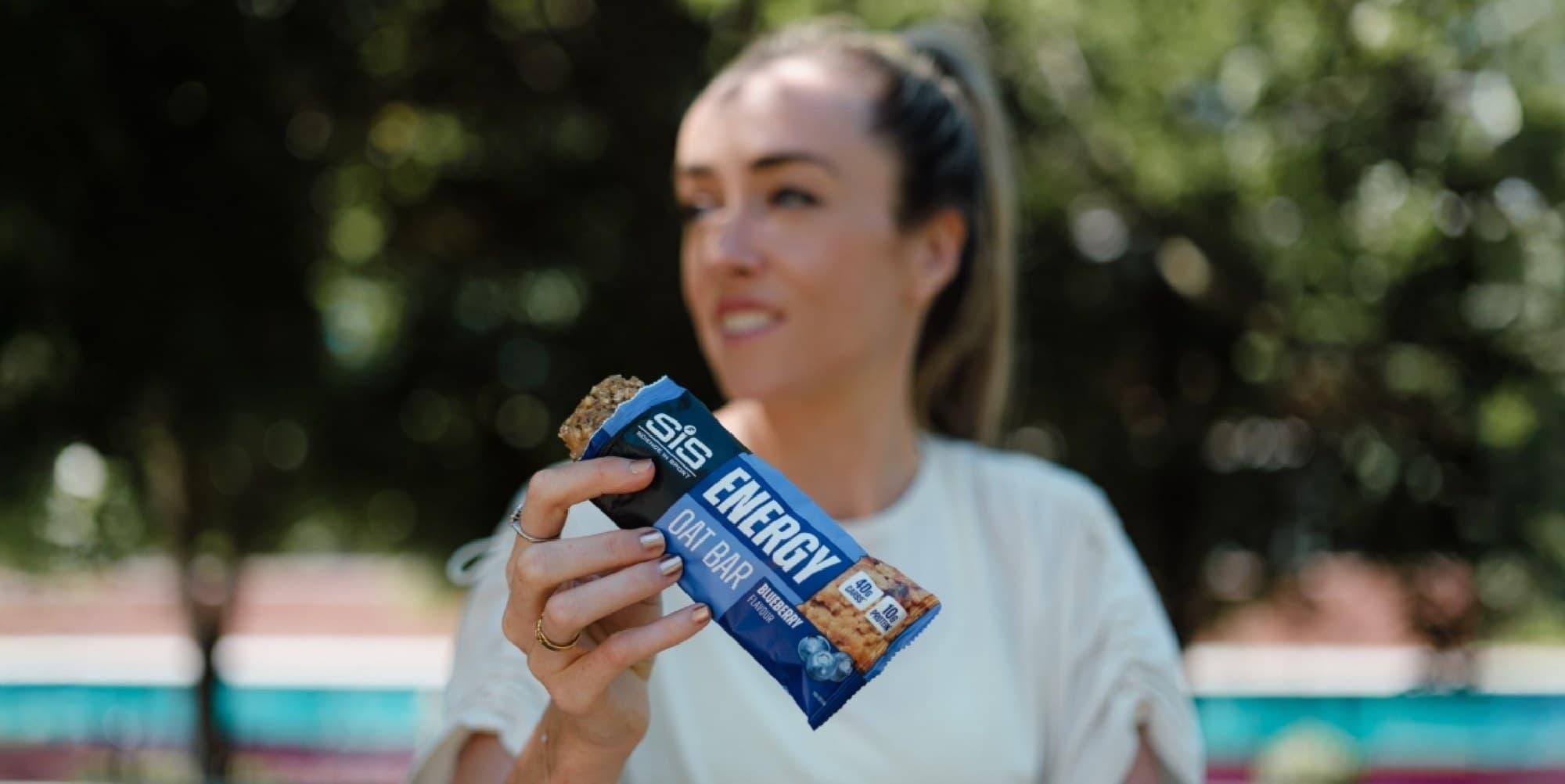
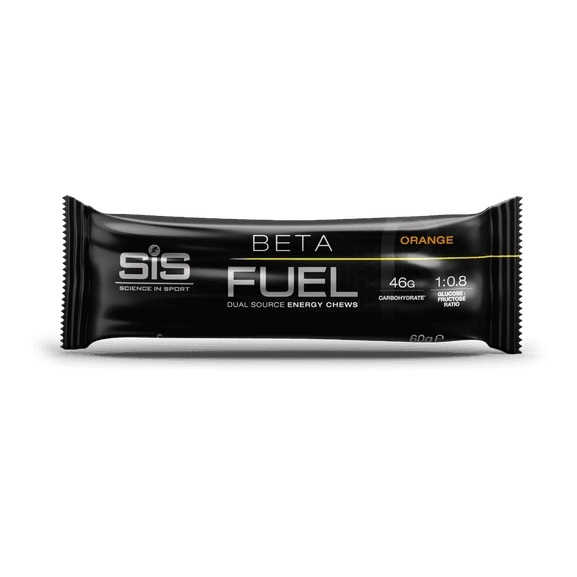
Chewable carbohydrates instead of a gel: Beta Fuel Chew
The first solid format from SiS: Beta Fuel Chew. A 60 gram pack holds 46 grams of carbohydrate, so a single pack covers a substantial part of your hourly target. The base: maltodextrin and fructose in a 1 to 0.8 ratio, orange flavour. A chewable texture works differently from a gel in psychological terms: you do not swallow the serving in one movement, you stretch it over several minutes, and the wave of sweetness in the stomach feels gentler.
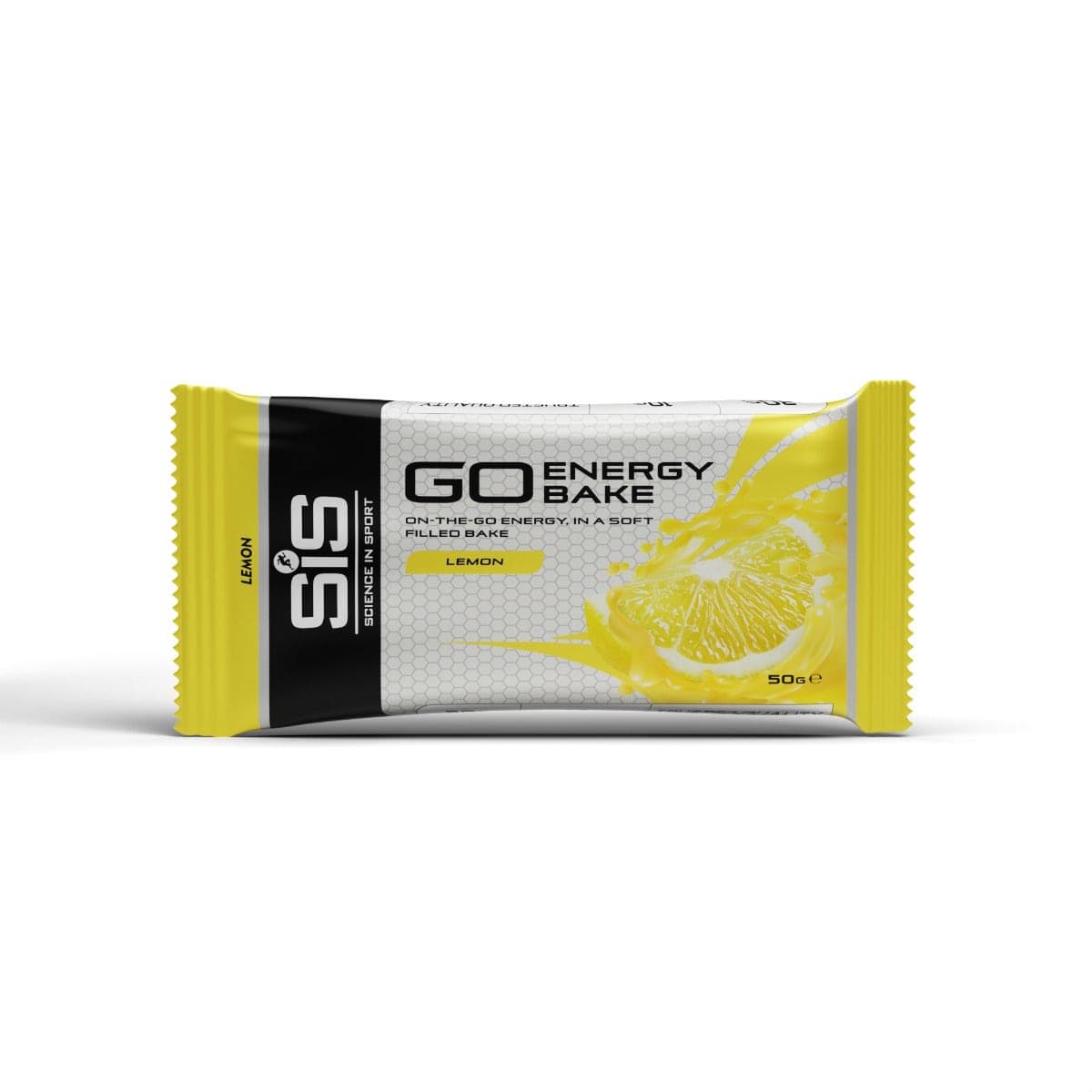
A bake during a race: SiS GO Energy Bake
The second option: GO Energy Bake, a soft bake with a fruit filling, 30 grams of carbohydrate, lemon and tiramisu flavours. It is closer to ordinary food, and that is exactly why the format often saves the day on trails and long bike rides, where the body starts asking for something salty, sour or simply unlike a gel. Thirty grams of carbohydrate is easy to count: one piece covers roughly half of the hourly target, and the rest comes from a drink or a gel.
How much carbohydrate per hour you need on long efforts
The benchmark for a long distance: 60–90 grams of carbohydrate per hour. The lower end suits those who are only starting to fuel on the run or who are going at a comfortable pace, the upper end makes sense for a race for time and for those who have rehearsed that intake in training beforehand. It is easier to count in grams rather than in items: check how much carbohydrate is declared on the packaging, add up everything sitting in your pockets and divide it by the time you plan to be working.
The race plan: solids early, gels in the second half
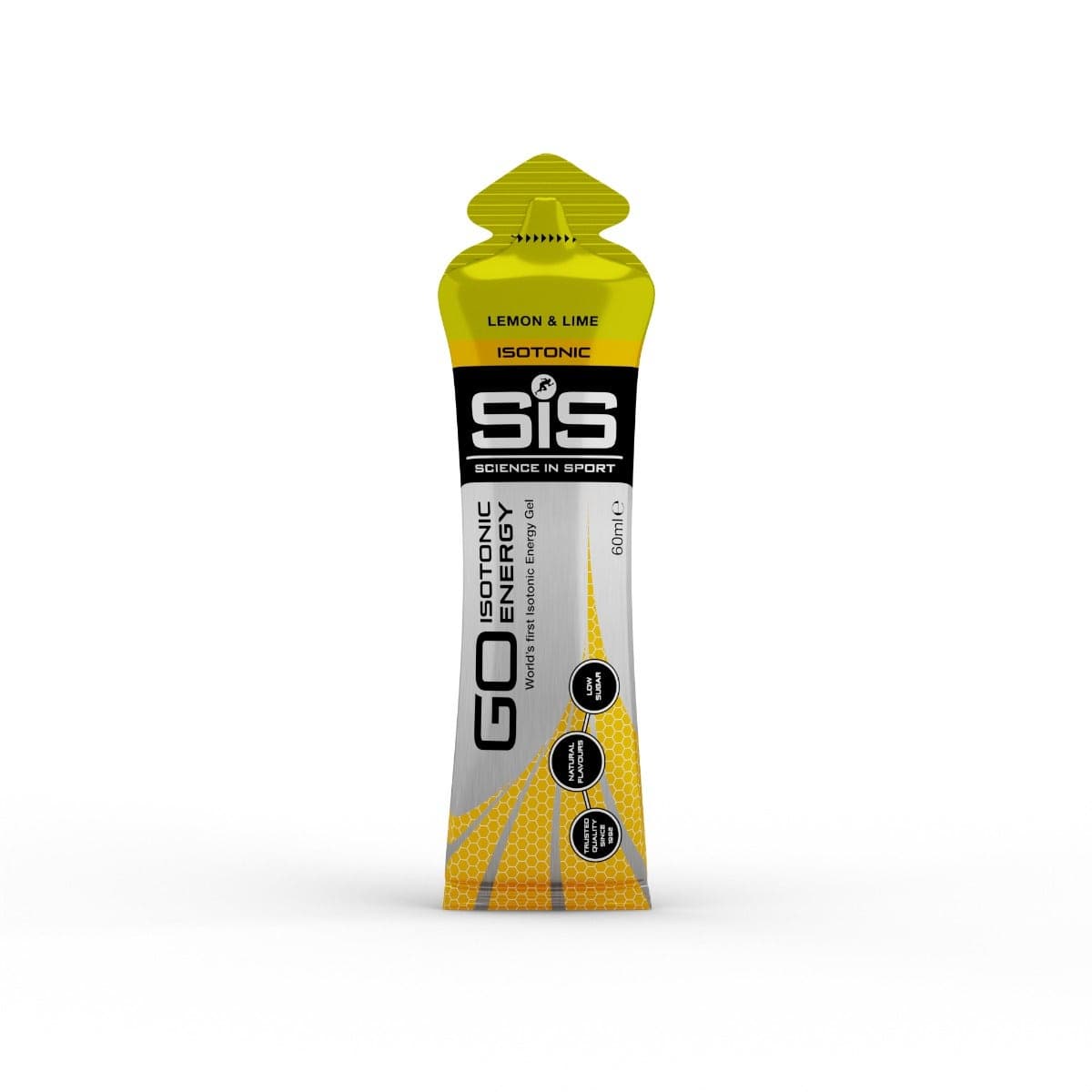
The logic that works looks like this: in the first half of the distance, while the stomach is calm and the pace has not yet eaten through your reserves, you take solid fuel, and in the second half you switch to GO Isotonic gels. The explanation is simple: chewing and breathing at the same time gets harder the higher your heart rate, and towards the end of a race your willingness to fiddle with packaging drops too. It makes sense to put the solid format where you have the most coordination and patience, that is, at the start rather than in the final kilometres.
What to wash chewable carbohydrates and bars down with
Any solid fuel needs to be washed down with water. Concentrated carbohydrate pulls fluid into the gut, and if there is not enough water you end up with heaviness, gurgling and exactly the queasiness you were trying to escape. Tie each portion to an aid station or to a sip from your bottle: a piece, water, another piece. In the heat this matters especially, because part of your fluid goes on thermoregulation rather than on digestion.
How to train your stomach: rehearsing your fuelling in training
Any plan is tested in training, not on race day. The stomach trains much like muscles do: regular long sessions with fuelling at race pace gradually raise your carbohydrate tolerance. Take two or three long sessions and repeat on them exactly the fuelling schedule you intend to use in the race, with the same flavours and the same intervals. If a format does not work for you, you still have time to swap it instead of panicking at the twentieth kilometre.
Common mistakes with solid fuel in a race
The first mistake: trying a new flavour for the first time on race day. The second: keeping solid fuel in an awkward pocket you cannot reach on the move. The third: eating by feel rather than by the clock, and remembering about carbohydrate only once your pace has already dropped. The fourth: combining solids and a concentrated drink at the same moment, giving your stomach a double dose of sugars. And the fifth: deciding in advance that solids do not work on the run without ever trying them on a long session.
Who solid formats suit best
Chewable carbohydrates and energy bakes are especially convenient where the pace is not maximal but the working time is long: a marathon for a comfortable result, a trail race with sections hiked uphill, a long bike race or the bike leg of a triathlon. Chewing is easiest on the bike, because breathing is steadier and your hands are freer. On a fast half marathon and on distances up to an hour there is almost no point in solid fuel: there a drink and a gel win.
The conclusion is simple: if gels stop going down, change not the amount of carbohydrate but its form and the moment you take it. Solids in the first half, gels in the second, water with every portion and rehearsal in training cover most of the stomach problems you meet on a long distance. The SiS formats discussed here can be found at spacefuel.kz and tested calmly on your own long sessions before the racing season starts.
Frequently asked questions
FAQ
What can replace gels if they make me feel sick during a marathon?
Try solid formats: SiS Beta Fuel Chew chewable carbohydrates (46 g of carbohydrate in a 60 g pack) or the soft GO Energy Bake (30 g of carbohydrate). The texture is different, and the sweet load on the stomach feels gentler.
How much carbohydrate per hour should I eat on a long distance?
The benchmark is 60–90 grams of carbohydrate per hour. The lower end suits a comfortable pace and your first attempts at fuelling, the upper end makes sense in a race for time if you have rehearsed that intake in training beforehand.
How do I alternate solid fuel and gels during a race?
In the first half of the distance, while the stomach is calm, use solid formats, and in the second half switch to GO Isotonic gels. Chewing is harder at a high heart rate, so it is more logical to place solids at the beginning. Wash any solid fuel down with water.