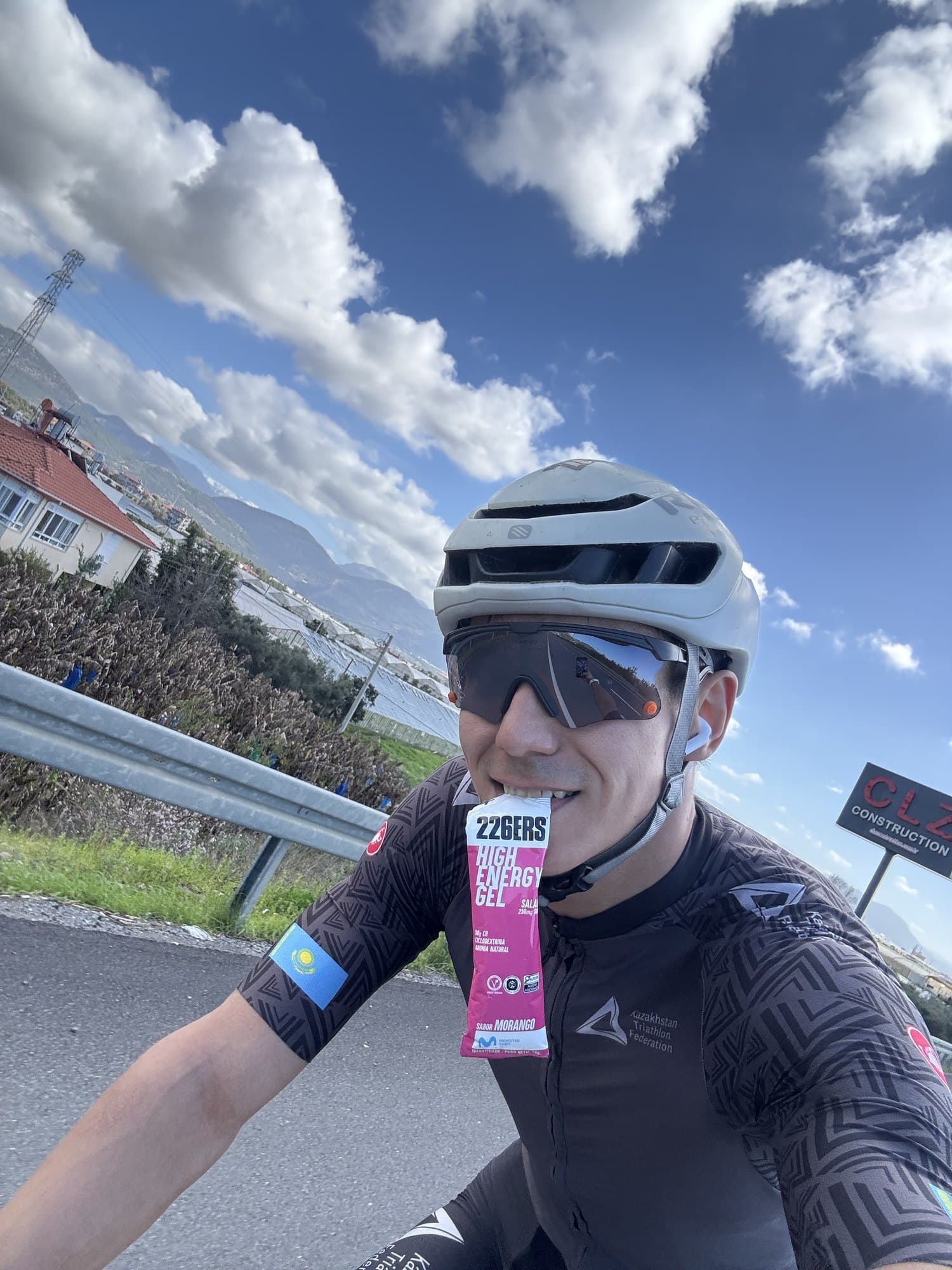
Electrolyte gummies on a long session tick two boxes at once: they deliver carbohydrate and return part of the salt lost through sweat. This article will be useful to runners, cyclists and triathletes who work for longer than an hour and are looking for an alternative to gels. The prompt for this breakdown was Saltanat Kazybayeva's choice: the favourite product named was 226ERS Vegan Gummy Bar in orange flavour with electrolytes. The wording is simple: “My favourite product is electrolyte gummies, they are absorbed really well on long sessions”.
How gummies differ from a gel and a sports drink
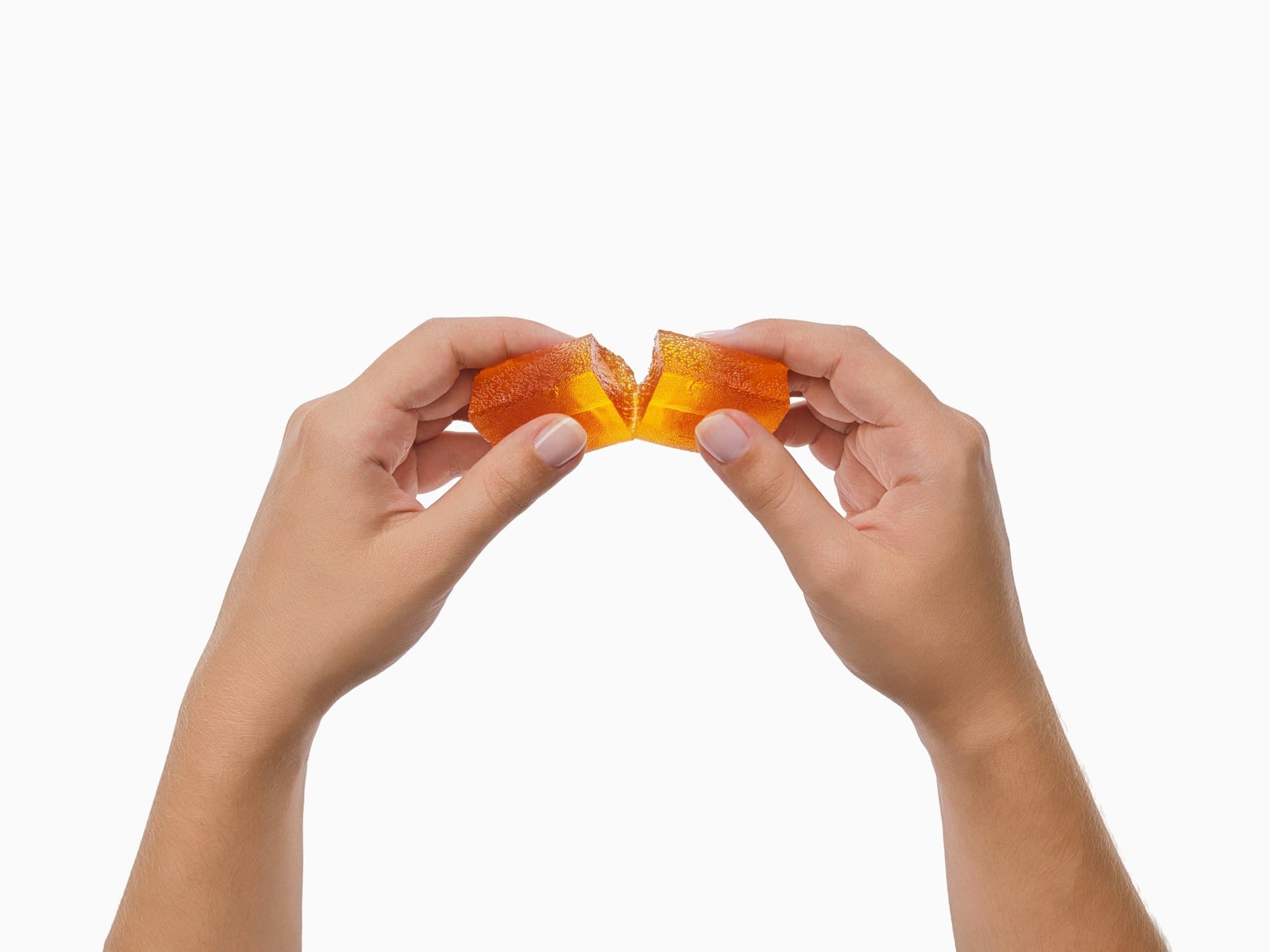
Race nutrition comes in three main forms. A gel is concentrated carbohydrate in a soft sachet that usually needs to be washed down. A drink gives you carbohydrate, fluid and salt all at once, but at a fixed concentration, and its volume is limited by your bottle. The chewable format sits between the two: a dense texture you have to chew, with clear portioning. A 30 g bar contains 17.3 g of carbohydrate, 125 mg of sodium, 27 mg of magnesium, 9 mg of potassium and 82 kcal. For many people it is psychologically easier than a sweet gel, especially in the fourth hour of work.
How much carbohydrate per hour you need on long work
The generally accepted starting point in sports science is this: for work lasting from one hour to two and a half hours you aim for 30 to 60 g of carbohydrate per hour, while on longer distances, with a mix of glucose and fructose sources, you work up towards 60 to 90 g. One bar with 17.3 g of carbohydrate is a building block, not the whole plan. In practice that means two or three such bars per hour, or a combination of gummies with a drink and a gel. The maths needs doing in advance, not on the move.
Why sodium matters in training: salt, water and thirst
Sodium is the first thing to go with sweat, and it is sodium that helps you hold on to the fluid you drink rather than flush it straight through. If on multi-hour work you drink only plain water in large volumes, the sodium concentration in your blood falls and you get a bloated stomach, nausea and lethargy. That is why salt on long work is planned just like carbohydrate. In the heat and on distances from three hours upwards, the 125 mg of sodium from a bar is added to an electrolyte drink or tablets rather than counted as the full requirement.
Magnesium and potassium in the formula: what to realistically expect
Far less magnesium and potassium is lost in sweat than sodium, so in race nutrition they play a supporting role. The 27 mg of magnesium and 9 mg of potassium in a bar are a top-up to the day's intake, not a daily requirement, which is covered by ordinary food and, if needed, separate supplements on easy days. They should not be treated as a cure for cramp: cramp during a race is more often linked to working harder than you are used to, to under-drinking and to general muscle fatigue than to any single mineral.
How to eat gummies while running and on the bike
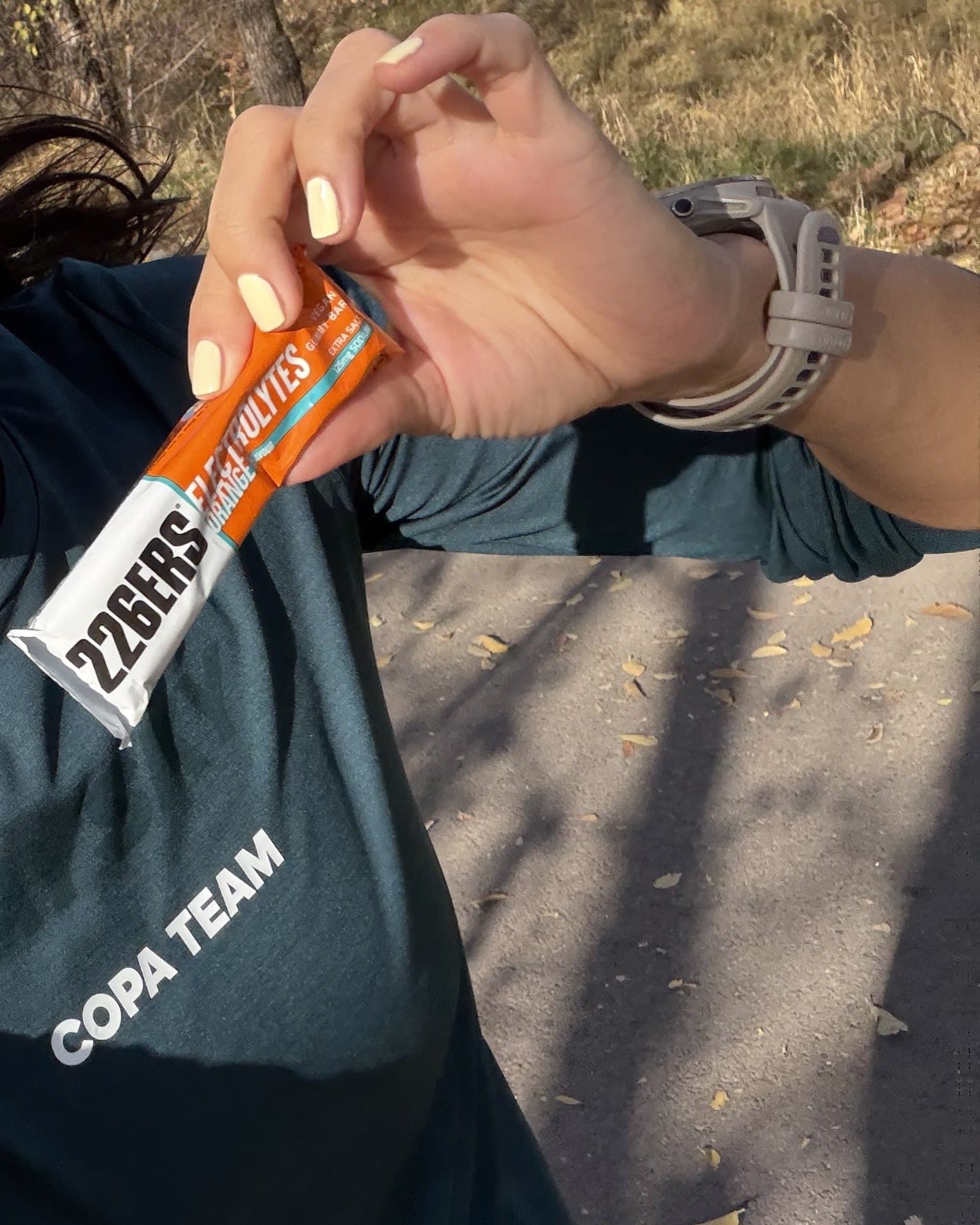
The sequence is simple: bite, chew, wash down with water. The main constraint is that chewing competes with breathing, so pick a calm stretch to eat: a flat section of the course, the approach to a feed station, a flat part of the bike leg. Chewing during an interval, on a steep climb or on a technical descent is awkward and unsafe. It helps to open or split the bar in advance, keep it in an accessible pocket of your gilet or tights, and always have a bottle to hand: without water the dense texture dries your mouth out.
Pectin instead of gelatine: vegan and gluten-free
The gelling base here is pectin, a plant-derived ingredient, so the bar suits people who do not eat gelatine and it is labelled vegan and gluten-free. The carbohydrate comes from organic cane sugar and rice syrup. It is worth bearing in mind separately how chewable nutrition behaves in the cold: in sub-zero temperatures the dense texture gets harder, so keep the bar in an inside pocket close to your body rather than an outer one. In the heat it is the other way round: gummies cope with warming better than many dense protein bars.
Typical mistakes with chewable nutrition during a race
The first mistake is eating gummies without water and ending up with a sticky lump in a dry mouth. The second is trying a new product on race day. The third is eating all your supplies in the first hour and then going two hours with no carbohydrate. The fourth is building a four-hour plan around chews alone: your jaw gets tired and by the end of the race you no longer want to eat at all. The fifth is putting your nutrition in a pocket you cannot reach on the move, and so simply not eating in time.
How to rehearse your nutrition on a long session
The gut trains just like the heart and the muscles. Rehearse your race plan on long sessions at target pace: the same order, the same time intervals, the same volume of fluid. It helps to set a reminder every 20 or 25 minutes so that eating does not depend on how you feel. It is worth working through several flavours and noting what still goes down in the third hour and what you get sick of: besides orange, Vegan Gummy Bar comes in four more flavours, and rotating them helps fight flavour fatigue.
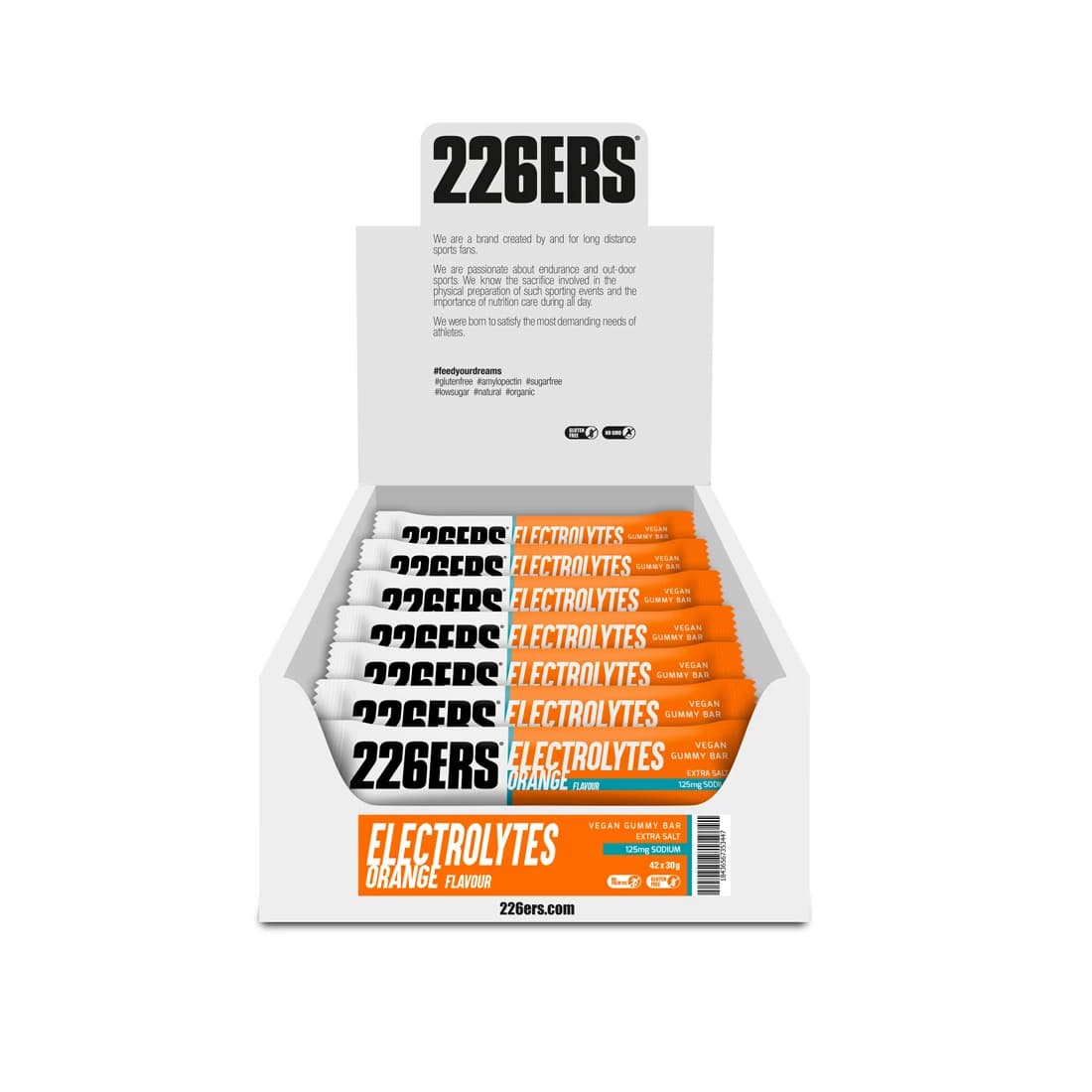
Chewable electrolyte gummies are not a replacement for your whole nutrition system but a convenient part of it: a clear portion of carbohydrate plus a little salt, in a format that is easier to take once sweet gels have worn thin. Put your plan together in advance, rehearse it on two or three long sessions, and only then take it to the start line. You can see Vegan Gummy Bar in five flavours and the rest of the 226ERS range at spacefuel.kz.

FAQ
How many gummy bars should you eat in an hour?
The reference point on long work is 30 to 60 g of carbohydrate per hour, and on very long distances, with a mix of sources, up to 60 to 90 g. A bar has 17.3 g of carbohydrate, so that works out at two or three bars per hour, or a combination with a drink and a gel.
Do you need to wash electrolyte gummies down with water?
Yes, the sequence is: bite, chew, wash down with water. Without water the dense texture dries your mouth out and goes down less easily, so keep a bottle to hand.
How do electrolyte gummies differ from a gel?
A gel is concentrated carbohydrate that usually needs washing down, while gummies have a dense texture and clear portioning. Many people find them psychologically easier in the fourth hour of work, but they are only comfortable to chew on a calm stretch of the course.