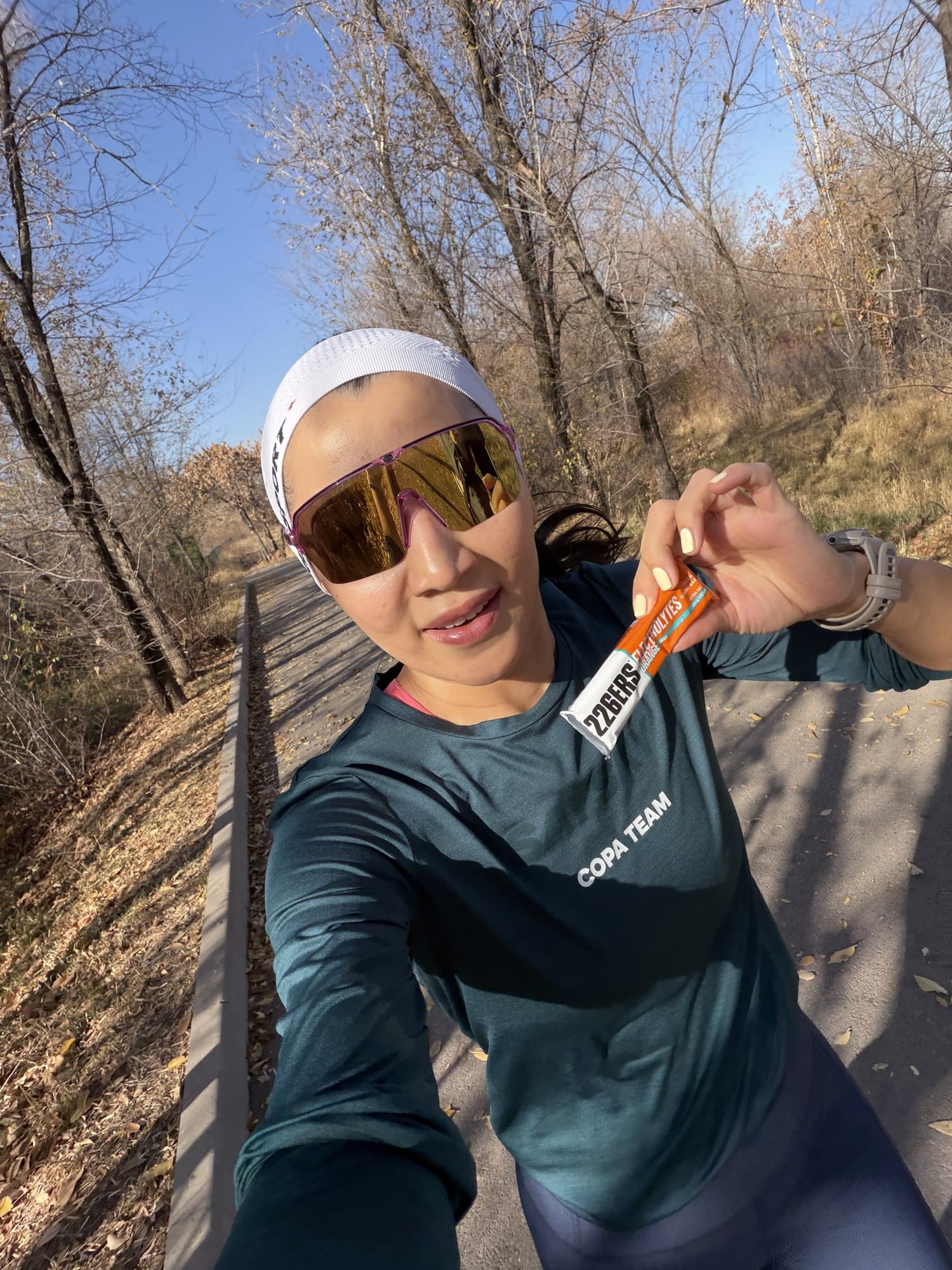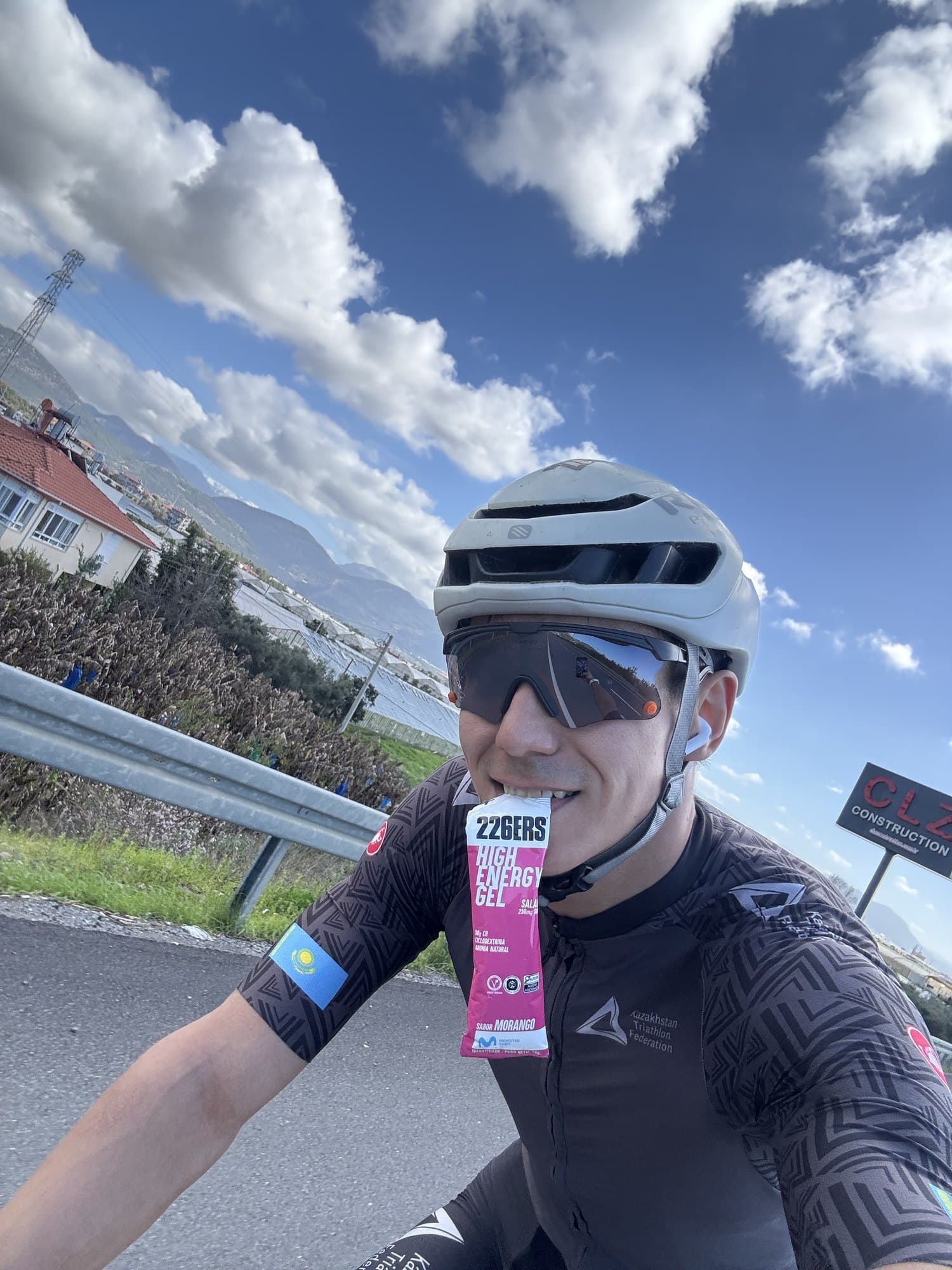
A caffeine-free gel is a working tool of everyday training, not a watered-down version of the “real” gel. This article will be useful for runners, cyclists and triathletes who do long, high-volume sessions several times a week and want to train the body to take carbohydrate on the move without turning every session into a stimulant session. We will look at it through the example of the 226ERS High Energy gel in the “Salted Strawberry” flavour, which triathlete Daryn Konysbayev named as his favourite in November 2026: “I love High Energy for its consistency, it is just right for training.”
Why a caffeine-free gel is better in training
In endurance sport, caffeine is usually treated as a race-day tool: it lowers the perceived effort of the work and helps hold concentration over the final kilometres. But sensitivity to it drops with regular use, and if caffeinated gels go into every long session, the effect on the start line will be noticeably more modest. The logic is simple: cover your training volume with a neutral gel and save caffeine for a few key sessions and races. There is a separate benefit for anyone who trains in the evening: a neutral gel will not stop you falling asleep after a late session.
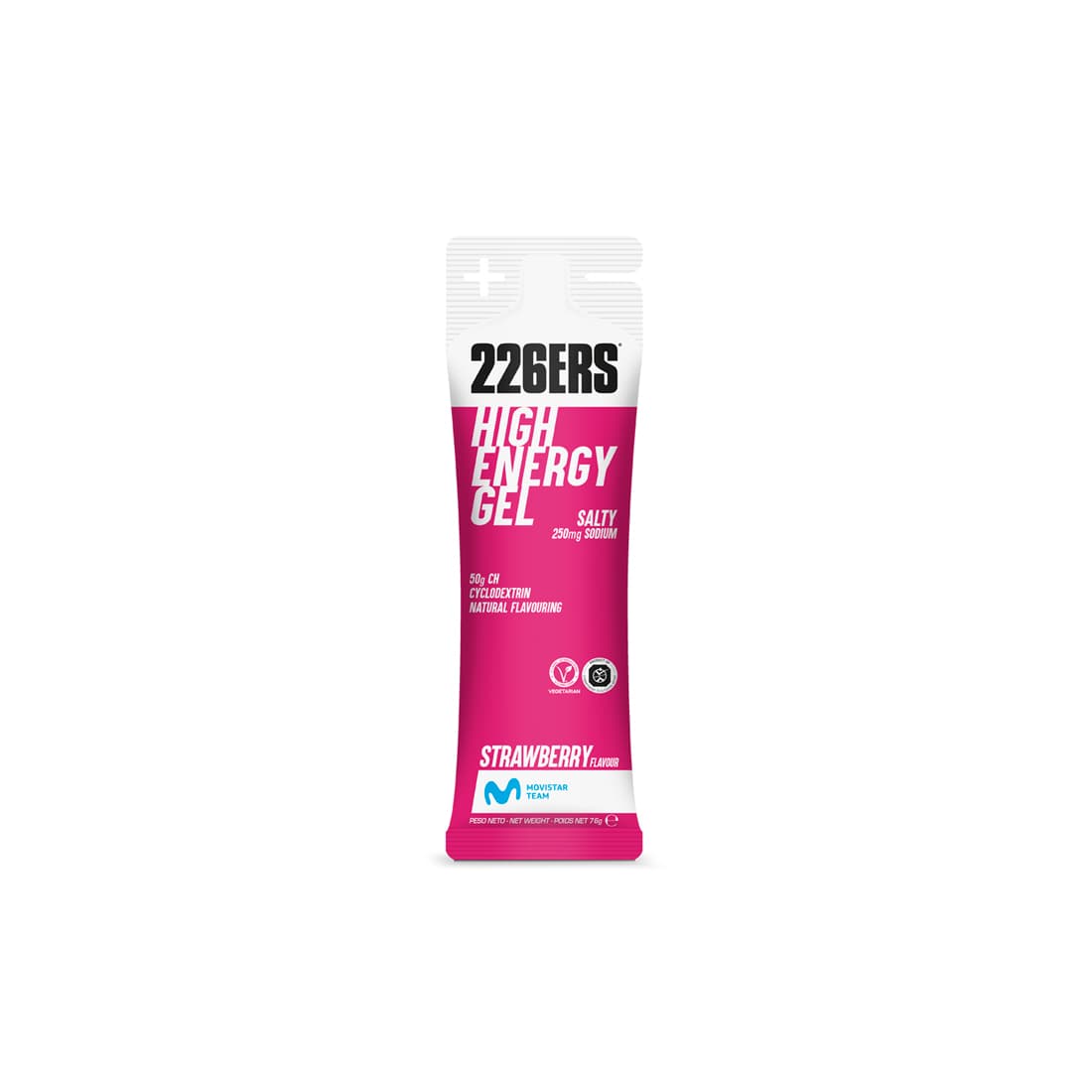
What is inside the 226ERS High Energy “Salted Strawberry” gel
One sachet weighs 76 grams and delivers 50 grams of carbohydrate, 250 milligrams of sodium and 201 kilocalories, with no caffeine in the formula. The carbohydrate part is built from glucose syrup, maltodextrin and Cluster Dextrin, and the product is gluten free. A serving this size is noticeably bigger than the small gels most people are used to, and that changes the arithmetic: a single sachet covers most of an hour's carbohydrate needs, which means fewer packets in your pocket or gilet.
What “gel consistency” means and why it matters
When athletes talk about consistency, they mean the thickness of the gel and the way it behaves in the mouth while running or riding. A gel that is too thick demands water and attention, while one that is too runny is hard to keep hold of when rivals are alongside you or a descent is coming up. On the bike and in the water this is a secondary detail, but in running, especially in tempo work, five extra seconds of wrestling with a sachet disrupt your breathing and rhythm. Choosing a gel by texture is therefore not a matter of taste but a practical criterion, and one that only shows itself in motion rather than in the kitchen.
How often to take a gel during a long session
For prolonged work the guideline is simple: one gel every 30 to 40 minutes. The general logic of sports physiology here is this: glycogen stores in the muscles and liver are limited, and in work lasting longer than an hour external carbohydrate pushes back the moment when pace starts to sag on its own. Fuelling should begin before things get hard, within the first 20 to 30 minutes: absorption takes time, and chasing a deficit is always more expensive than preventing one. If a session lasts an hour and a half, the fuelling plan should be written down before you leave the house rather than decided on feel.

Sodium in the gel and salt losses in sweat
The 250 milligrams of sodium per serving address the second problem of long work: sweat carries away not only water but electrolytes too, and plain water without salt does not always restore the balance. The signs of an imbalance are familiar to many: salt stains on your kit, cramping muscles over the final kilometres, a heavy, sluggish feeling after the finish. One gel cannot cover the losses completely, so in the heat or over very long distances sodium is usually topped up from a drink or from separate electrolyte products. But having salt in the gel itself makes it a more sensible choice for high-volume sessions than a sweet concentrate with no electrolytes.
How to rehearse gels before a race
The gastrointestinal tract trains just like the heart and the muscles: taking carbohydrate regularly on the move raises tolerance and reduces the risk of heaviness, nausea and cramps. Training gels therefore do double duty: they give you energy now and prepare the body for your race plan later. A sensible practice is to include fuelling in every long session of the base period and to fully rehearse the exact scheme you intend to use on race day at least a few times, including the flavour, the amount of water and the intervals between servings.
Typical mistakes when fuelling with gels
The first and most common one is eating everything in the second half of the session, once you have already run out of energy. The second is taking an unfamiliar flavour or a new brand straight to the start line without having tried it in training even once. The third is ignoring water, especially with thicker gels, even though even a small sip helps the stomach empty and reduces discomfort. The fourth is treating fuelling as an option for slower athletes, when in fact the higher the intensity, the faster glycogen is used up. And the fifth is keeping a supply at home that does not last the whole training block, and skipping fuelling on some of the long sessions because of it.
How many gels to keep in stock for a training block
If you count one gel for every 30 to 40 minutes of long work, your weekly volume converts easily into a number of sachets and your monthly order stops being guesswork. Planning in packs is more convenient: the 226ERS High Energy “Salted Strawberry” gel costs 2 900 ₸, and a pack of six gels in this flavour costs 15 700 ₸. A supply like that usually covers several long sessions in a row and means you do not have to change your fuelling halfway through the block.
In short: a caffeine-free gel covers the bulk of the season's work, supplies carbohydrate and sodium on long sessions and prepares the stomach for race day, leaving caffeine as a separate tool for races. You can compare formulas and put together a supply for your own training block at spacefuel.kz.
FAQ
Why choose a caffeine-free gel when caffeinated gels exist?
Sensitivity to caffeine drops with regular use, so it makes sense to save it for key sessions and races. Everyday long sessions are easier to cover with a neutral gel, which also will not stop you falling asleep after an evening workout.
How often should I take a gel during a long session?
The guideline for prolonged work is one gel every 30 to 40 minutes. It is worth starting early, within the first 20 to 30 minutes, rather than when your pace has already begun to drop.
How much carbohydrate and sodium are in the 226ERS High Energy gel?
A 76-gram serving contains 50 grams of carbohydrate, 250 milligrams of sodium and 201 kilocalories, with no caffeine. The carbohydrate comes from glucose syrup, maltodextrin and Cluster Dextrin, and the product is gluten free.