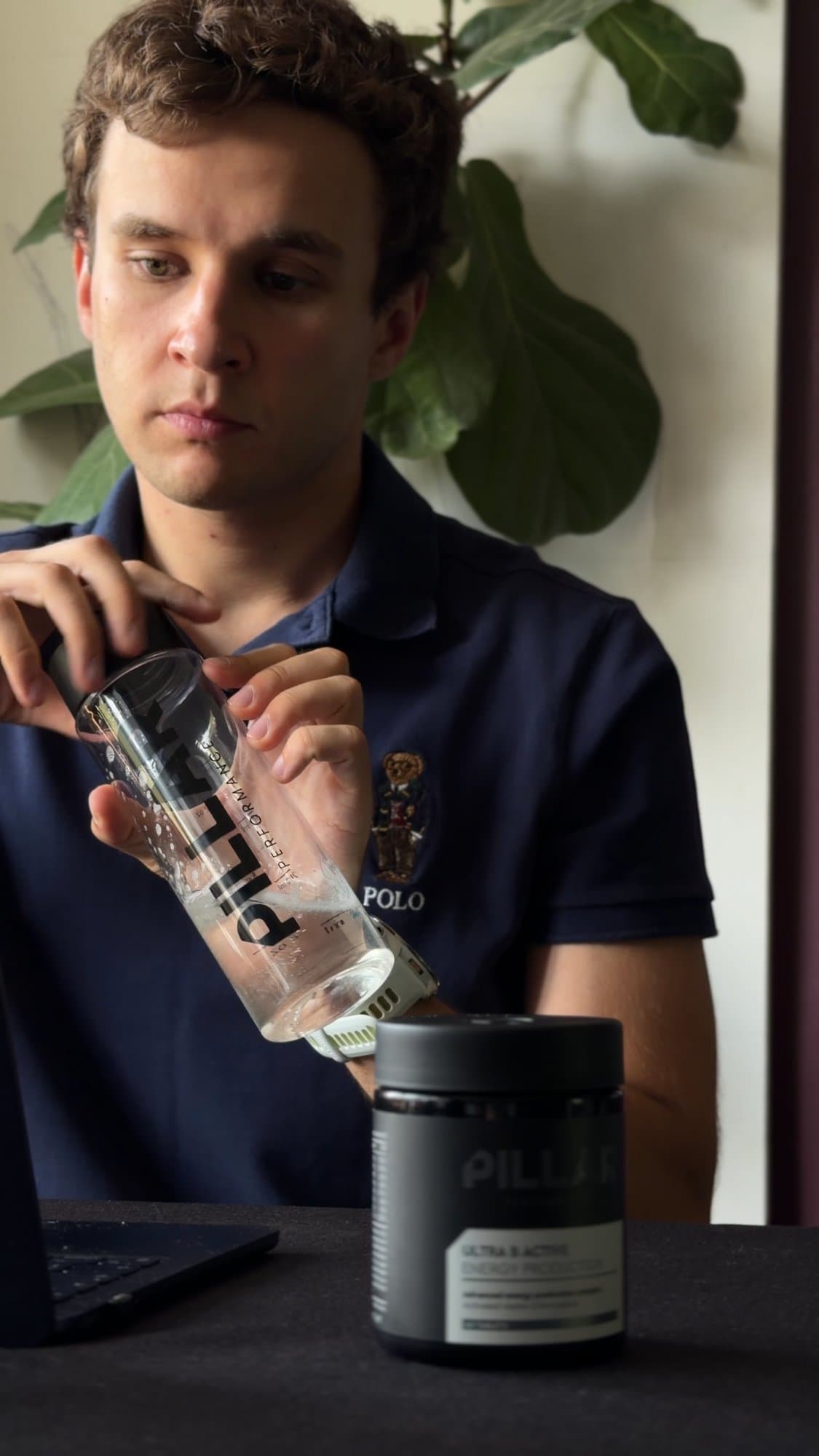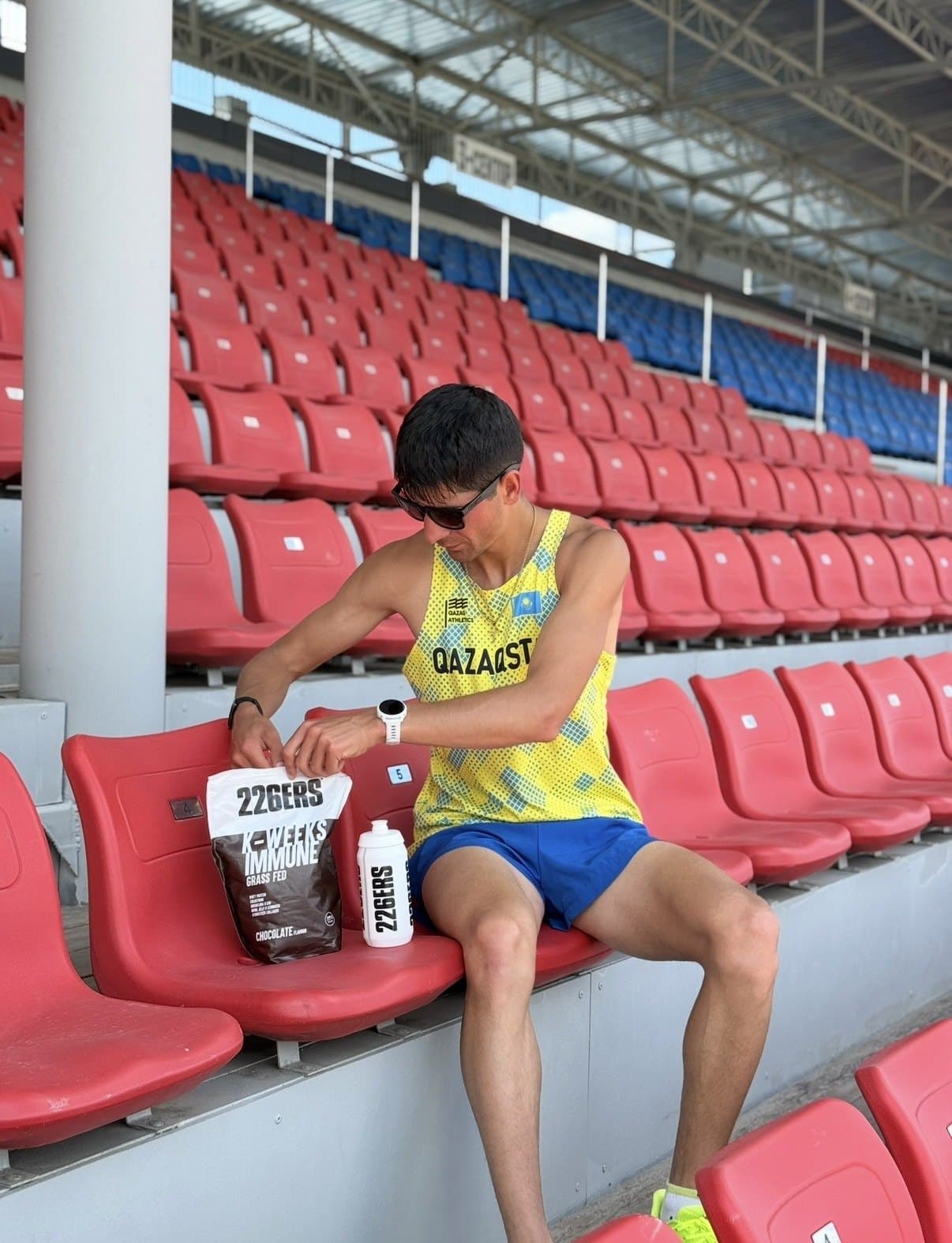
Protein at peak training volume is not about gaining size, it is about getting through a run of hard weeks without breaking down. When the plan holds three quality sessions plus a long one and the recovery between them shrinks, the body works at its limit: muscles, tendons and the immune system are all loaded at the same time. This article is for runners, cyclists and triathletes heading into the biggest block of their build who want to understand why protein gets added in a period like this, and how a protein for hard weeks differs from an ordinary whey after the gym.
Why protein needs rise during hard weeks
High volume means more microdamage to muscle tissue and more work to rebuild it. While recovery is still unfinished, the next session lands on an unprepared base, and fatigue accumulates in a way that subjectively reads as “the legs just will not go”. Protein is the basic building material here: when it is in short supply, the body takes longer to return to normal, holds its strength qualities less well and adapts to training more slowly. That is exactly why endurance athletes usually raise their daily protein intake during peak weeks, not only their carbohydrates.
What K-Weeks Immune by 226ERS is
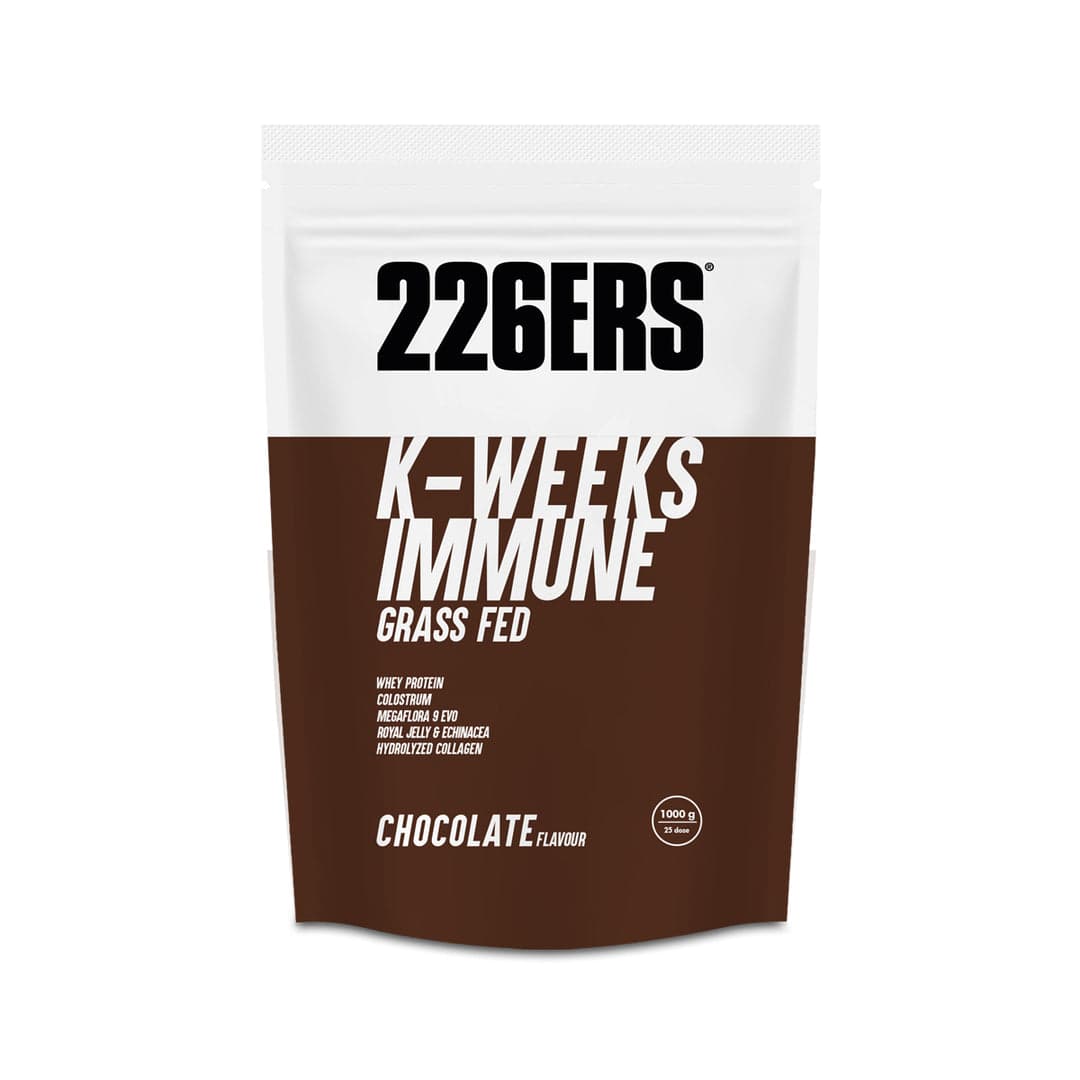
K-Weeks Immune by 226ERS is a protein blend that the champion of Kazakhstan Rinat Kulygin describes in a single line: “K-Weeks Immune supports the body through a period of heavy training volume”. A 40 g serving contains 23 g of protein from grass-fed cows' milk, hydrolysed collagen, colostrum, MegaFlora 9 EVO probiotics, inulin and beta-glucans, echinacea, chamomile and vitamin B6. In other words, it is not a pure isolate but a combined formula assembled for a specific job: not topping up your protein target after a gym session, but supporting the body through the weeks when it is especially vulnerable.
23 g of protein per serving: how much of the daily target is that
23 g of protein per serving is roughly what you get from a large portion of cottage cheese or from four eggs. For an endurance athlete a serving like that usually covers a quarter or a third of the daily requirement, with the rest left to normal food. This is a point of principle: the manufacturer states plainly that the product does not replace proper meals. Protein solves the problem of convenience and consistency, for those mornings when you do not feel like eating after a session but still need a full breakfast.
Colostrum, probiotics and beta-glucans: the immune side of the formula
The immune part of the formula is built from ingredients that sports practice has long associated with periods of high load. Heavy training blocks are known to raise the risk of catching a cold: immunity works less well for a while, especially alongside poor sleep and a calorie deficit. The probiotics and inulin in K-Weeks Immune work as a pair, the bacteria and the medium that feeds them, while beta-glucans, colostrum, echinacea and chamomile are included as supporting ingredients. Vitamin B6 is involved in protein metabolism, so it sits logically next to the protein.
Collagen for tendons when running volume is high
The hydrolysed collagen in the formula addresses a different weak spot: connective tissue. As volume grows, tendons and ligaments adapt more slowly than muscle, and they are the ones that most often make themselves felt during peak weeks: the Achilles, the plantar fascia, the knee. Sports practice uses collagen as part of overload injury prevention, normally as a course rather than a one-off. The advantage of a combined blend is that the muscle and connective tissue components go down in one serving, with no need to keep several tubs in mind.
How to take protein: 40 g in the morning with breakfast
The protocol is simple: 40 g in 250-300 ml of water, milk or a plant-based drink, in the morning with breakfast. A morning serving is convenient for two reasons. First, after a night's sleep the body has gone a long time without protein, and an early serving helps spread the daily target more evenly instead of dumping it into dinner. Second, the morning is the easiest time to turn into a habit: during hard weeks there is almost no energy left for extra steps in the evening. If the session is early in the morning, it makes more sense to take the blend afterwards, along with a proper breakfast.
Common mistakes with protein during high-volume periods
The first mistake is treating protein as a replacement for food. A serving of the blend does not contain enough carbohydrate to cover what a long session burns, and a fuel deficit cannot be fixed with protein. The second is starting a course at the most critical moment. Any new blend is worth trialling during a calmer week so you can see how your stomach responds. The third is expecting an effect from a single serving. Supporting ingredients such as collagen and probiotics work over weeks of regular use. The fourth is using protein to paper over systematic lack of sleep and a chronic calorie deficit, which no supplement can deal with.
How to fit protein into a high-volume week
A practical framework looks like this: protein is spread across three or four servings through the day, and the protein blend covers one of them, usually breakfast. Carbohydrates stay tied to training, and recovery meals after quality work and long sessions are not skipped. Sleep stays a priority, because without it neither recovery nor immunity works. Against that background the supplement does its narrow job: it removes part of the everyday friction and makes your diet predictable in the weeks when the training plan is already taking all your energy.
All in all, K-Weeks Immune by 226ERS is a protein for a specific context rather than a universal powder: 23 g of protein plus collagen and an immune blend in a single morning serving for heavy training weeks. The 1 kg pack costs 62 000 ₸, it comes in chocolate and cappuccino flavours, and you can buy it in Kazakhstan at spacefuel.kz.
FAQ
Why does a runner need protein during high-volume periods?
High volume causes more muscle microdamage and longer recovery, and protein is the main building material for repairing it. When protein is in short supply, fatigue accumulates and adaptation to training goes more slowly.
How do you take K-Weeks Immune by 226ERS?
A 40 g serving is mixed into 250-300 ml of water, milk or a plant-based drink and taken in the morning with breakfast. The product does not replace proper meals and works as an addition to your diet.
How much protein is in a serving of K-Weeks Immune?
A 40 g serving contains 23 g of protein from grass-fed cows' milk. Besides the protein, the formula includes hydrolysed collagen, colostrum, MegaFlora 9 EVO probiotics, inulin and beta-glucans, echinacea, chamomile and vitamin B6.