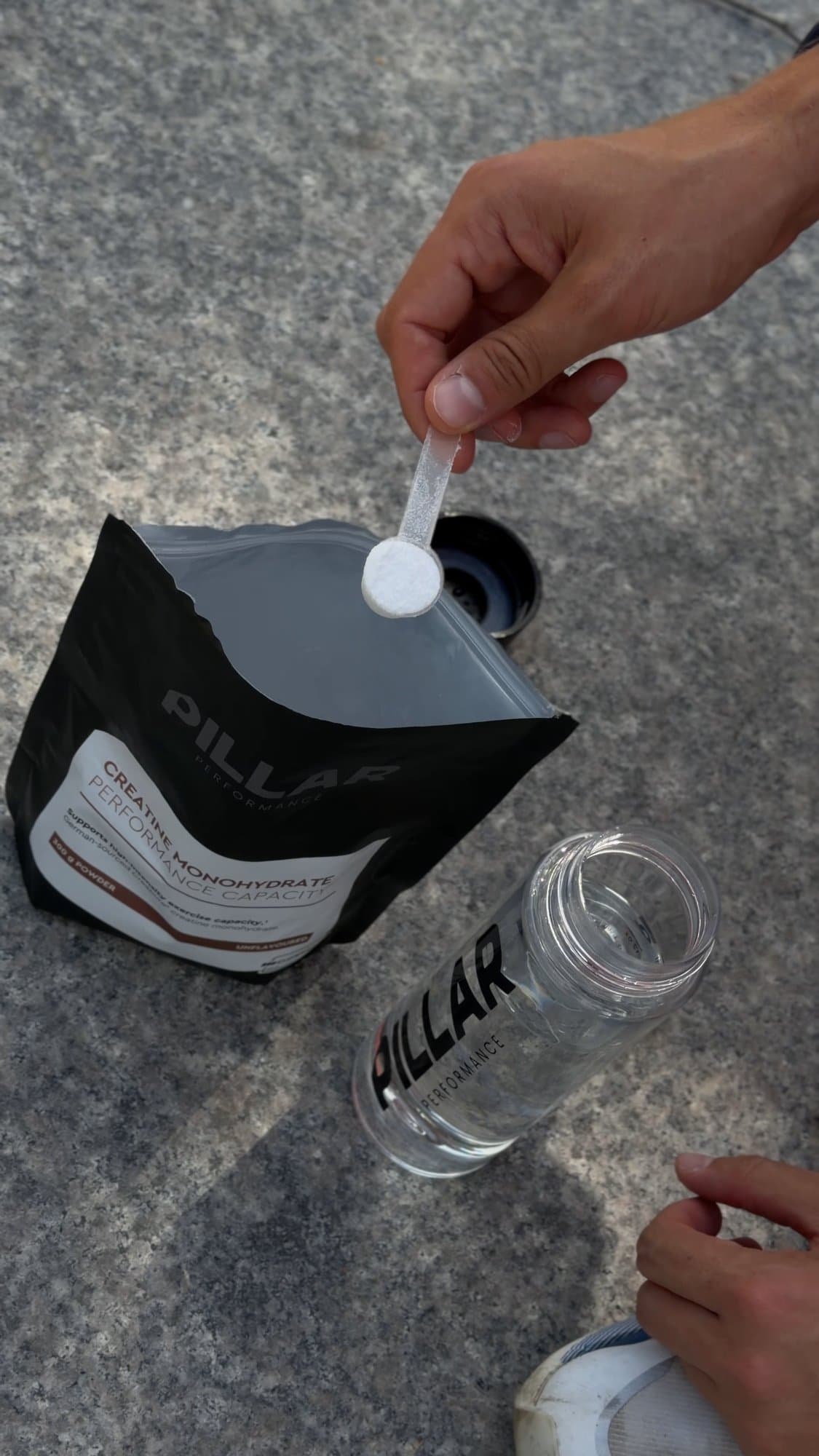
The question “does a runner need protein” usually comes up in winter, when the plan is base work, strength sessions in the gym and long easy runs, with no races on the calendar. This article is for runners, cyclists and triathletes who want to understand why protein is worth counting at all in endurance sport, how a whey concentrate differs from ordinary food, and when the powder gives you nothing. We work through the logic using 226ERS Whey Protein, which is 95.3% concentrate of whey from the milk of grass-fed cows.
Why a runner needs protein when the fuel is carbohydrate
Carbohydrate covers the energy, but tissue repair runs on protein. After a long run, and especially after a strength session in the gym, the body needs material to rebuild muscle fibres, connective tissue, enzymes and blood cells. As weekly volume grows, protein turnover rises, and a chronic shortfall does not show up straight away: first the muscle soreness lingers, then the quality sessions feel flat, small overload niggles heal more slowly and colds come round more often. Protein does not make a session faster, it makes it absorbable.
How much protein a day you need on high volume
Endurance sports nutrition usually gives a reference figure of around 1.4 to 1.8 grams of protein per kilogram of body weight per day, nearer the upper end when strength work is added and during periods of calorie deficit. Distribution matters more than the total: portions of 20 to 25 grams at each of three or four meals work better than one large protein dinner. For a 70 kilogram runner that is roughly 100 to 125 grams a day, which means protein at every meal, not only after training.
Why protein falls short in the winter base period
In winter the shape of the week changes: the gym comes in, strength circuits appear, long runs move to the weekend, and sessions more often land in the evening after work. The day ends up looking like this: a light breakfast, a lunch grabbed on the run, training, and one substantial meal late at night. Total calories may well be adequate, yet the protein is badly spread and there is almost none of it in the first half of the day. This is exactly the situation in which powdered protein is convenient: it delivers a predictable portion of protein at the point where a proper meal simply is not going to happen.
226ERS Whey Protein: what is in a 30 gram serving
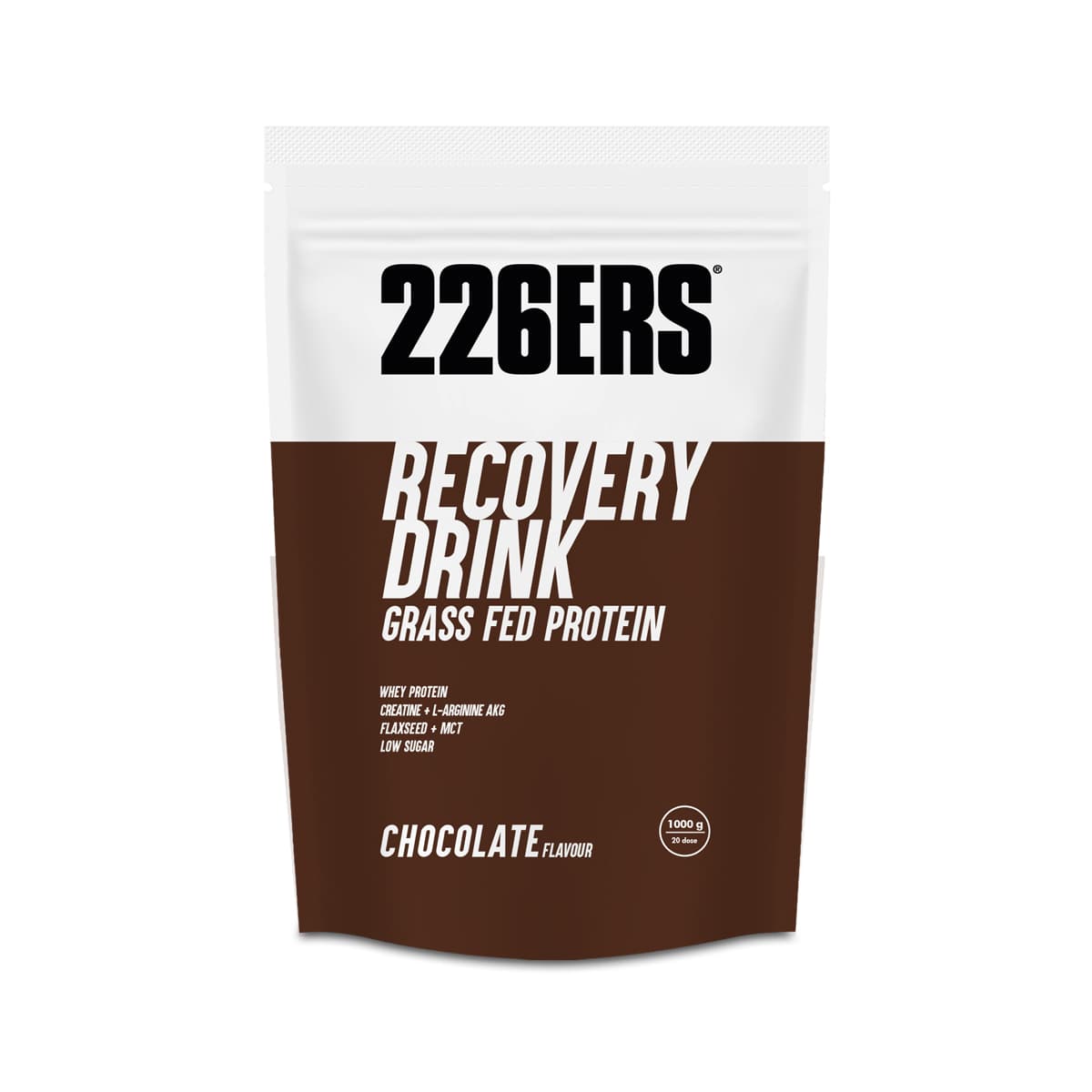
One 30 gram serving of 226ERS Whey Protein contains 22.4 grams of protein, 2.5 grams of leucine, 5.4 grams of BCAAs, 2.2 grams of carbohydrate and 115 kilocalories. The base is concentrate of whey from the milk of grass-fed cows, at 95.3% of the formula. Two things matter here for a runner. First, the serving lands exactly in the 20 to 25 gram protein range recommended for a single intake. Second, carbohydrate and calories are low, so the supplement does not disrupt the rest of the diet and does not replace recovery nutrition after hard work.
Leucine and BCAAs: what the numbers on the label mean
BCAAs are the three branched-chain amino acids, and the key one is leucine: it is what triggers muscle protein synthesis. That is why protein supplements are judged not only on total grams of protein but on leucine per serving, and the figure usually quoted is around two to three grams. A serving of 226ERS Whey Protein has 2.5 grams of leucine and 5.4 grams of BCAAs, so a separate tub of amino acids on top of a complete protein serving no longer makes any sense. Quality protein from food works on the same principle.
How to take whey protein: one serving a day
The scheme is simple: one scoop in 200 to 250 millilitres of water, one serving a day. The most sensible place for it is wherever protein is genuinely missing: after a strength session or a long run, if real food is still a couple of hours away, or at breakfast and a snack if there is almost no protein in the morning. Water rather than milk makes for a lighter drink that is easier to take straight after a session. There are three flavours, chocolate, vanilla and cappuccino, and that is a practical point too, because a supplement that is unpleasant to drink gets abandoned within a week.
When a runner does not need protein
If the daily requirement is covered by food, protein powder is not needed. Eggs, cottage cheese, fish, meat, poultry, dairy and legumes supply the same building material, and the powder has no advantage over them: it is simply more convenient and quicker. Before buying a tub, it is worth honestly counting the protein meal by meal across two or three typical days. Often it turns out that the problem is not the amount but the fact that all the protein is eaten in the evening, in which case the answer is redistributing food rather than a new supplement. The ingredients matter as well: the product contains milk and soya, so it is not suitable for anyone with lactose intolerance or an allergy to those components.
Common protein mistakes among runners
The first mistake is using protein in place of recovery nutrition after a hard session: carbohydrate is needed there too, to bring glycogen back, and 2.2 grams of carbohydrate per serving does not solve that. The second is drinking a shake instead of a meal and losing the vegetables, fats and micronutrients. The third is hoping that a supplement will make up for an overall calorie deficit in the base period. And the fourth is taking the powder to a race. Protein is a tool for training weeks, while fuelling on course is built on carbohydrate, fluid and electrolytes, all rehearsed in advance.
In short: protein as part of the winter plan
The winter base is the time when recovery decides what shape you arrive in for the spring races, and protein here is as much a part of the plan as volume and the gym. Work out your requirement, spread protein across the day, and if a gap in the schedule remains, close it with a single serving of whey. If food handles it on its own, the supplement is not needed. 226ERS Whey Protein in three flavours, like the rest of the endurance range, is available at spacefuel.kz.

FAQ
How much protein a day does a runner need?
The generally accepted reference in endurance sports nutrition is roughly 1.4 to 1.8 grams of protein per kilogram of body weight per day, nearer the upper end with strength training and in a calorie deficit. What matters is not only the total but the distribution: 20 to 25 grams at each of three or four meals.
How do you take 226ERS Whey Protein?
One scoop in 200 to 250 millilitres of water, one serving a day. It makes sense to place the serving where protein is lacking: after a strength session or a long run, when a full meal is still a couple of hours away, or at your morning meals.
Do I need protein if I eat well?
No. If your daily protein requirement is covered by food, the supplement is not needed: the powder is more convenient and quicker, but it offers no advantage over eggs, cottage cheese, fish, meat and legumes. Start by counting the protein in your meals across two or three typical days.