A post-session recovery drink is not something you need every day, and that is where any conversation about recovery should begin. Runners, cyclists and triathletes often buy a tub or a box of sachets, then drink a serving mechanically after any run at all, including an easy thirty-minute jog. There is little benefit in that habit, and the packaging disappears quickly. This article is about how to decide whether you need a drink after a particular session, what the formula should contain and how to stop recovery from becoming extra calories.
Which sessions justify a recovery drink
There are a few situations where a serving after the work really does belong: a long session, a hard climbing day, a second session in one day, and especially when more work is planned for the next day. The general logic is simple: the more you have emptied your stores and the less time there is before the next load, the higher the cost of delay. If your next quality session is more than a day away and your appetite is normal, your body has time to recover on ordinary food.
When you do not need it: an easy session with lunch close by
After a steady cross-country run, an easy recovery ride or a short swim, when you will sit down to a proper lunch half an hour later, a separate serving is unnecessary. A plate of grains, meat or fish and vegetables covers exactly the same jobs. The recovery drink was never designed to replace food, but to solve the situations where eating properly is not an option: the journey home, work straight after training, or no appetite after hard efforts in the heat or at altitude.
What is inside a Recovery Drink sachet: the 50 g serving
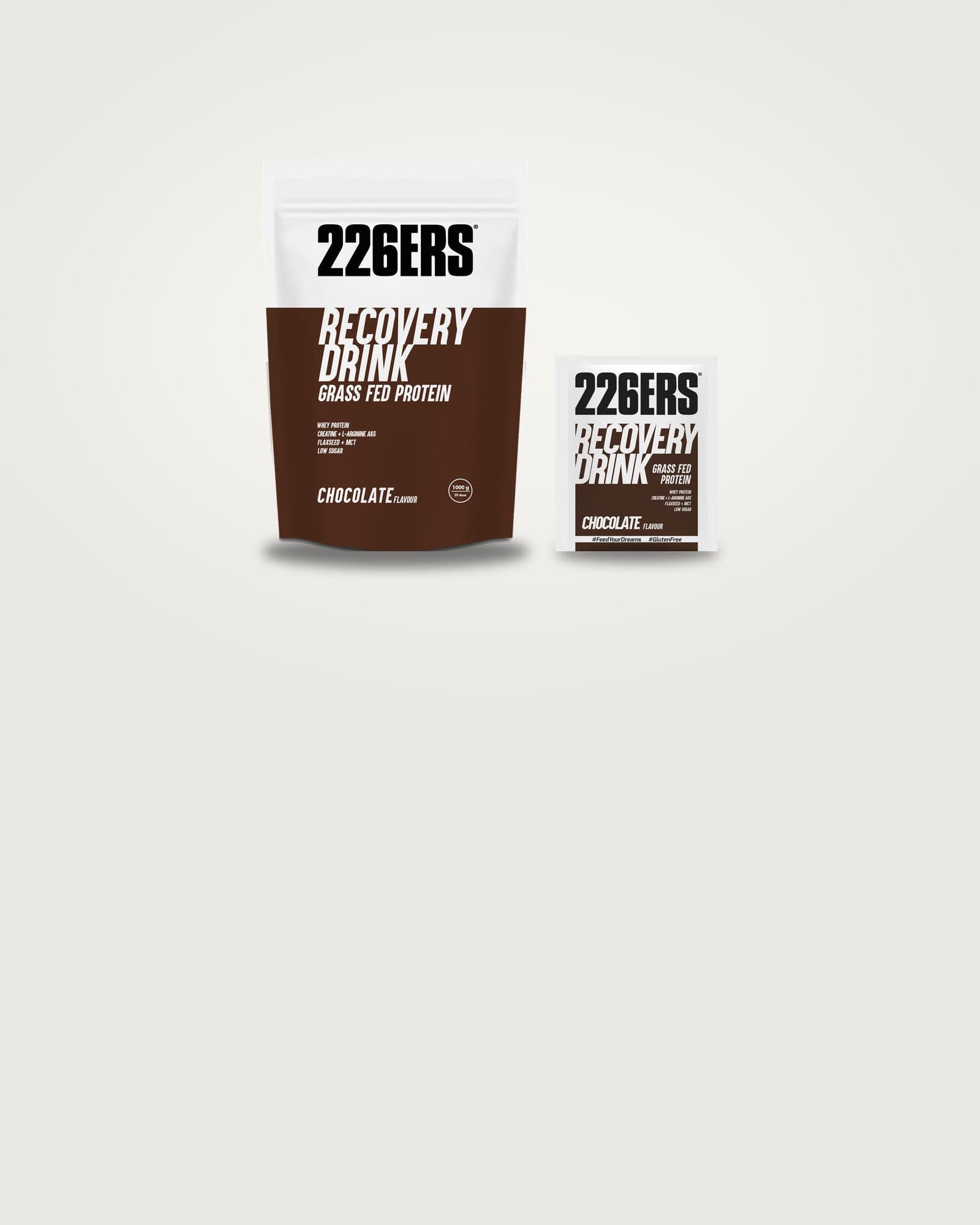
One 50 g Recovery Drink sachet contains 21.5 g of protein from grass-fed whey, 20 g of carbohydrates, 1,500 mg of creatine, 250 mg of arginine AKG and 185 kcal. Structurally this is the classic recovery format: whey protein plus carbohydrates. That combination covers the two basic post-exercise jobs, giving your body material for muscle tissue and helping to start refilling glycogen stores. Importantly, the product contains milk and soya, so anyone intolerant to milk protein should take that into account before buying.
How to take it: the whole sachet in 500 ml of water within the first 45 minutes
The protocol is straightforward: dissolve the whole sachet in 500 ml of water and drink it within the first 45 minutes after the session, one serving a day. Half a litre of fluid is not just a carrier for the powder here: after a long session the body is almost always down on water, and the drink covers part of that deficit. Splitting a sachet into two servings makes little sense, because the protein dose then falls below the usual working figures. If your session finishes away from home, it is easier to put the powder into a bottle in advance and add water at the finish.
Why the formula includes creatine and arginine AKG
Creatine monohydrate is considered one of the most studied supplements, and with creatine consistency matters more than timing: the effect builds up with daily use. That makes the creatine in a recovery drink convenient as a habit: you are already drinking a serving after your key work, so the question of taking it answers itself. Arginine AKG is included as a further amino acid component of the formula. On days without the drink, though, if you are running a creatine course, it makes sense to take it separately, otherwise you will miss more days than you hit.
Common mistakes with recovery drinks
The first mistake is using a serving instead of dinner. The drink covers the window after the load, but it does not replace your daily energy and protein needs, so you still need real food an hour and a half to two hours later. The second is a double serving in the hope of speeding recovery up. The manufacturer specifies one serving a day, and the body does not use more protein at once any more efficiently. The third is drinking it after every single session, which burns through the packaging and strips the tool of its purpose. The fourth is ignoring the ingredients if you are allergic to milk or soya.
How to fit the drink into your training week
The easiest approach is to mark the key sessions in your plan in advance: the long run, interval work, tempo running, a long ride with plenty of climbing, and days with two sessions. Those are the sessions a serving follows. In a typical amateur week there are two or three of them, which means the drink is needed two or three times. In peak weeks before a race or at a training camp the frequency rises, because the hard days come back to back and there is less time for proper meals. In the off-season, by contrast, your ordinary diet covers most of the recovery.
What athletes say about recovering from hard work
Saltanat Arstanbekova notes that this is not their first Recovery Drink and that they take it after sessions, feeling considerably better for it. How you feel the next morning really is one of the most honest guides an amateur has: if you wake up wrung out after a run of hard days, it is worth checking not only your sleep and your volume, but also what you are using to cover the first hours after the work. Sensations do not replace a plan, but they do hint at which way to adjust it.
The conclusion is simple: a recovery drink is a tool for specific situations, not a daily ritual. Go through your week, mark the hard days and the days with two sessions, take a serving after those, and the rest of the time lean on ordinary food. Recovery Drink and other recovery products are available at spacefuel.kz.

FAQ
Do I have to drink a recovery drink after every session?
No. It is justified after a long session, a hard climbing day or a second session in one day, especially when more work is planned for the next day. After an easy session with lunch coming up soon, it is not needed.
How should I prepare and take Recovery Drink?
Dissolve the whole 50 g sachet in 500 ml of water and drink it within the first 45 minutes after the session. One serving a day is recommended, with no need to split it or double it.
What does a Recovery Drink sachet contain?
A 50 g sachet contains 21.5 g of protein from grass-fed whey, 20 g of carbohydrates, 1,500 mg of creatine, 250 mg of arginine AKG and 185 kcal. The product contains milk and soya.