A race nutrition kit is easier to build around goals than around individual items: a road race, a trail event and post-exercise recovery all call for different products. This article is for runners, cyclists and triathletes who are tired of working out from scratch before every start how many gels to carry, what to wash them down with and what to drink in the evening after the finish. We will go through three typical kits and the logic behind them.
Three goals that nutrition kits are built around
The first goal: a steady road race where the pace stays high and aid stations come at regular intervals. The second: a trail event, where speed is lower, time on feet is longer and the stomach tires of sameness. The third goal is not about the distance at all, but about what happens afterwards: sleep, muscles, the ability to get out for the next session. Split your nutrition into these three blocks and choosing products becomes almost mechanical, with no improvising on race day.
The marathon kit: gels, SUB9 Race Day and SUB9 PRO capsules
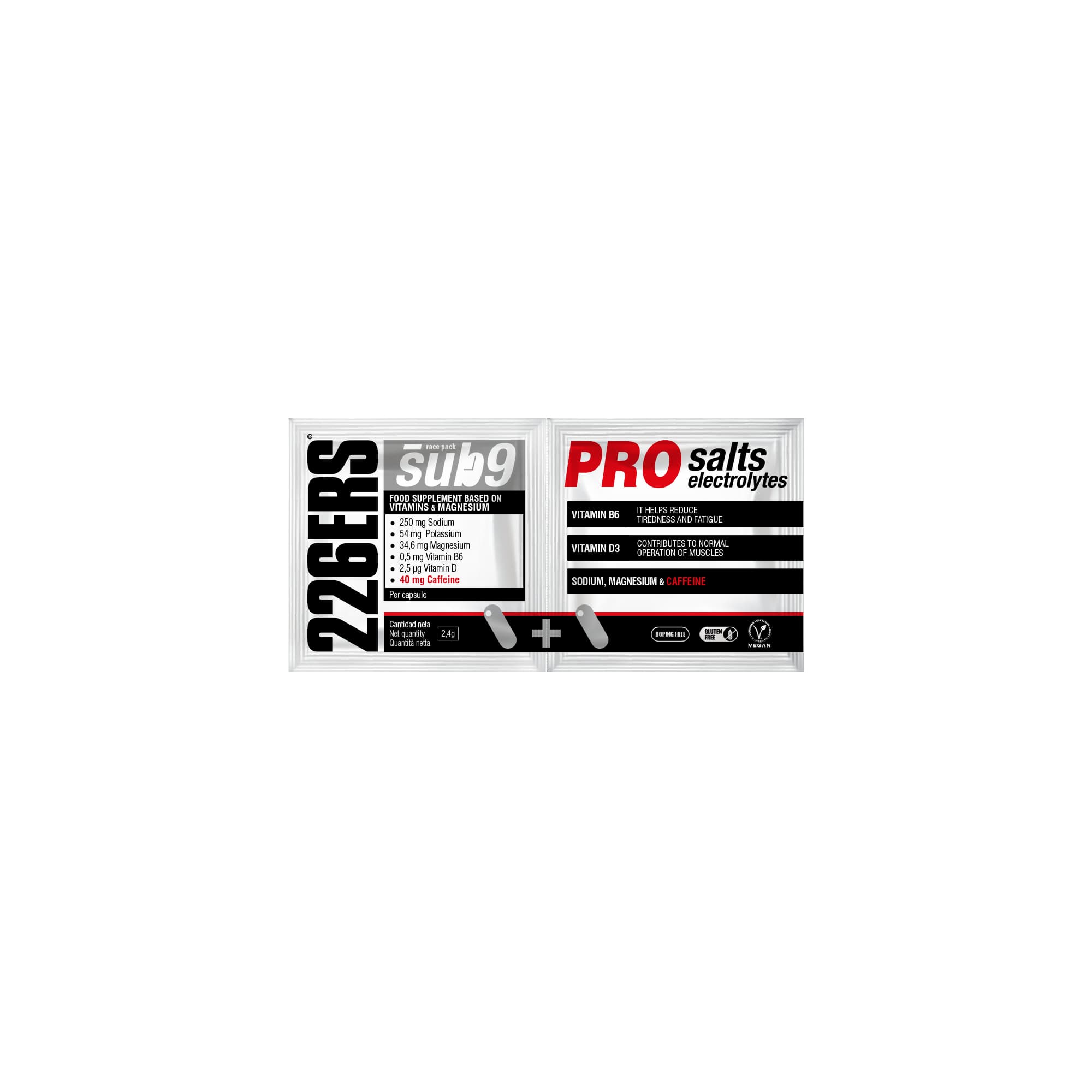
The marathon kit contains eight gels, SUB9 Race Day drink mix, SUB9 PRO capsules and Recovery Drink. The logic is simple: the drink covers the pre-race window and the opening kilometres, the gels keep carbohydrate coming in across the whole distance, the capsules work as a separate element of the race protocol, and Recovery Drink is already waiting in your bag at the finish. This set is designed for race day specifically rather than for training volume, so it gets used up entirely over a single start.
How many gels you need for a marathon and how to count carbs per hour
The widely accepted benchmark in sports science: in efforts longer than two hours the body can absorb roughly 60–90 grams of carbohydrate per hour, and more than that with a trained stomach and mixed sugar sources. That is where the number of gels comes from: multiply your target intake by your expected time on course and subtract what the drink mix will deliver. Eight gels for a marathon is not an arbitrary number, it is roughly the amount that covers the distance for an amateur running somewhere around three and a half to four hours.
The trail kit: bars, electrolyte chews and Hydrazero
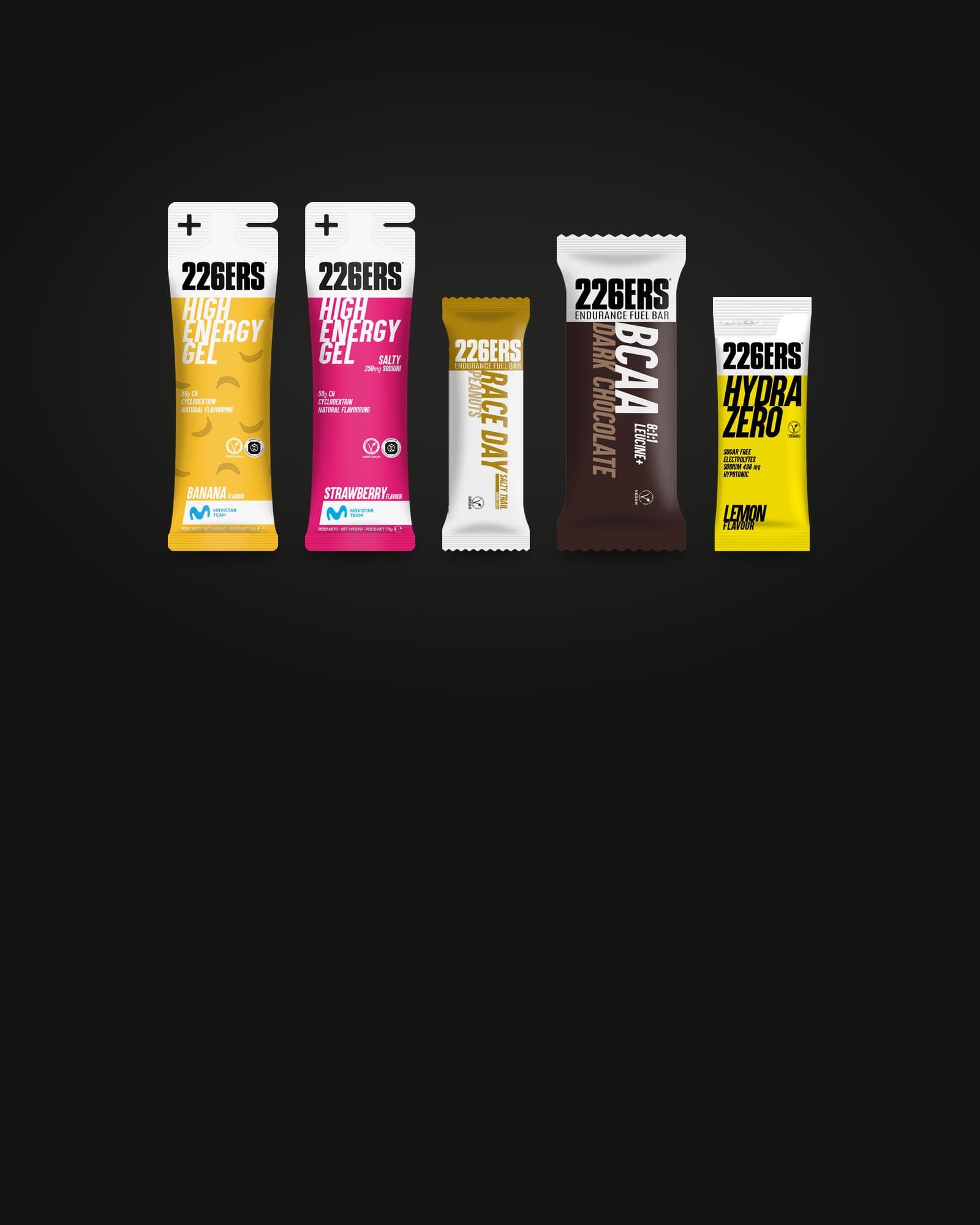
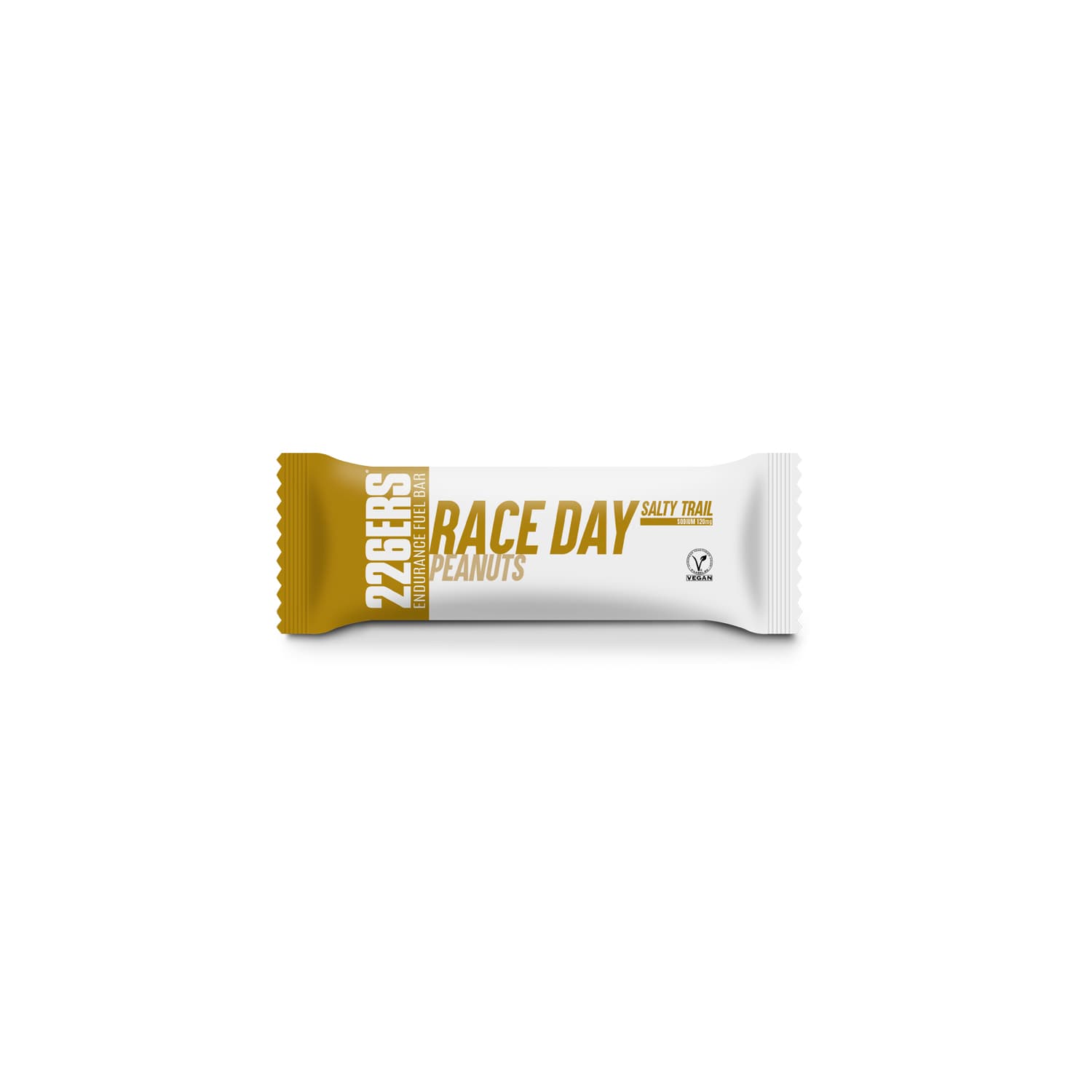
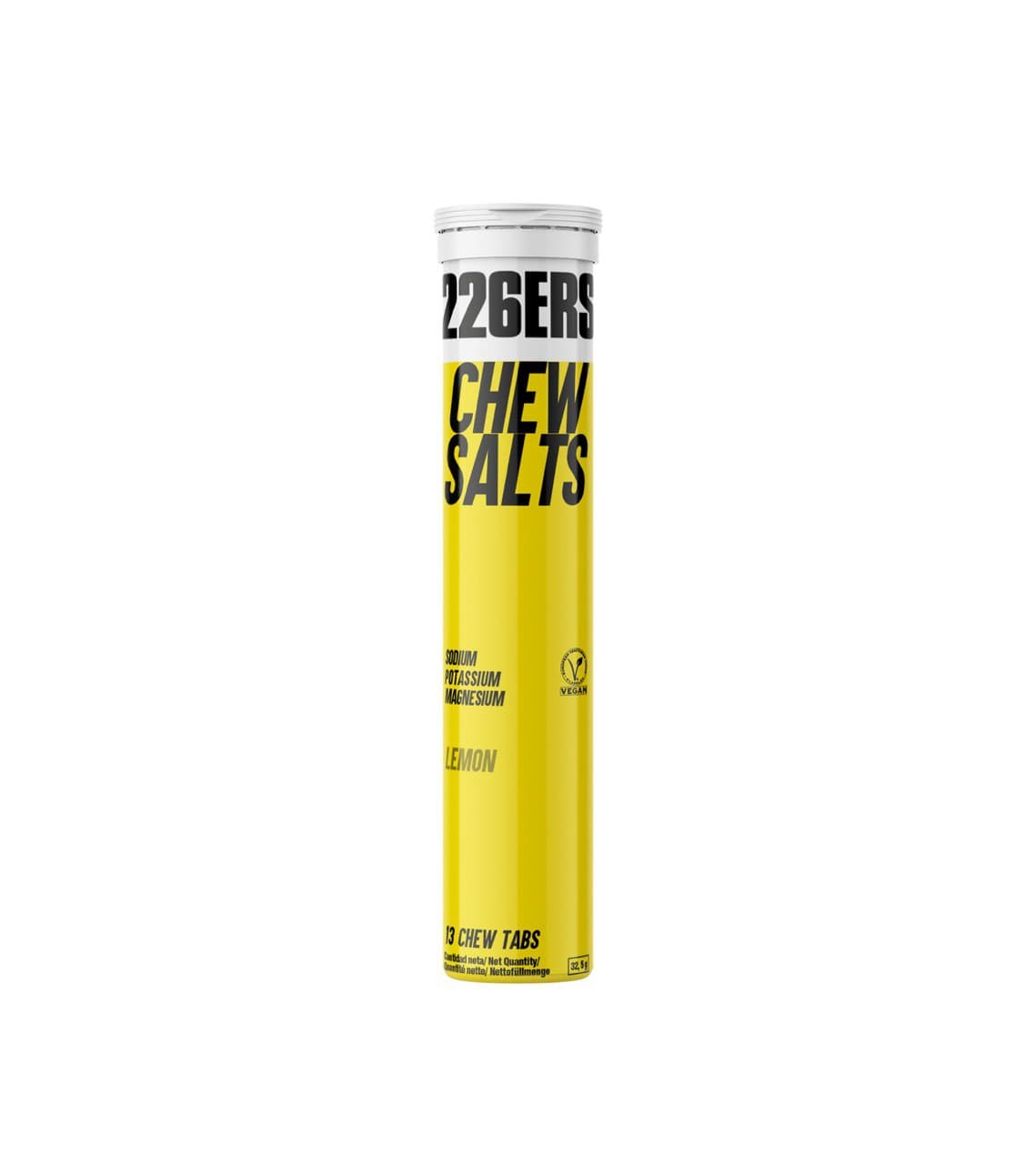
The trail kit is put together differently: gels, bars, electrolyte chews and Hydrazero. On broken terrain the pace is uneven, there is more hiking on the climbs, and the body takes solid food more calmly. A bar goes down without trouble on a climb, while a gel is better saved for sections where you need to lift your energy quickly. Electrolyte chews and Hydrazero cover a separate job: over a long distance in the heat, water without salts does not solve the problem, it only dilutes what is left. That is why hydration is a standalone block in the trail kit.
Why alternating flavours and textures matters on trail
The main reason people stop fuelling on long distances is not physiology, it is flavour fatigue. After the fifth identical gel the sweetness starts to turn your stomach, the athlete simply stops eating, and half an hour later the pace collapses. A kit of gels, bars and chews solves this through variety of texture: something to chew, something to drink, something to swallow on the move. Lay your nutrition out in your vest pockets in advance, in the order you plan to take it, and you will not have to pick through a pile of identical sachets out on course.
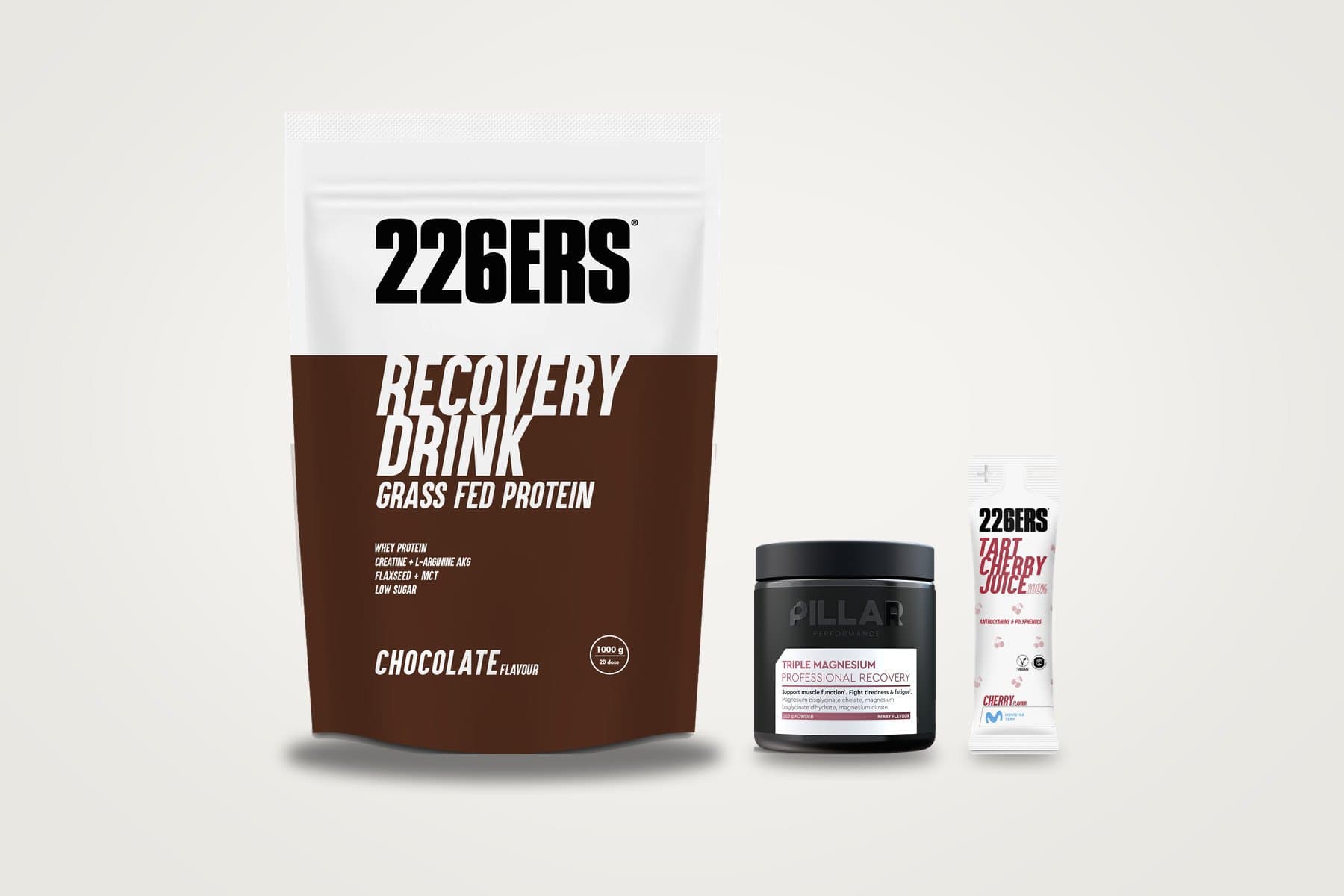
Recovery after the race: Recovery Drink in the first few hours
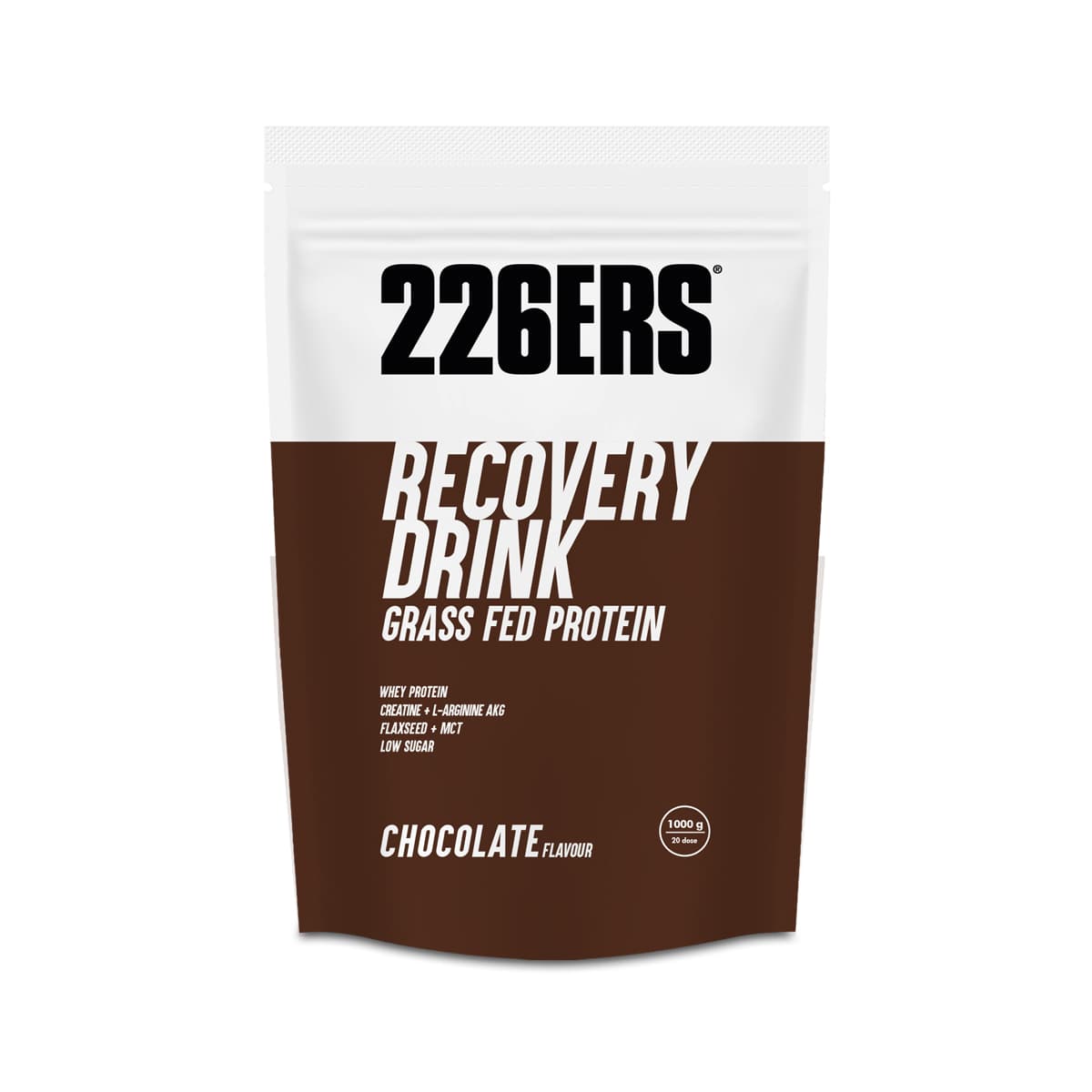
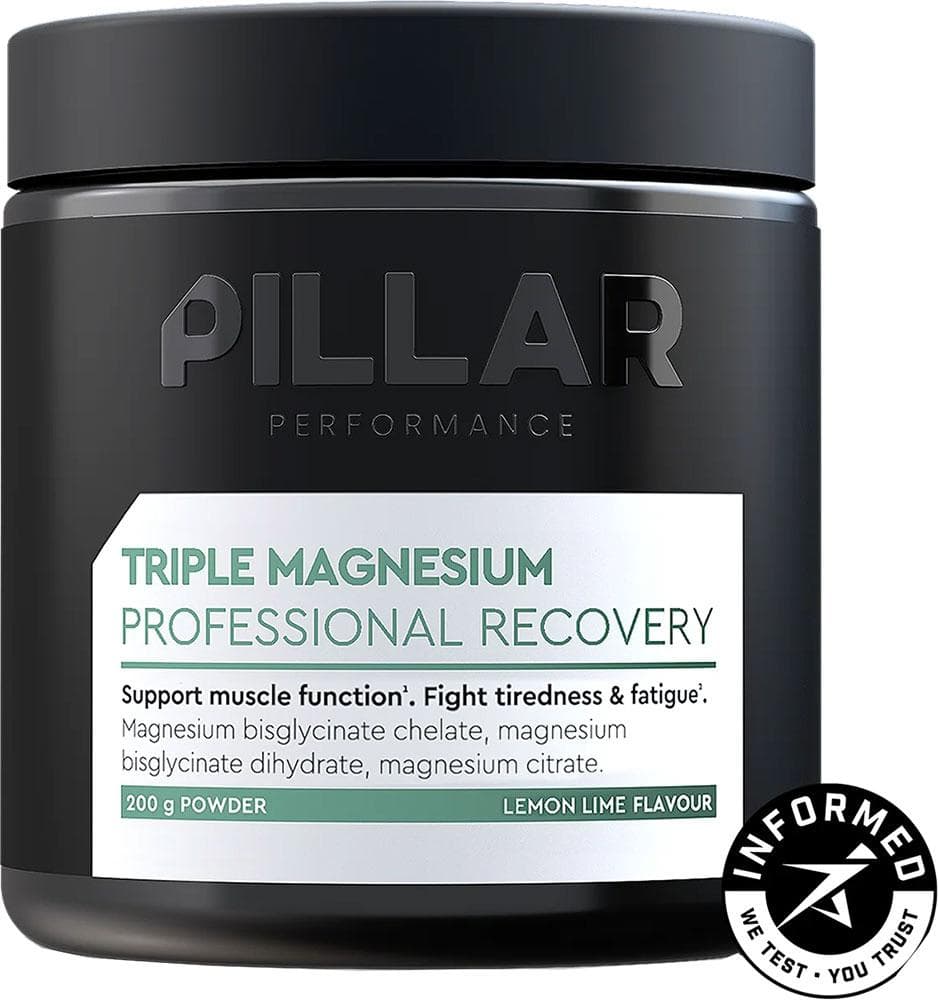
The recovery kit consists of a one kilogram tub of Recovery Drink, PILLAR Triple Magnesium and Tart Cherry. A recovery drink works in the first hours after the effort, when there is only one job: get carbohydrate back into the muscles and supply protein to repair tissue. The classic approach in sports nutrition combines carbohydrate and protein in a single serving, because that combination restores stores faster than either component on its own. The one kilogram pack makes sense here: a recovery drink is needed after every hard session, not once a season.
Magnesium and Tart Cherry during high-volume periods
Triple Magnesium and Tart Cherry belong to a different category: this is not race fuel but daily support during loaded weeks. Magnesium is involved in muscle and nervous system function, and it is most often taken in the evening, when the main task of the day is quality sleep. Cherry is known in sports nutrition as a source of polyphenols and is used in recovery protocols. Products like these do not produce an instant effect: they make sense as a course alongside regular training, not as a one-off tablet after a hard race.
A classic mistake: new nutrition on race day
The most common mistake with any kit is unpacking it on the morning of the start. The stomach has to be trained to handle concentrated carbohydrate, and that happens in training: take the same gel and the same drink mix you plan to use in the race on your long run, at the same dose. In the weeks before the race it is worth doing two or three long sessions on the full race plan, breakfast included. Then on race day your nutrition becomes familiar routine rather than an experiment with an unpredictable outcome.
How to separate training nutrition from race nutrition
A practical scheme looks like this: the race kit sits apart and stays untouched until the start, while training runs on single units bought as consumables. That saves you from discovering the day before the race that you have two gels left instead of eight. Recovery products in large packs and daily supplements live on their own cycle: you simply need to restock them before they run out, otherwise the recovery routine falls apart at the busiest point of the season.
A kit put together in advance saves attention rather than money: on race day you should not be solving problems you could have solved a month earlier. Work out your distance, count your carbs per hour, test your nutrition on a long run and plan separately what you will drink after the finish. Every product in the kits described above, from gels and SUB9 Race Day to Recovery Drink, Triple Magnesium and Tart Cherry, is available in Kazakhstan at spacefuel.kz.



FAQ
How many gels should I take for a marathon?
Work back from your target carbohydrate intake: the sports science benchmark is 60–90 grams per hour in efforts longer than two hours. For an amateur finishing in around three and a half to four hours that comes to roughly eight gels, minus whatever the drink mix delivers.
How does trail nutrition differ from marathon nutrition?
On trail the pace is uneven and there is more hiking, so the body takes solid food more calmly: bars and chews are added alongside gels. Hydration comes as a separate block: electrolyte chews and Hydrazero.
What should I take after a hard session or race?
In the first few hours a recovery drink with carbohydrate and protein does the work, for example Recovery Drink. Daily support during loaded weeks comes from Triple Magnesium and Tart Cherry, but these make sense as a course rather than a one-off.