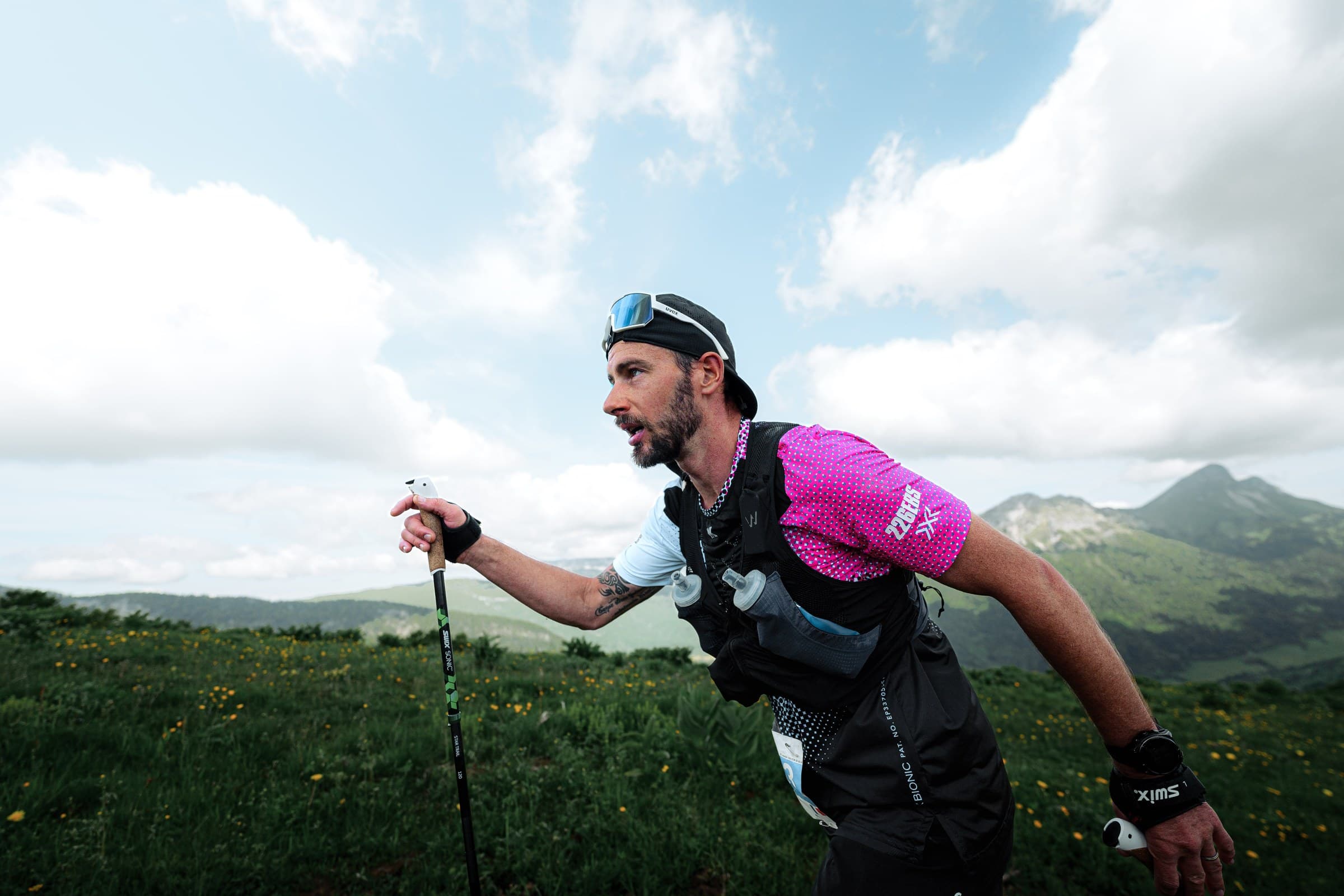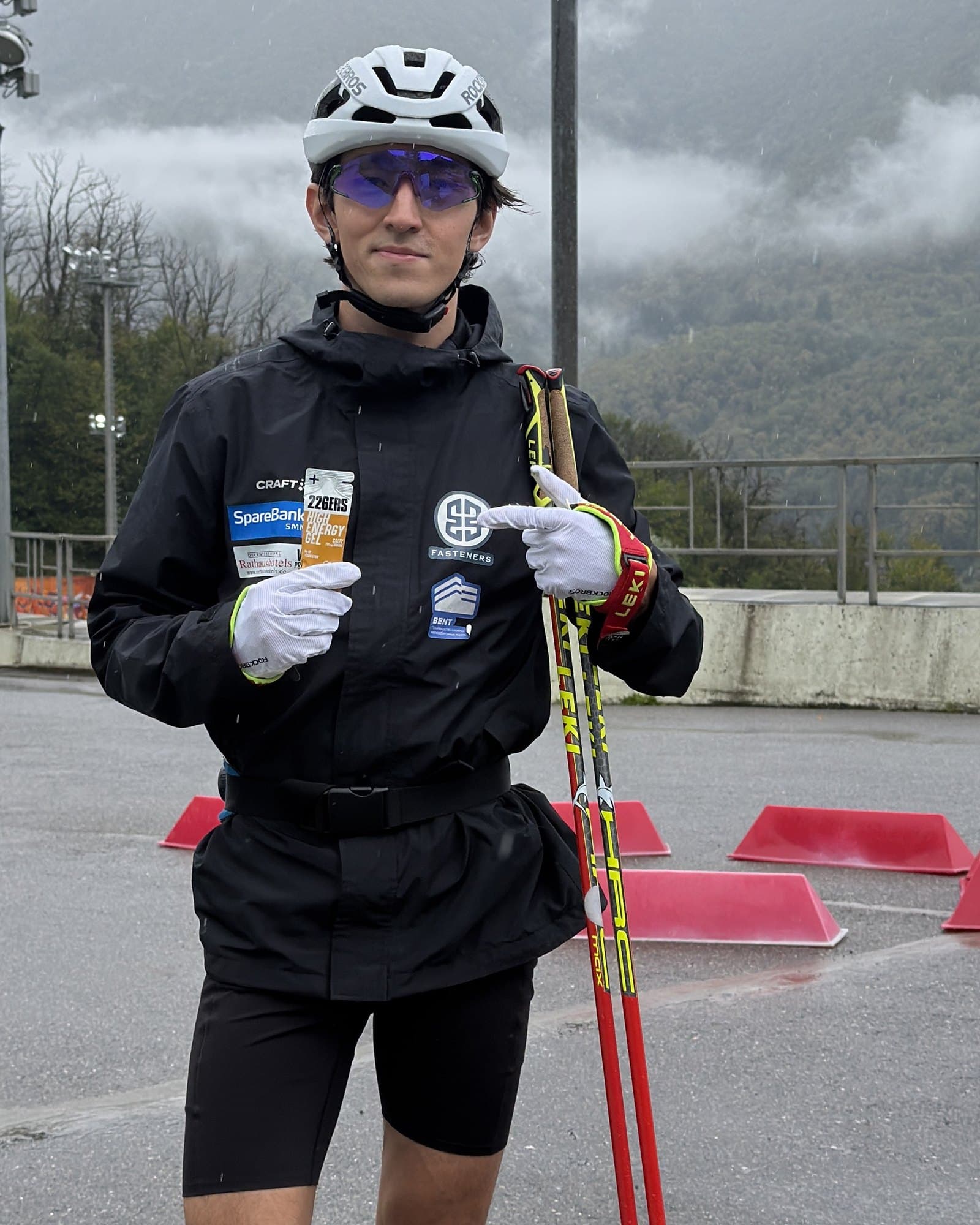
A pre-race gel is the shortest way to add carbohydrate in the final minutes before the gun. This piece is about how many minutes beforehand to take it, why there is sodium in the formula and why a salty flavour sometimes works better than a sweet one. It will be useful for runners, skiers, cyclists and triathletes who have already learnt to fuel on the course but are still deciding during the warm-up whether to take the gel now or leave it in a pocket. The prompt for this look was the experience of skier Chingiz Rakparov, who keeps energy gels on hand both before training and before a race.
Why take a gel before the start if you have already had breakfast
Pre-race breakfast usually lands two to three hours before the start, and by the time the gun goes some of the readily available carbohydrate has already been spent: on the journey to the venue, on registration, on the warm-up, on nerves and on keeping warm if it is a winter start. Muscle stores do not drop noticeably over that time, but blood glucose at the start is often lower than you would like, especially if breakfast was light or early. A small portion of fast carbohydrate just before the work begins closes that gap and lets you settle into your pace straight away instead of grinding through the first few kilometres.
How many minutes before the start to take a gel
The most common approach: the gel goes down in the last minutes of the warm-up, roughly a quarter of an hour before the start, washed down with a few sips of water. The logic is simple: the body has already switched into working mode, the carbohydrate reaches the bloodstream around the first metres of the course, and there is no time left for a rebound dip in blood sugar. The window of thirty to forty minutes before the start is usually the most awkward one, and it is exactly there that some athletes feel flat on the start line. Go by what you have already tested in training rather than by theory.
What is in High Energy Gel “Salted Peanut and Honey”
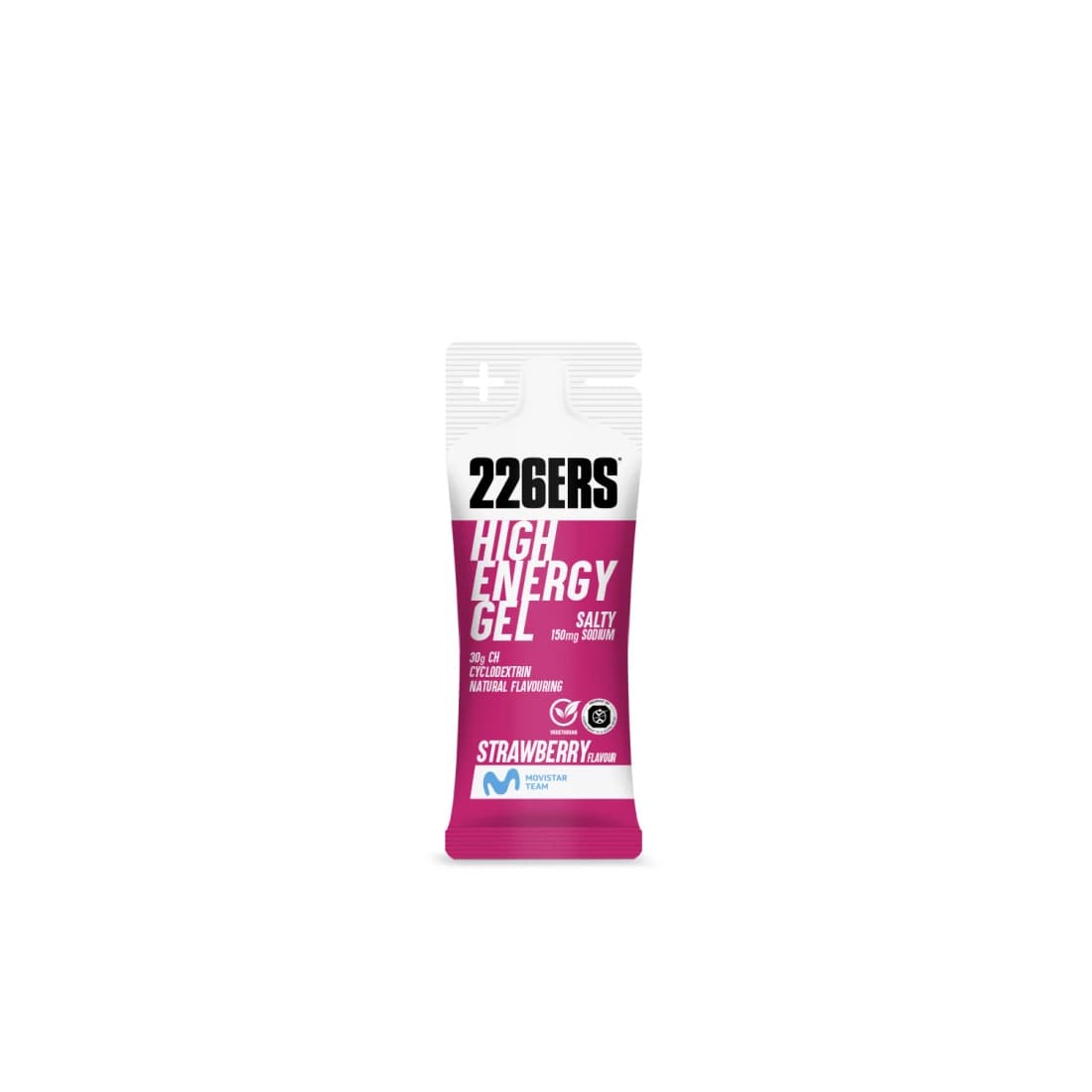
High Energy Gel in the Salted Peanut and Honey flavour comes in 76 g sachets and delivers 50 g of carbohydrate, 201 kcal and 250 mg of sodium. There is no caffeine in it, and no gluten either. For a pre-race serving those are meaningful details: there is enough carbohydrate for the effect to be noticeable, yet the format stays a single sachet that you do not need to split or recalculate on the move. One sachet before the start and a clear carbohydrate figure make the rest of your on-course fuelling plan much simpler.
A salty gel flavour: when sweet will not go down any more
Flavour fatigue is a real problem in long races: after several sweet gels and a sweet isotonic drink the body starts refusing the next serving even when the plan says you need it. A salty flavour breaks that monotony, and the serving goes down without any internal resistance. That is why it is worth keeping salty options in your plan not only for the start but also for the second half of the course, where the bargaining with yourself usually begins. In short races it works differently: there, a familiar flavour matters more than variety.
Sodium in a gel: why salt even before the start
Sodium is the main electrolyte lost in sweat, and a shortfall shows up not only as cramp but also as a drop in concentration and a thirst that lingers even on a full stomach. A dose of salt alongside your pre-race carbohydrate helps hold fluid in the body from the very start of the work rather than chasing losses halfway through. This is especially noticeable in the heat and in tight clothing, when you start sweating while still in the start pen. That said, a gel does not replace a drinking plan: sodium only works together with water or an isotonic drink.
A caffeine-free gel before the start: plus or minus
The absence of caffeine in a pre-race gel gives you freedom to plan. You can save the caffeine for the point on the course where it is more useful, and avoid stacking it on top of the coffee you had at breakfast. That is handy for evening starts, after which getting to sleep matters, and for weekends with several races back to back, typical of the ski season and track racing. For anyone who tolerates stimulants poorly or tends to get a racing pulse on the start line, the caffeine-free option is simply calmer.
Gels in the cold: ski races and winter starts
In winter a gel behaves differently: in the cold it thickens, the sachet turns stiff, and opening it in gloves is awkward. The fix is well known: carry the gel in an inside pocket under your jacket, close to the body, rather than in an outer one. It is also worth rehearsing the movement itself: tearing the pack open in mittens, getting the serving down in time and not losing the corner of the sachet. For ski races and winter runs this is as much a part of preparation as choosing your clothing layers, and it is practised in training, not on race day.
Common mistakes with a pre-race gel
First mistake: trying a new flavour on race day and finding out how your stomach reacts out on the course. Second: taking a thick gel without water if that is exactly how it sits badly with you. Third: taking the gel far too early and hitting a dip just as the work begins. Fourth: adding a second gel just in case and going to the line feeling heavy. Fifth: accidentally picking up the caffeinated version, forgetting about your morning coffee, and spending the first kilometres with your heart rate above plan.
How to trial your pre-race gel in training
The best way to test the routine is to rehearse race day in training: the same breakfast, the same interval before the work starts, the same gel, the same water. A time trial or a long session with an intense start will do the job: that is exactly where you can see whether the serving helps or hinders. Write down what you took and when, and how you felt over the first kilometres, and after two or three sessions the routine stops being guesswork. The finished protocol then transfers to any race unchanged.
A pre-race gel solves one narrow task: adding carbohydrate and salt in the final minutes before the work and starting the race evenly. Preparation does the rest: a tested flavour, a clear timing for taking it and water to hand. High Energy Gel “Salted Peanut and Honey” in a 76 g sachet is available at spacefuel.kz for 2 900 ₸.


FAQ
How many minutes before the start should you take a gel?
The most common approach: in the last minutes of the warm-up, roughly a quarter of an hour before the start, with a few sips of water. The window of thirty to forty minutes before the start is usually the least convenient, and some athletes feel flat over the first kilometres when they use it.
How much carbohydrate is in the 226ERS High Energy gel in Salted Peanut and Honey?
A 76 g sachet contains 50 g of carbohydrate, 201 kcal and 250 mg of sodium. There is no caffeine or gluten in the formula.
Why do you need a salty gel if sweet flavours are available?
After several sweet gels and a sweet isotonic drink, flavour fatigue sets in and the next serving is hard to get down. A salty flavour breaks the monotony, so it is worth keeping one both for the start and for the second half of the course.