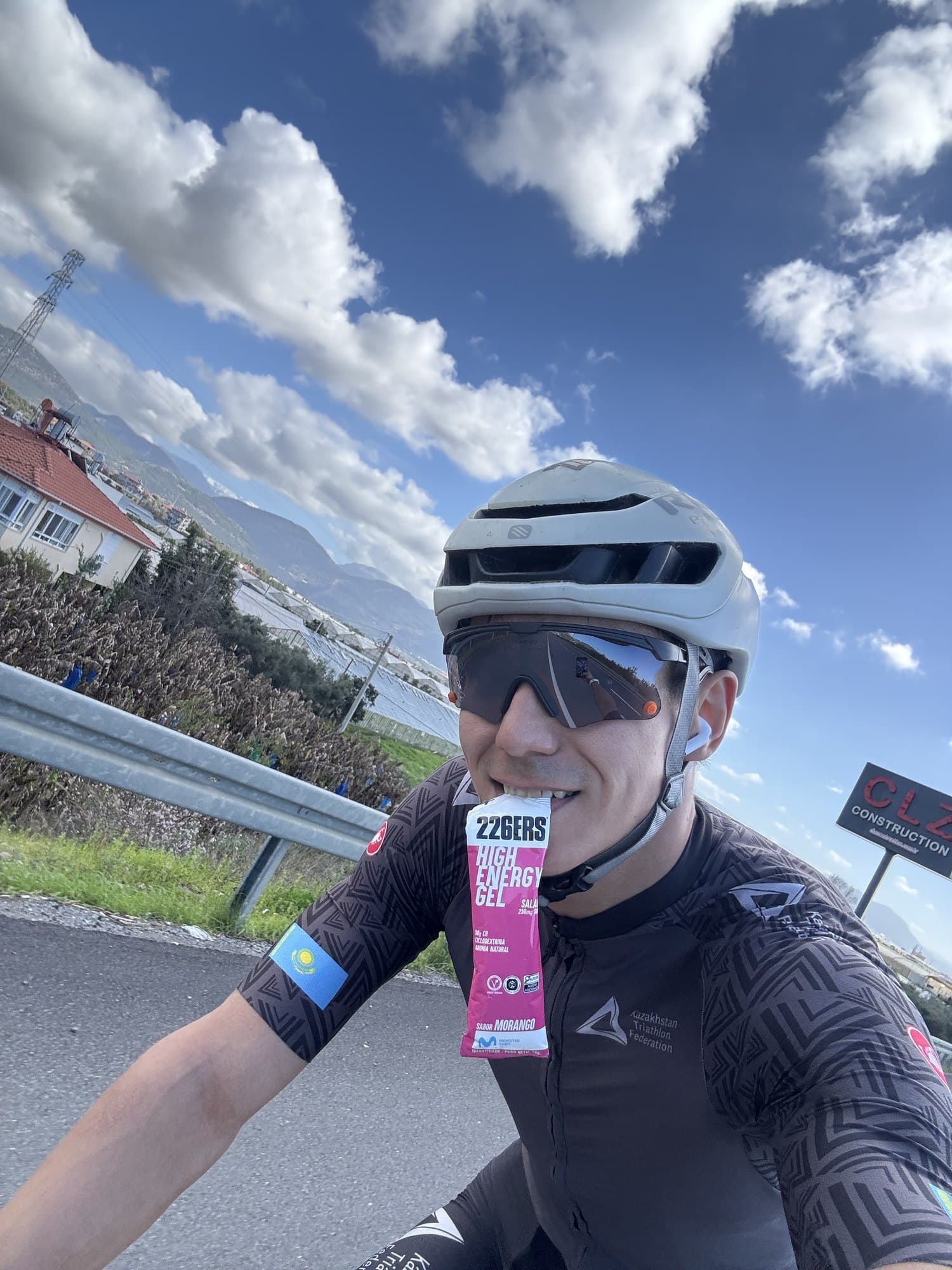
In 226ERS High Energy gel the carbohydrates come in the form of cyclodextrin. For sports nutrition this is an important detail: the form of the carbohydrate determines not only how much energy you get, but also how well your stomach tolerates the gel in the second, third and fourth hour of work.
One large molecule instead of many small ones
The cyclodextrin molecule is larger than that of glucose, sucrose or ordinary maltodextrin. For the same amount of carbohydrate it produces fewer dissolved particles, which means lower osmolarity in the finished mixture.
Low osmolarity
Osmolarity shows the concentration of particles in a solution. The higher it is, the more water the body draws into the intestine to dilute the contents, and the more often you get that familiar “brick” feeling after a sweet, concentrated gel. With cyclodextrin this figure is lower, so the gel is gentler on digestion.
The stomach empties faster
A mixture with low osmolarity does not linger in the stomach and moves on down the tract. The serving is not sitting inside waiting its turn, and the carbohydrates reach the muscles while you carry on working.
What this gives you in practice
The main problem in a long race is not the first gel but the fifth and the sixth. When the previous serving has not yet cleared, the next one lands on top of it, and then come heaviness, nausea and missed feeding points. A cyclodextrin gel is designed for regular intake: you can take one every 30 minutes without any heaviness.
Who needs this most
Marathon runners going longer than three hours, trail and ultra runners, cyclists in long races and triathletes at half distance and IRONMAN. The longer the effort, the more feeds you take on the course and the more noticeable the difference in tolerance.
How to build it into your plan
Rehearse the interval in long training sessions rather than on race day: start with a gel every 40–45 minutes and shorten it to 30 if your stomach stays calm and the pace is high. Wash it down with a couple of sips of water or isotonic drink. This is the standard rule for any new product.
226ERS High Energy gels, with and without caffeine and in a range of flavours, are available at spacefuel.kz. You can also put together a set to suit your own distance there.

FAQ
Why is cyclodextrin used in the 226ERS High Energy gel?
In the 226ERS High Energy gel the carbohydrates are provided in the form of cyclodextrin, and the form of the carbohydrate determines not only the amount of energy but also how the stomach tolerates the gel in the second, third and fourth hour of work. The cyclodextrin molecule is larger than that of glucose, sucrose or ordinary maltodextrin, so for the same amount of carbohydrate it yields fewer dissolved particles and a lower osmolality of the finished mixture. With cyclodextrin this value is lower, and the gel is gentler on digestion.
How does the osmolality of a gel affect the stomach?
Osmolality shows the concentration of particles in a solution: the higher it is, the more water the body draws into the intestine to dilute the contents, and the more often that familiar “brick” feeling appears after a sweet, concentrated gel. A mixture with low osmolality does not linger in the stomach as long and moves further along the tract. The serving does not sit inside waiting its turn, and the carbohydrates reach the muscles while you keep working.
How often can you take the 226ERS High Energy gel during a race?
A cyclodextrin-based gel is designed for regular intake: you can eat one every 30 minutes without heaviness. Work out the interval on long training sessions rather than on race day: start with a gel every 40–45 minutes and shorten it to 30 if your stomach is calm and the pace is high. Wash it down with a couple of sips of water or isotonic drink, which is the standard rule for any new product.