Gel without water: the question comes up every time the aid stations on a course are far apart, your bottle is already empty and your plan says it is time to take on carbohydrate. The situation is familiar to trail runners on mountain loops, to cyclists on long rides out of town and to competitors at smaller races where water is handed out once every five kilometres. This piece is about why an ordinary thick gel practically demands something to wash it down, how the isotonic format is put together and how to build a fuelling plan that will not fall apart because there is no water on the course.
Why a thick gel is hard to take without water
An ordinary concentrated gel is a very dense carbohydrate solution. Once it reaches the stomach it first has to be diluted by fluid, and until that happens gastric emptying slows down. Hence the familiar sensations: a lump under the ribs, heaviness, no desire to take the next mouthful. If you managed to pick up water at an aid station, the problem solves itself. If not, the body draws fluid from its own reserves, and against a background of dehydration that makes you feel worse still. This is exactly why, with thick gels, the fuelling plan is tied rigidly to where the water stations are.
Isotonic gel: the same concentration as blood plasma
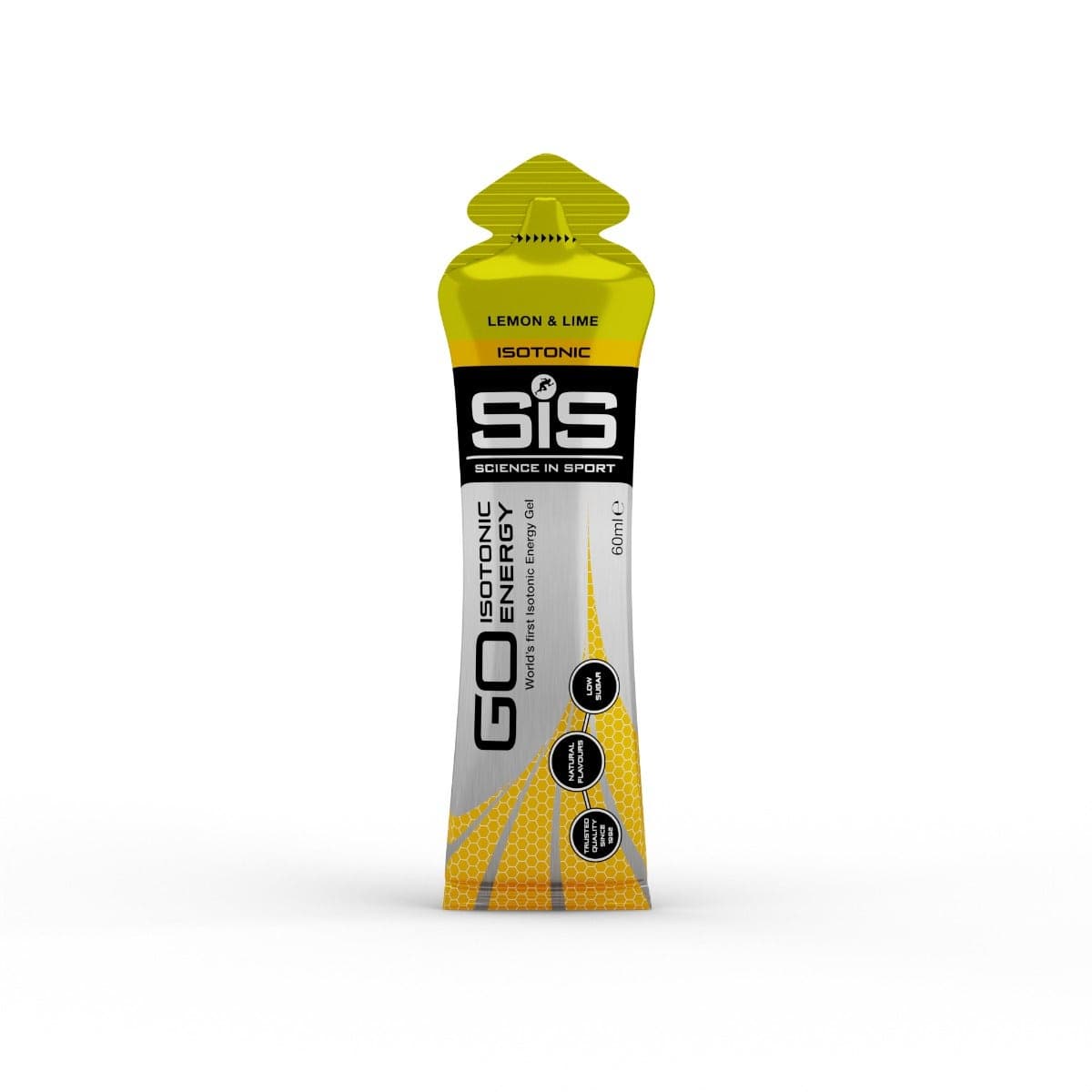
The isotonic format solves the problem differently: the gel is already diluted to a concentration close to that of blood plasma. In texture SiS GO Isotonic is closer to a drink than to a paste, so it goes down in a single mouthful and needs nothing to wash it down. Water in this scheme stops being a precondition for taking carbohydrate and becomes a separate variable: you drink it according to thirst and the weather, not because otherwise you could not swallow the gel. For a start with sparse aid stations, that is a fundamental difference in planning.
How much carbohydrate one sachet gives and how to count an hour of racing
A 60 ml sachet contains 22 g of carbohydrate and no caffeine. The manufacturer suggests a simple scheme: the first gel 10–15 minutes before the start, then one every 25–35 minutes. Converted to an hour that is roughly two gels, so around 40–50 g of carbohydrate, which falls within the generally accepted range for distances of one to three hours. On longer races experienced athletes push intake higher, but they do it gradually and always combine sources: gels, a drink, sometimes solid food. It is worth starting at the lower end of the range and watching how your stomach responds.
The absence of caffeine as a planning advantage
A caffeine-free gel is convenient because you can take it from the first minute to the finish without worrying about your total stimulant dose. Your caffeine strategy is then built separately and deliberately: a single point in the second half of the course instead of chaotic accumulation. The same property helps on evening sessions and races, where extra stimulant would ruin your sleep, and in races in the heat, where many athletes prefer to keep caffeine under control.
Salted caramel with electrolytes for the heat
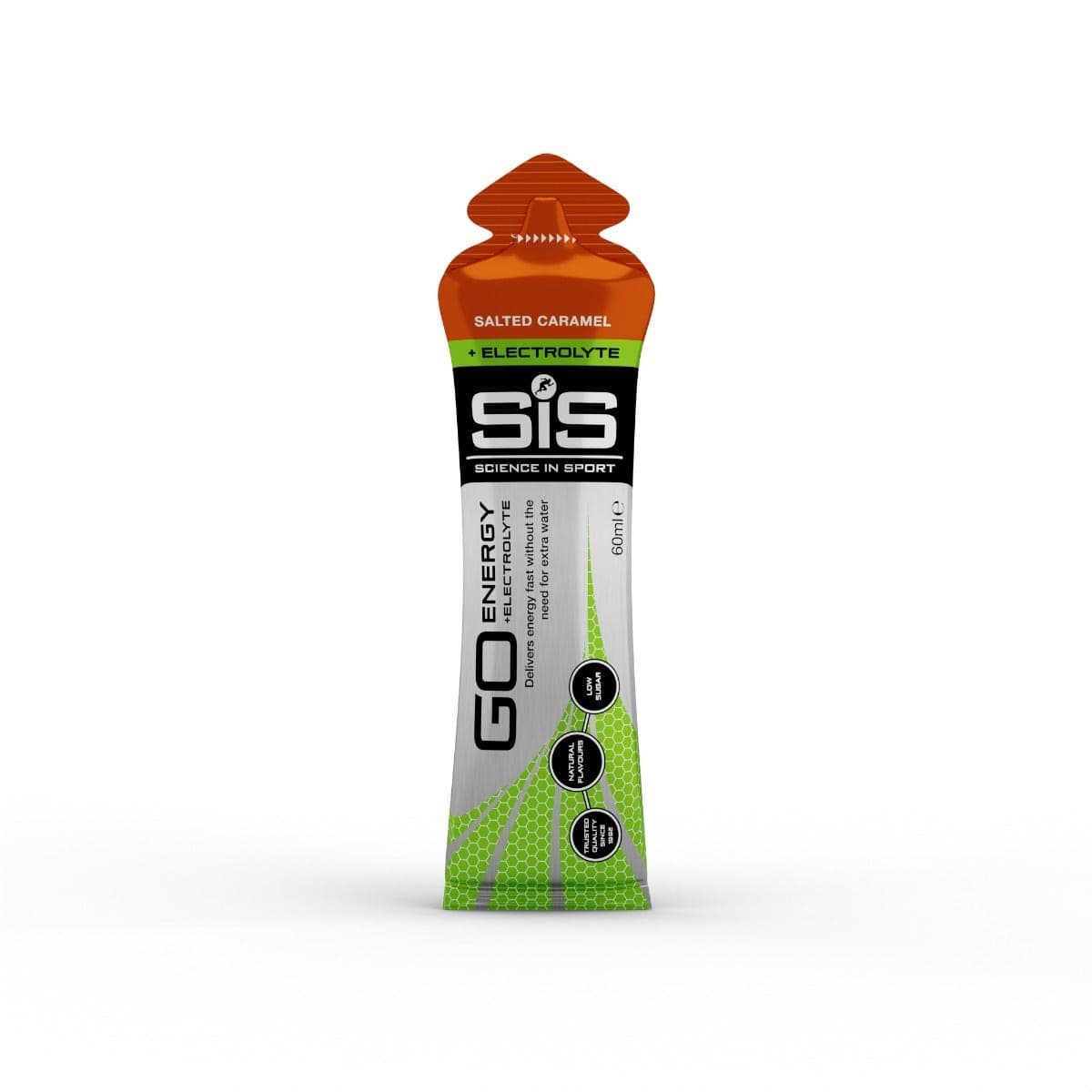
For hot conditions and long distances the range includes a salted caramel flavour with electrolytes: 118 mg of sodium per serving. Sweat costs you not only water but salt as well, and the losses are individual, growing with temperature and with the duration of the effort. If a race lasts more than two hours in warm weather and all you are drinking is plain water, the sodium concentration in your blood gradually falls, and that shows up in how you feel and how your muscles work. In that sense the version with electrolytes covers two jobs at once: carbohydrate and part of your salt balance.
Flavours and flavour fatigue over a long distance
All six flavours are in stock: pineapple, lemon and lime, pink grapefruit, fruit salad, blackcurrant and apple, at 2 400 ₸ each. Variety here is not marketing but a working tool. By the third hour the same flavour starts to turn your stomach, and a gel that went down easily in the first hour becomes an ordeal. The simple solution: take two or three different flavours to the race and alternate them, saving the most pleasant one for the final third of the distance, when motivation to eat is at its lowest.
Typical gel mistakes in a race
The first and biggest: trying new nutrition on race day. The stomach adapts to gels, and the scheme needs bedding in on long sessions at the same pace and in the same weather. The second mistake: skipping the early feeds and starting to eat once your energy has already gone. Carbohydrate does not work instantly, and clawing back a slump is harder than avoiding it. The third: washing an isotonic gel down with a sports drink, raising the overall sugar concentration in the stomach. If your bottle already holds a carbohydrate drink, you need fewer gels, and that has to be worked out in advance rather than on the move.
How to build a plan for a course with few aid stations
The sequence is simple. Work out your expected time on the course, divide it by the 25–35 minute interval and you have the number of sachets. Add one spare. Plan fluid separately: bottle volume, refill points, a reserve for the heat. Pack the gels so that you can reach them without stopping: the front pockets of a vest, a saddle bag, a belt. And test all of this logistics on a long session, including the moment of opening a sachet on the move in gloves or with tired hands.
An isotonic gel does not make race nutrition automatically correct, but it removes one of the common causes of trouble: the dependence of your carbohydrate plan on having water to hand. The rest comes down to calculation, rehearsal in training and a sober assessment of race-day conditions. The SiS range, including all six GO Isotonic flavours and the version with electrolytes, can be viewed at spacefuel.kz.
FAQ
Can you take a gel without water?
A thick concentrated gel is hard going without water: it slows gastric emptying until it has been diluted by fluid. An isotonic gel is already diluted to a concentration close to that of blood plasma, so it needs nothing to wash it down, and you drink water according to thirst.
How many SiS GO Isotonic gels do you need per hour of racing?
The manufacturer's scheme calls for the first gel 10–15 minutes before the start and then one every 25–35 minutes. That is roughly two sachets an hour, so around 40–50 g of carbohydrate, with 22 g in a single 60 ml sachet.
Which gel should you take to a race in the heat?
For heat and long distances the version with electrolytes, in the salted caramel flavour, is the one to take, with 118 mg of sodium per serving. Sweat costs you not only water but salt, so in races lasting more than two hours in warm weather sodium is worth accounting for separately.