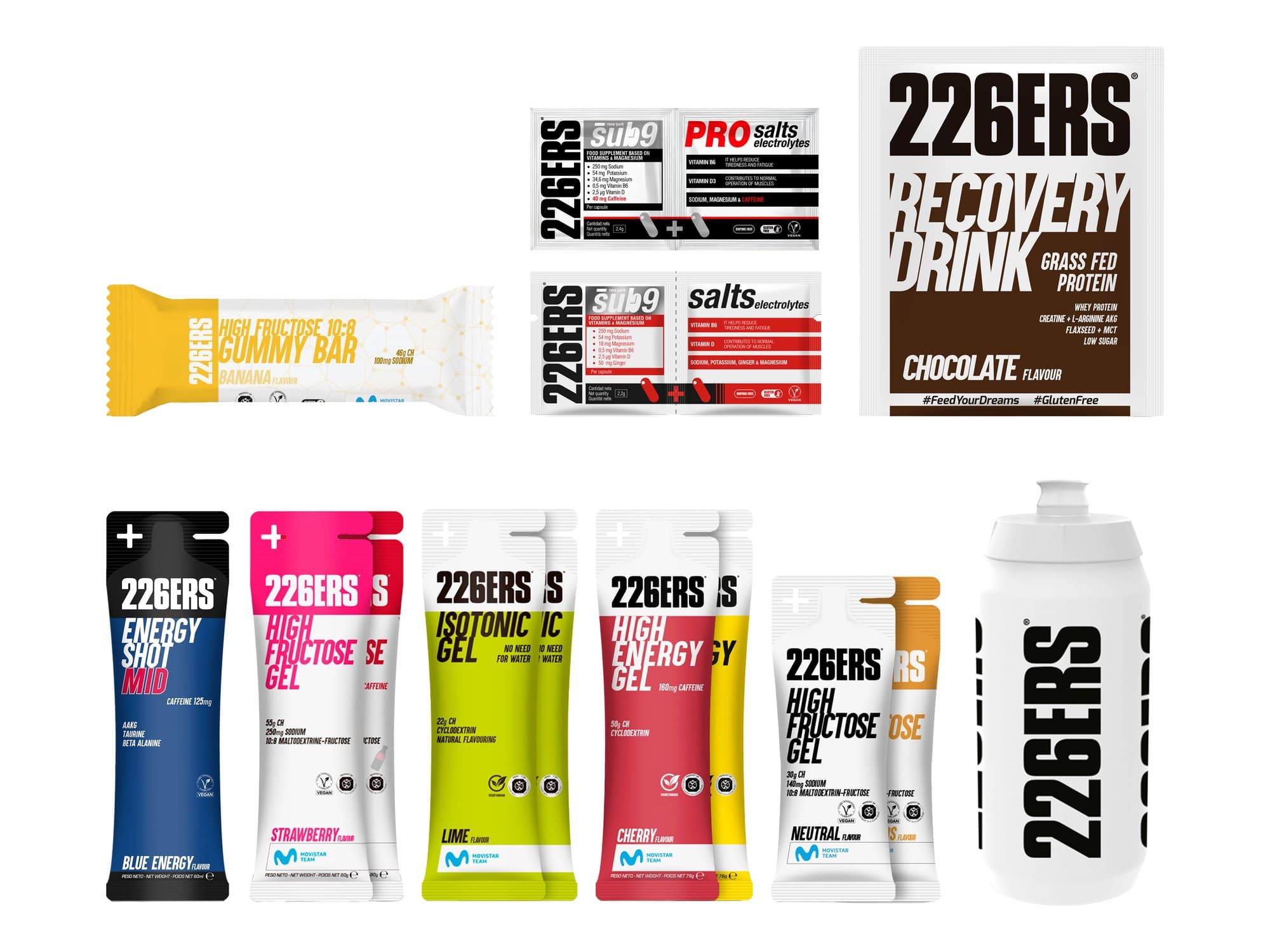
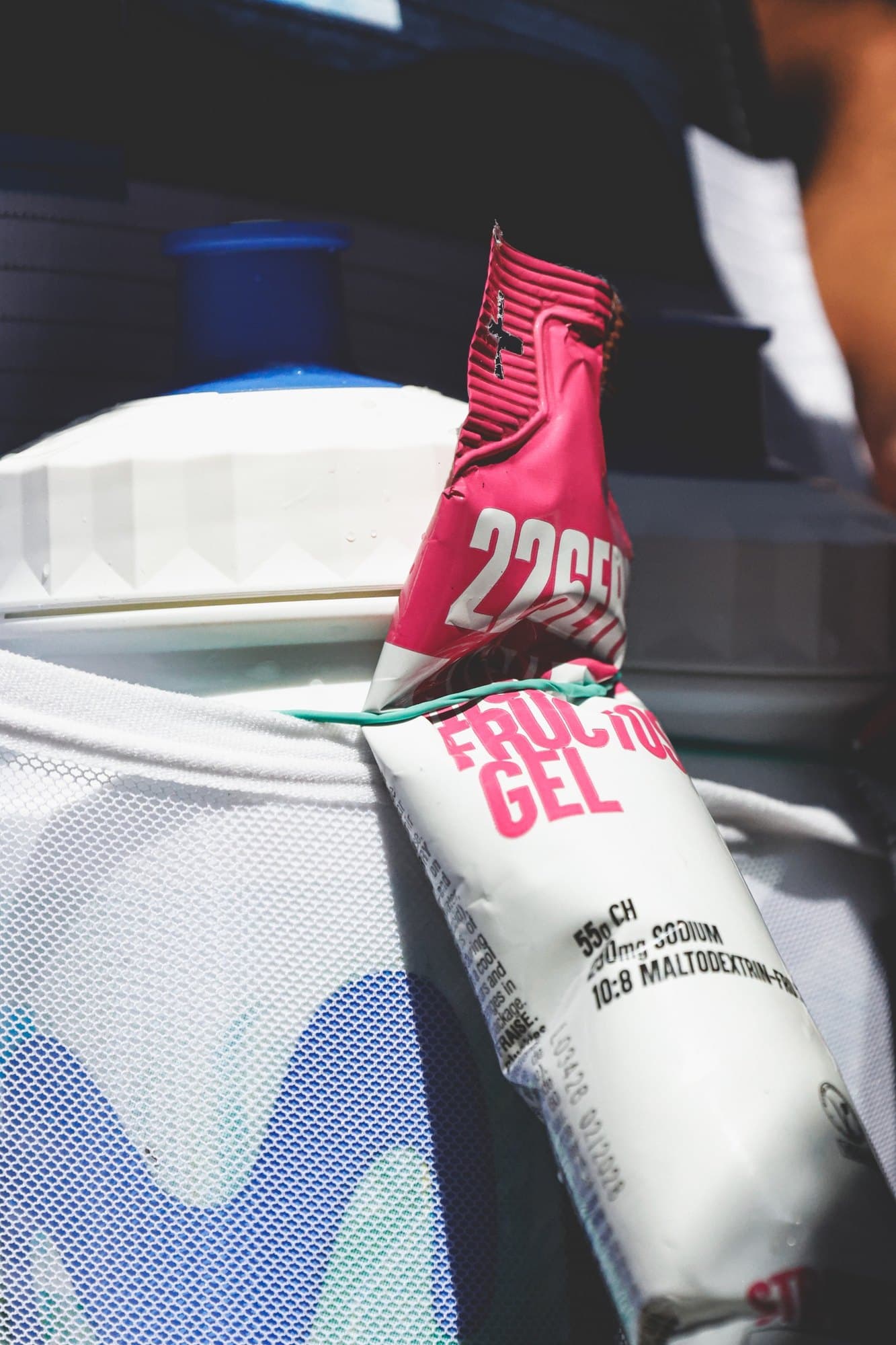
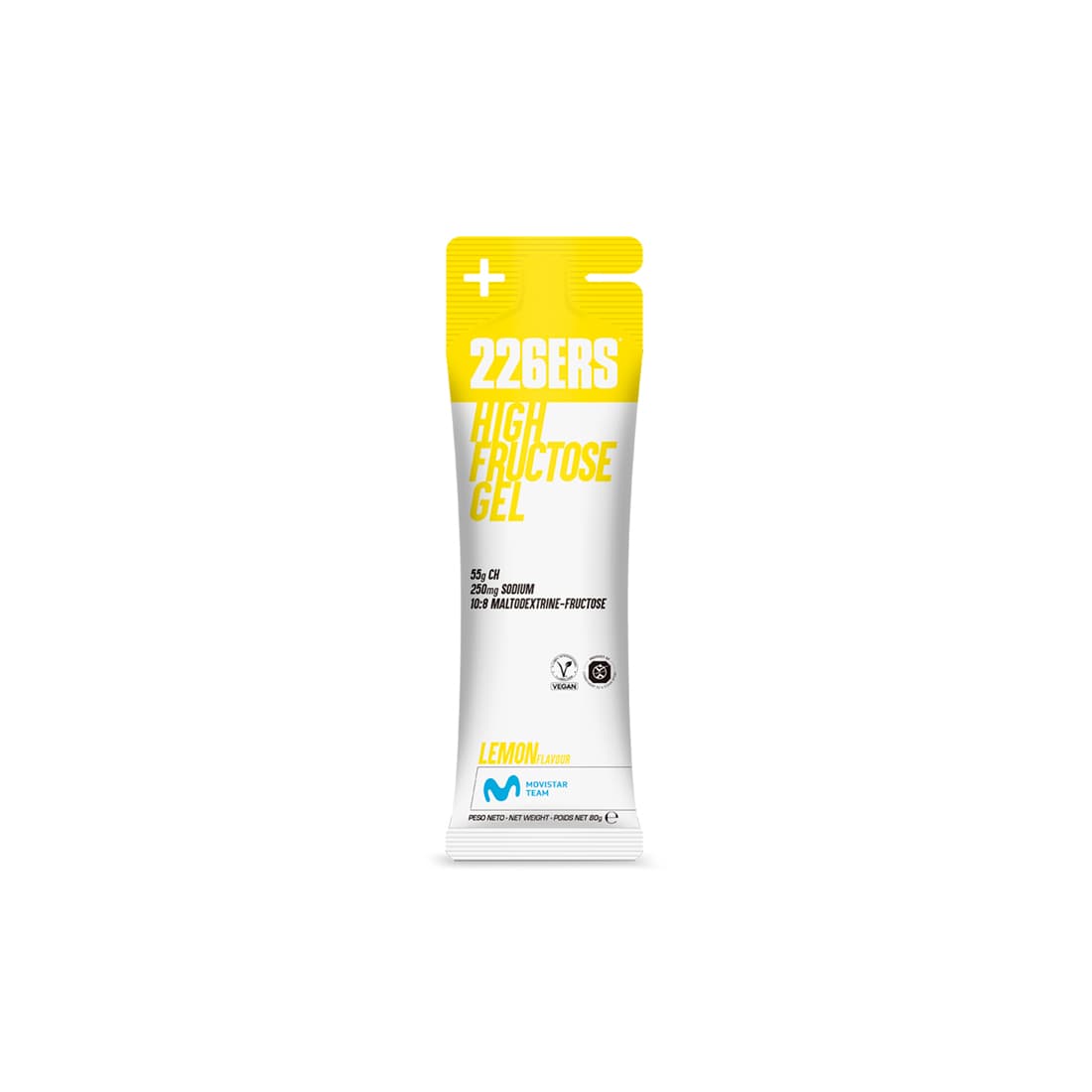
The question of how to take in more than 60 g of carbohydrate an hour comes up for a runner or triathlete the moment the distance stops fitting into two hours. Over 10 km and the half marathon, the glycogen stored in your muscles covers almost all of the work, and race nutrition plays a supporting role. In a marathon, a full-distance triathlon, a long ride or a trail race the picture is different: carbohydrate has to be delivered continuously, and the familiar figure of around 60 grams an hour becomes a ceiling rather than a target. Gels with a high proportion of fructose exist precisely for cases like these, among them High Fructose Gel from 226ERS: the sachet holds 80 grams of product, of which 55 grams are carbohydrate, plus 253 mg of sodium.
Why 60 g of carbohydrate an hour was long considered the limit
Glucose and maltodextrin, which breaks down into glucose anyway, cross the intestinal wall by the same transport route. The capacity of that route is limited, and in most people it tops out at roughly 60 grams an hour. Pile on more carbohydrate of the same type and it will not be absorbed any faster: part of it stays in the gut, draws water in after it and produces that familiar heaviness, sloshing and nausea. That is why the advice to stay under 60 grams an hour was treated as universal for so long.
Maltodextrin and fructose at 10:8: how this gets around the limit
Fructose is absorbed by a different route, independent of the glucose one. Give the body both carbohydrates at the same time and two channels are working, so the total rate of absorption goes up. In High Fructose Gel the ratio of maltodextrin to fructose is 10:8, which means the share of fructose here is noticeably higher than in an ordinary energy gel. The practical meaning is simple: one sachet delivers 55 grams of carbohydrate, and the body can process those 55 grams without the feeling that a stone is sitting in your stomach.
Why there are 253 mg of sodium in the gel
The sodium in the gel does two jobs. First, it takes part in carrying glucose across the intestinal wall, so it helps the carbohydrate itself do its work. Second, sodium is the first thing you lose in sweat, and over a long distance a sodium deficit shows up before a water deficit does. The 253 mg of sodium per sachet do not replace separate electrolytes in the heat or during many hours of work, but they make the gel less “dry” for the body and smooth out the gap between what you drink and what you lose.
How many gels an hour in a marathon and in a triathlon
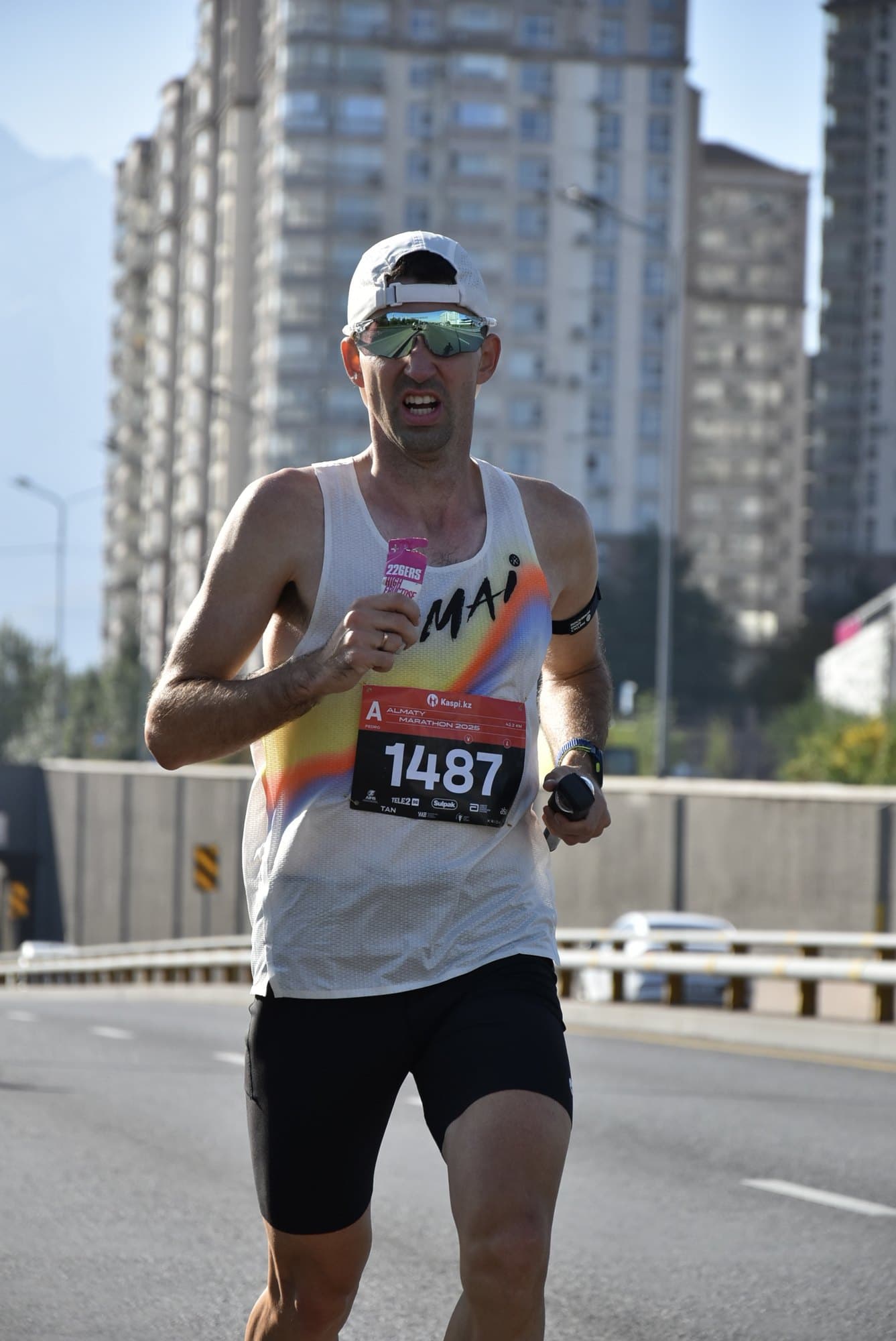
The starting point for a marathon is one High Fructose gel an hour. That gives around 55 grams of carbohydrate an hour, already above the classic figure, while staying comfortable for the stomach on the run. In a triathlon the plan depends on the discipline: up to two gels on the bike leg and one on the run. The logic here is physiological rather than a matter of taste: on the bike your torso is stable, there is almost no jolting and blood flow to the gut is higher, so nutrition is absorbed better. On the run it is the other way round, and the volume is worth cutting back deliberately.
Long rides, trail and cross-country skiing: different regimes
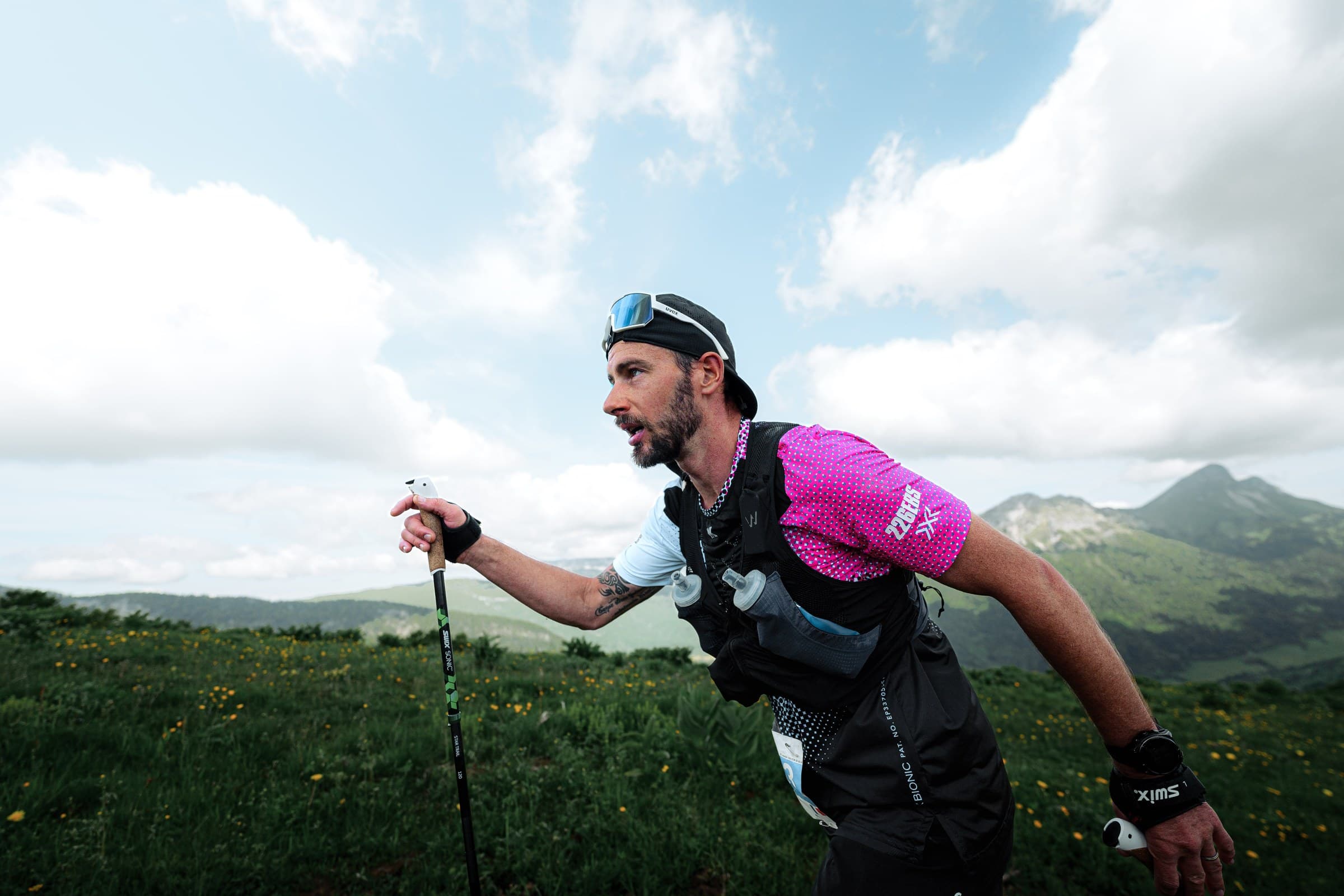
On a long ride the guideline is one or two gels an hour, depending on the intensity and the duration of the work. In trail running and ski races it makes more sense to stick to one gel an hour. The reason is not that the body burns less: the reason is the conditions. Trail adds elevation change, impact loading and an uneven heart rate, while skiing brings in the cold and whole-body work. In both cases the stomach accepts large portions less willingly, and a steady stream of carbohydrate matters more than one maximum dose.
Two gels an hour and 300 ml of water: where the limit lies
The upper limit for High Fructose gels is no more than two an hour, and they need around 300 ml of water alongside. This is not a formality but a condition for the whole scheme to work. A concentrated gel pulls fluid into the gut, and if there is no water, absorption slows down and cramps and nausea come with it. So a nutrition plan should always be built together with a plan for the aid stations: first look at where the water will be on course, and only then place your gels across the hours.
The caffeinated Cola and Cherry gels: one an hour
The Cola and Cherry flavours contain caffeine, and a separate rule applies to them: no more than one such gel an hour. Caffeine lowers the perceived effort of the work and helps in the second half of the distance, but it is easy to overdo, especially if you are also drinking energy drinks or had coffee before the start. A sensible approach is to save the caffeinated flavours for the part of the race where you want the effect, and to cover the rest of the distance with the neutral flavours, of which the range has several, from lemon and strawberry to cherry.
The classic mistake: trying 55 g of carbohydrate for the first time on race day
The most common problem with high-carbohydrate gels is not the formula but the lack of preparation. The gut adapts to the volume and concentration of carbohydrate in the same way muscles adapt to training load: gradually, over several weeks. Eat a concentrated gel for the first time at kilometre 30 of a marathon and your stomach will almost certainly refuse, and that will have nothing to do with the product. A nutrition plan needs to be rehearsed on long sessions at the same pace, with the same amount of water and in the same order of flavours you intend to use on race day.
Why professionals choose high-fructose gels
Pedro Visuete calls High Fructose his favourite gel, and there is practical logic behind that. The higher an athlete's level, the higher their average power and the more carbohydrate they can get through in an hour of work. At that level, the difference between 40 and 55 grams of carbohydrate per sachet turns into a difference in the number of sachets you have to carry and tear open on the move. Fewer packets in a pocket or on the bike frame means less fuss during the race and less chance of losing your nutrition.
The bottom line: more than 60 grams of carbohydrate an hour becomes available not through willpower but through a combination of two carbohydrates, sodium and enough water. One High Fructose gel an hour is enough for a marathon, on the bike leg of a triathlon and on a long ride you can work towards two, for trail and skiing it is better to stay at one, and caffeinated flavours should be limited to one an hour. High Fructose gels from 226ERS in a range of flavours, including lemon, strawberry, cola and cherry, are available at spacefuel.kz.
Frequently asked questions

FAQ
How much carbohydrate is in one High Fructose gel?
The sachet holds 80 grams of product, of which 55 grams are carbohydrate, plus 253 mg of sodium. The ratio of maltodextrin to fructose is 10:8.
How many High Fructose gels can you take in an hour?
No more than two an hour, and they need around 300 ml of water alongside. The caffeinated flavours, Cola and Cherry, should be taken at no more than one an hour.
Why does the gel contain two different carbohydrates?
Glucose and fructose are absorbed by different transport routes, so combining them means more carbohydrate is absorbed in total than a single route allows. That is what makes it possible to go above the familiar figure of around 60 grams an hour.