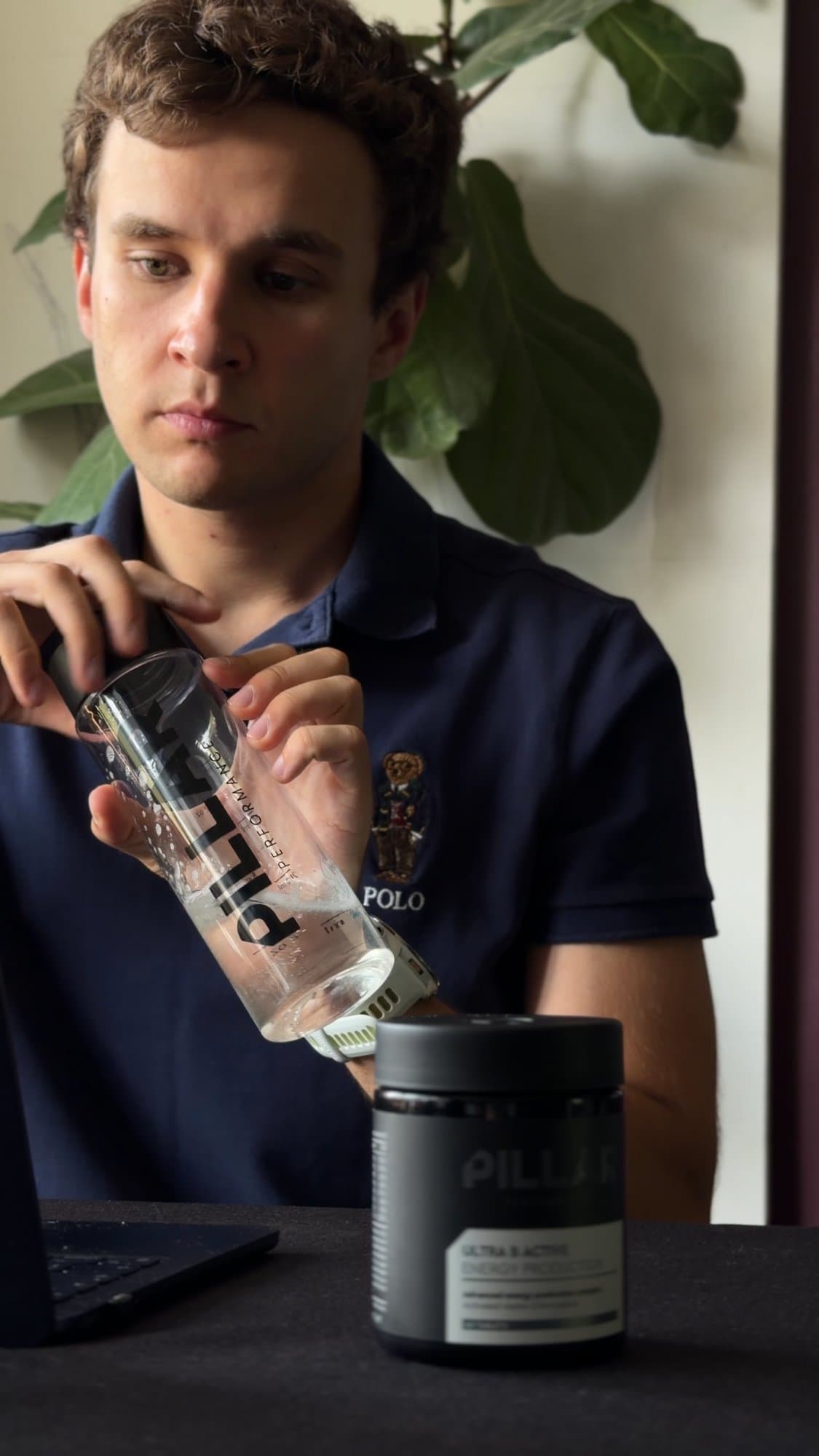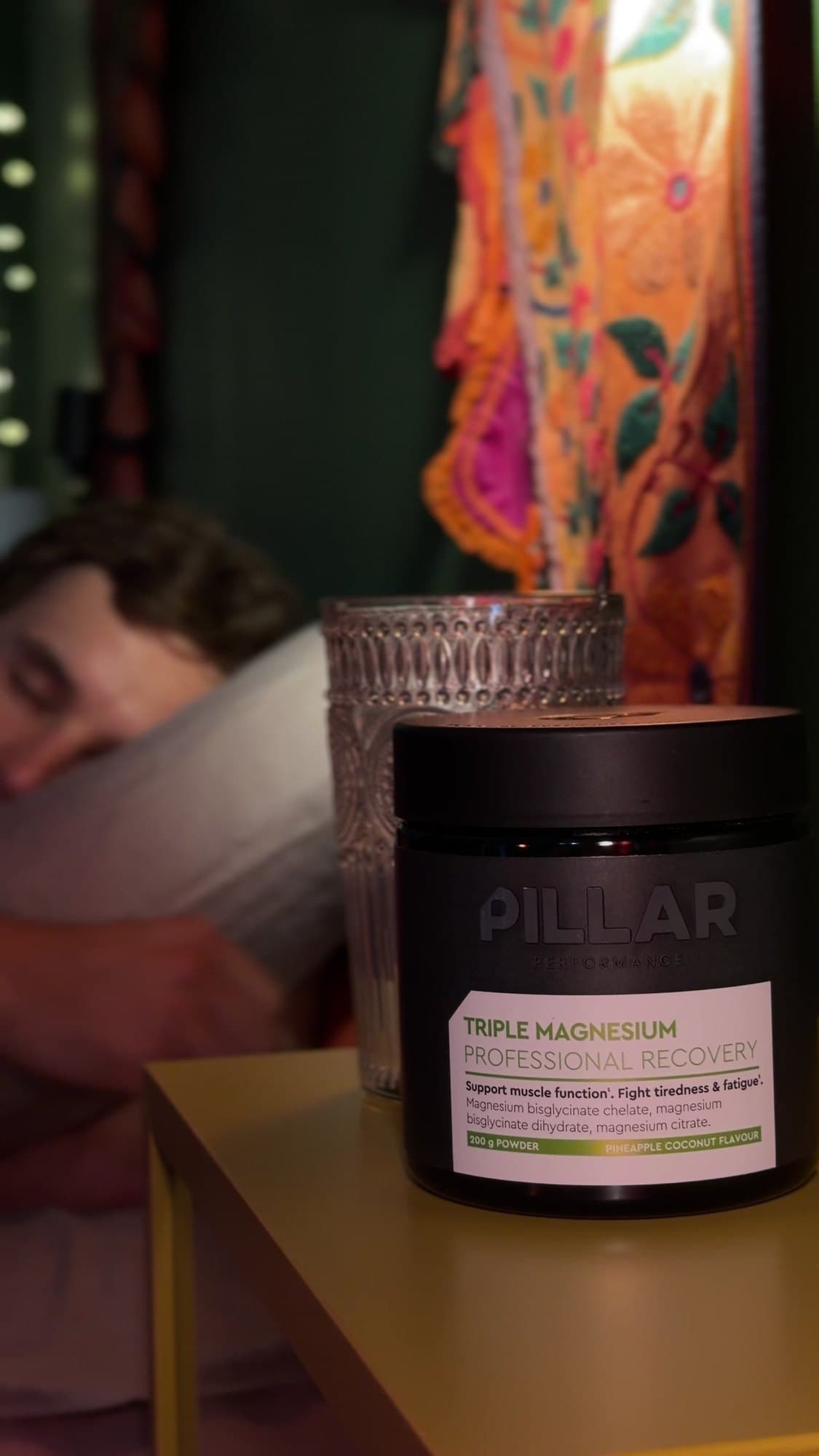
If your winter training shifts to the evening and the morning tempo session feels like a grind, the problem usually is not the plan but your sleep. This article is about how to sort out a runner's sleep in winter: why bedtime drifts during the dark season, how to calm the body down after late work and what place magnesium takes in an evening protocol. A practical example: on 7 November 2026 PILLAR athlete Aleksandr Semyonov described how he closes out a training day, and that sequence is easy to copy for anyone who runs after work.
Why sleep becomes broken in winter
In winter it gets dark early, daylight hours are short and the body receives less morning light, which is what sets the daily rhythm. Add to that the dry air from radiators, overheated bedrooms and a shifted schedule: training moves from midday to late evening. The result is that a person goes to bed on time, formally clocks up the usual hours, yet wakes up unrested. Sleep breaks into pieces and recovery quality drops, even though training volume has stayed the same or even gone up during the base period.
Evening training and an overstimulated nervous system
Intense work in the evening raises body temperature, heart rate and overall arousal. The body needs time to switch from load mode into recovery mode. If you sit down with your phone or laptop straight after intervals, that switch drags on. So it helps to leave at least an hour of calm activities between the last hard effort and lights out: a shower, food, getting things ready for the morning, some light stretching. The harder the session was, the more important this buffer becomes.
The bedtime ritual of PILLAR athlete Aleksandr Semyonov
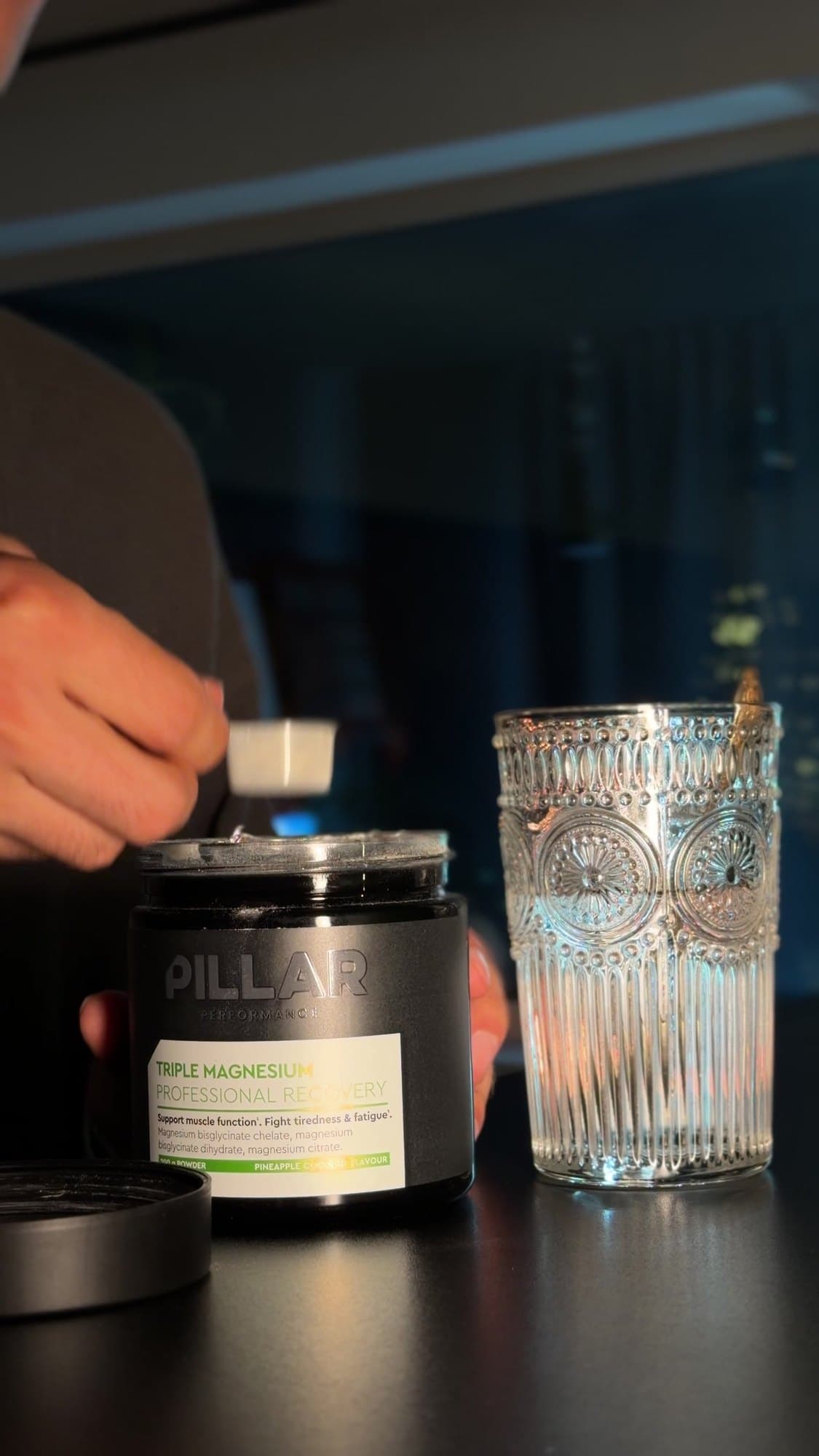
Aleksandr Semyonov closes his day simply: one scoop of PILLAR Triple Magnesium in a glass of water 30 to 60 minutes before bed, the phone well out of reach, a cool room. In his words it sounds boring, but it works. The value of a protocol like this lies precisely in its predictability, because the same actions in the same order become a signal to the body that the day is over. It is a cheap, repeatable tool that requires neither gadgets nor a rebuild of your whole life.
How to take Triple Magnesium: a 5 g serving before bed
The serving is 5 g, that is one scoop, mixed into a glass of water. The window of 30 to 60 minutes before bed is convenient because it coincides with the natural end of the day: the drink gets made alongside your other evening tasks and needs no separate reminder. Tying it to a ritual matters more than the exact minute, so if you always take your magnesium after a shower or always before brushing your teeth, the chance of skipping it falls sharply.
Why magnesium works as a course rather than a one off
Most people notice the difference in their sleep after 2 to 4 weeks of regular use, which is why magnesium makes sense as a course rather than something taken as and when. This is the classic mistake: someone tries a single serving, sees no instant effect and gives up. Supplements of this kind work cumulatively and on the back of a stable routine, not like a switch. A sensible strategy is to start a course during a period when your sleep is consistently suffering and give it at least a month, keeping track of how you feel on morning sessions.

A cool room and dry air from the radiators
A cool bedroom helps the body lower its core temperature, and that is one of the conditions for falling asleep. In winter the task gets harder, because heating dries the air out and overheats the room. So it is worth airing the room before bed, not wrapping yourself in several layers and humidifying the air where possible. Dryness in the throat and nose alone wakes people several times a night, and such micro awakenings usually are not even remembered, although they cut into sleep quality noticeably.
Your phone before bed: light and scrolling feeds
The point about keeping the phone away works on two levels at once. First, a bright screen close to your eyes late in the evening makes it harder for the body to register that night has arrived. Second, and often more important, feeds and messages hold your attention and keep your head from settling. A simple fix you can test on yourself within a week is to leave the phone charging outside the bedroom and get a separate alarm clock. If that is impossible, at least put the device aside for the whole window before sleep.

Typical runner mistakes in the dark season
Beyond screens and a hot bedroom, sleep is most often spoiled by late caffeine, a heavy meal right before lights out and alcohol, which helps you drop off but makes the night shallow. Another mistake is a different bedtime every day, when someone sleeps too little on weekdays and tries to claw it back at the weekend. That catch up pattern does not make up for accumulated sleep debt and knocks the rhythm further off. A consistent wake up time usually does more than attempts to recover hours after the fact.
Sleep as part of the training plan
If you count sleep as training, it deserves planning just like a track session: in advance and in the calendar. That means finishing evening sessions at the same time, leaving a buffer before lights out, keeping the evening protocol identical and judging the result over weeks rather than a single night. In the base period, when volume is growing and there are no races, sleep becomes the main resource for progress: the body adapts to the load at night, not during the session.
Sorting out sleep is harder in winter than in summer, but the tools are simple: a consistent bedtime, a cool bedroom, the phone out of bed and a calm evening ritual. Magnesium in this protocol is not a miracle but one element of a system that works when taken regularly as a course. PILLAR products, including Triple Magnesium, are available at spacefuel.kz.

FAQ
When should I take PILLAR Triple Magnesium before bed?
A 5 g serving, that is one scoop, is mixed into a glass of water and drunk 30 to 60 minutes before bed. It is convenient to tie the dose to your evening ritual so you do not forget it.
How long does it take to feel the effect of magnesium on sleep?
Magnesium is taken as a course, and most people notice the difference in their sleep after 2 to 4 weeks of regular use. A single serving gives no instant result, so it is worth giving the course at least a month.
What stops you sleeping after an evening session?
Overstimulation after intense work, a bright phone screen, a bedroom that is overheated and dried out by the heating, late caffeine, a heavy meal and alcohol. A buffer of calm activities between training and lights out helps.