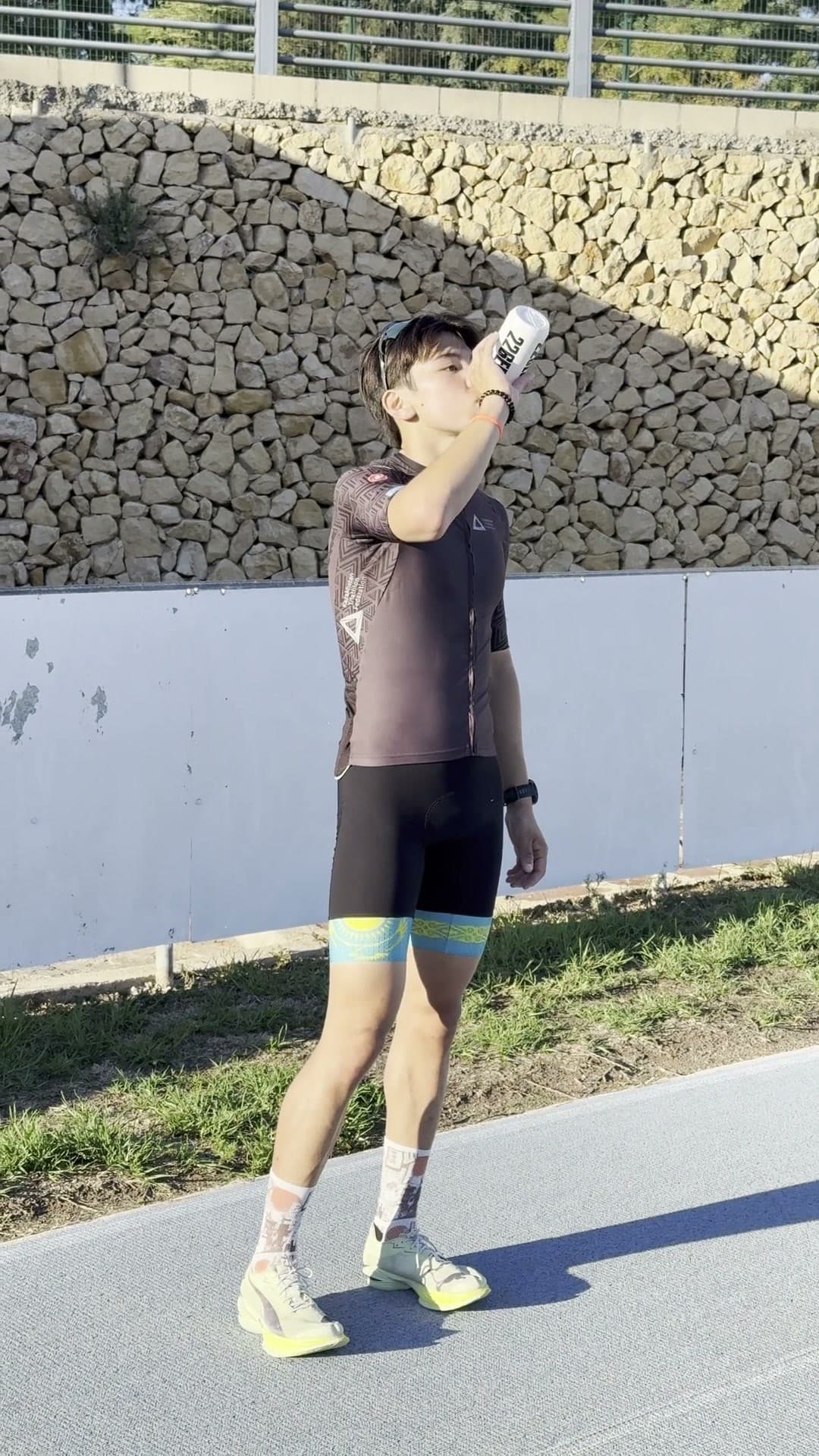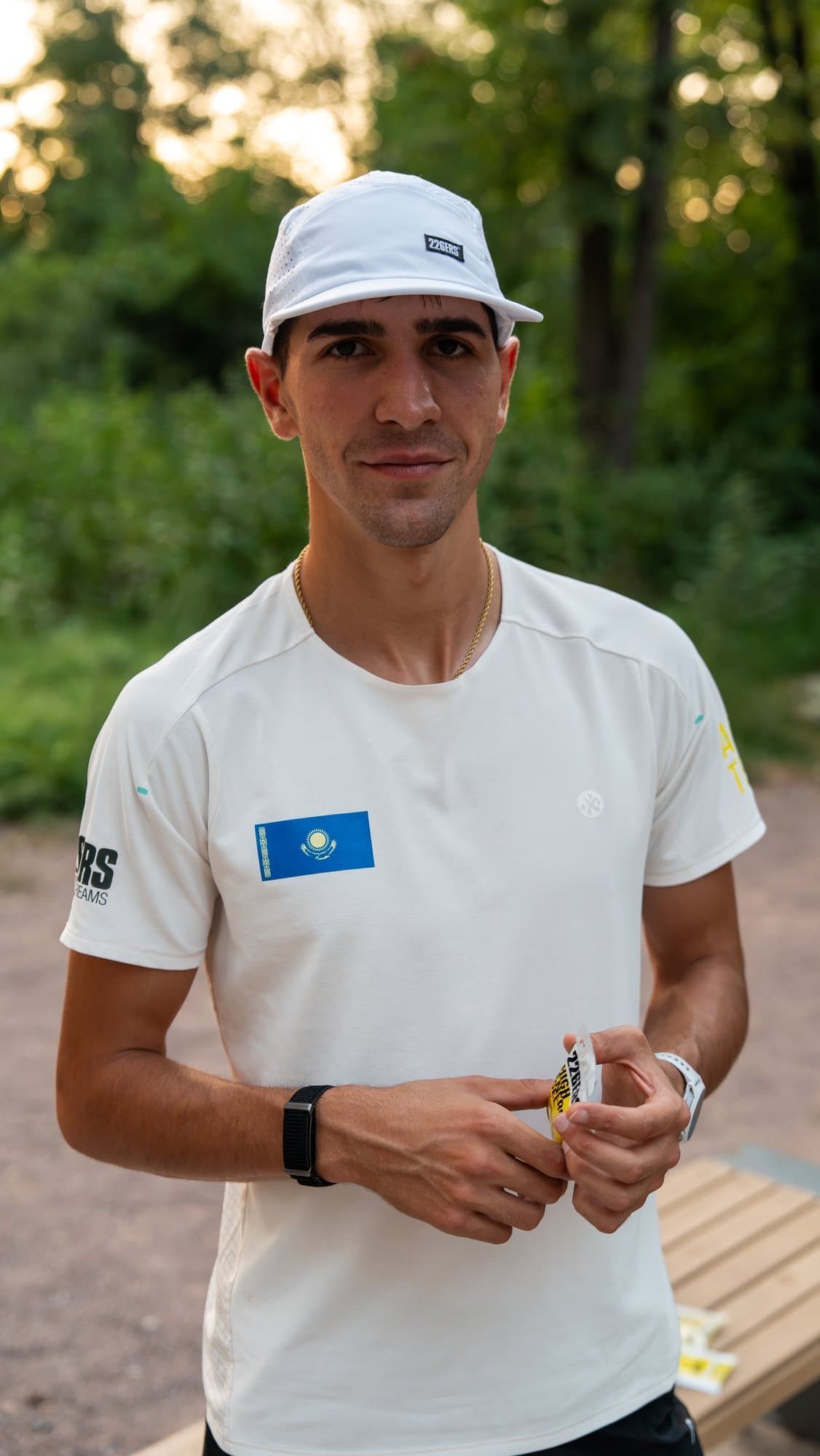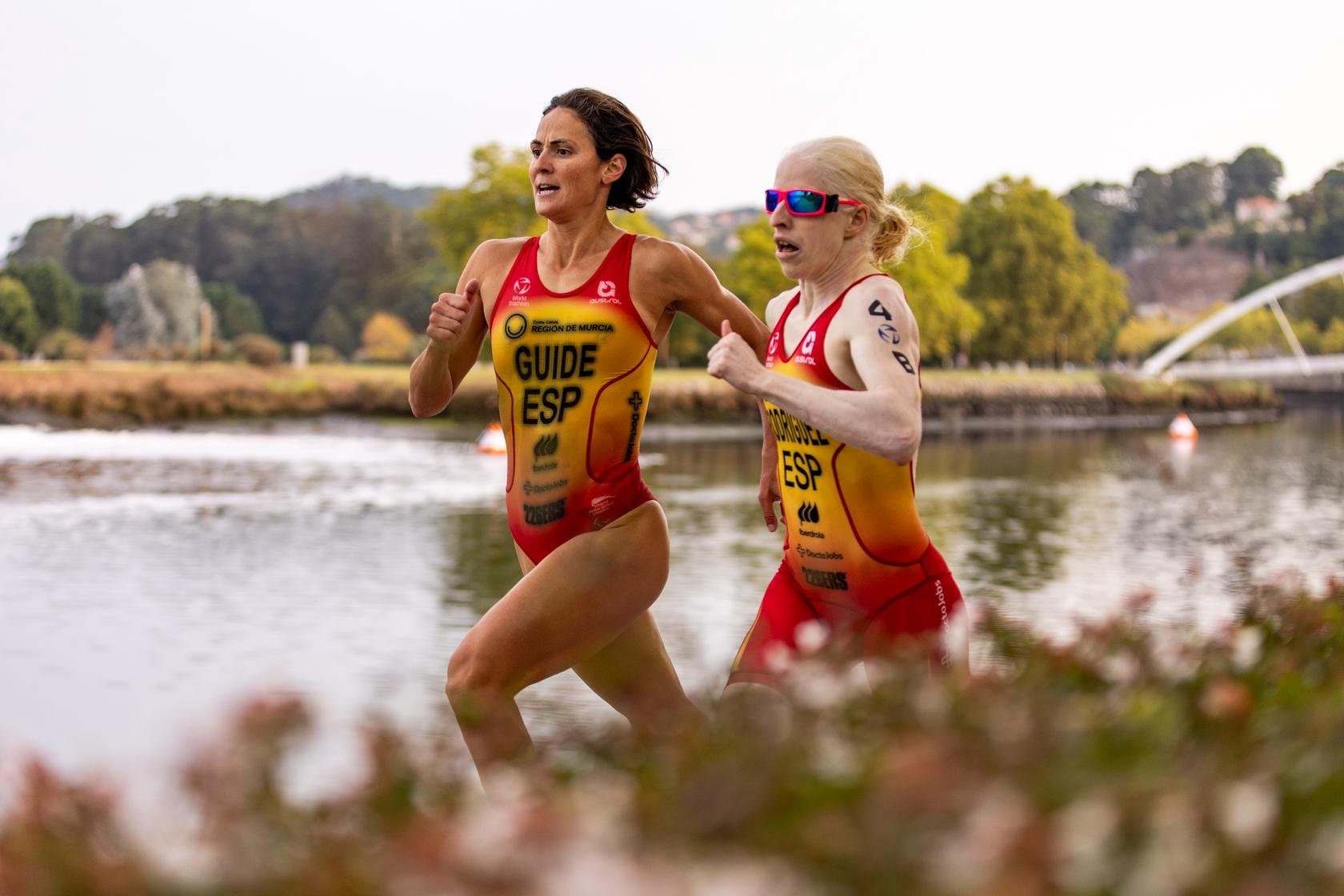
Today the IRONMAN World Championship takes place in Kona, the biggest race of the season in long-distance triathlon. For 226ERS this isn't just any occasion: the brand is an IRONMAN partner, and the number in its name refers to the 226 km that make up the full distance. So it makes sense to look at what race nutrition over those 226 km looks like, not in theory but hour by hour.
The target: 80–90 g of carbohydrates per hour
That's how much carbohydrate athletes take on in a full IRONMAN. The figure seems large, but it's spread across the whole race day and comes not from one product but from rotating three formats: gels, SUB9 and isotonic drink. The rotation matters in itself: the same hourly target is met with products of different textures and ways of taking them, rather than a dozen identical gels in a row.
Swim: nothing
On the first leg no fuel is taken at all; it simply isn't physically possible. So the carbs for the swim are loaded in advance: the evening before the race and at breakfast. It's the part of the plan that's easy to underestimate, even though it starts working before all the others: the athlete enters the water already fuelled, not counting on making up the shortfall later.
Bike: the main fuelling stage
The bike leg is the main window for refuelling, and the plan here is at its densest: a gel every 30 minutes plus isotonic drink in your bottle. Your position on the bike lets you eat and drink calmly, in a controlled way and by the timer, so this is where most of the race's carbohydrates go in. Whatever doesn't get into your body on the bike is much harder to make up on the run.
Run: fewer gels, salt and water at every aid station
On the marathon the interval stretches out: a gel every 35–40 minutes. Add a salt capsule every hour and water at every aid station. The logic is fundamentally different from the bike: maintenance instead of continuous refuelling. Gel frequency drops, and the task shifts to holding on to what you've taken in and not running short of fluid and electrolytes in the final kilometres.
Overall the plan looks simple: fuel up the evening before and at breakfast, take in the bulk on the bike, and keep a steady rhythm of gels, salt and water on the run. The difficulty isn't in what you take but in discipline: fuelling goes by the timer, not by how you feel. That's why the routine is practised in training long before race day.
226ERS products, gels, SUB9 and isotonic drinks, are available in Kazakhstan at spacefuel.kz. If you're preparing for a long distance, you can choose a set to match your hourly carbohydrate target in advance and test it on long training sessions.




FAQ
How many carbs per hour do you need for a full IRONMAN?
The reference point for a full IRONMAN is 80–90 g of carbohydrates per hour. That amount is spread across the entire race day and comes not from one product but from alternating three formats: gels, SUB9 and isotonic drink.
How often should you take gels on the bike and the run in an IRONMAN?
On the bike the plan is the densest: a gel every 30 minutes plus isotonic drink in the bottle. On the run the interval stretches to a gel every 35–40 minutes, with a salt capsule every hour and water at every aid station.
Do you take any nutrition during the swim in an IRONMAN?
No nutrition is taken during the swim, and physically it is not even possible. That is why the carbohydrates for the swim are loaded in advance: the evening before the start and at breakfast.