
When the racing calendar is closed, runners, cyclists and triathletes get a rare opportunity: a few weeks that can be spent not on results but on themselves. The question of which supplements to take in the off-season comes up most often at this time of year, because a season of training builds up deficiencies that go unnoticed in a race yet get in the way of recovery. Coach Elvira Takhauova picks out four basics that make a sensible starting point: vitamin complexes, protein, magnesium and collagen. Let us look at what each one is for, how to fit them into a week of rest, and which mistakes repeat year after year.
Why it is worth closing deficiencies after the racing season
An amateur endurance season is rarely gentle: the volume, the short nights, the flights, the nervous build-up to a key race. In that mode the body lives off its reserves, and when the load comes off it becomes clear which reserves have run low. The off-season is valuable precisely because there is no race to shape your nutrition and taper around. It is the one period in the year when you can calmly sort out sleep, weight, eating habits and supplements without risking your form before an important date.
Testing for deficiencies: why you should not start vitamins blind
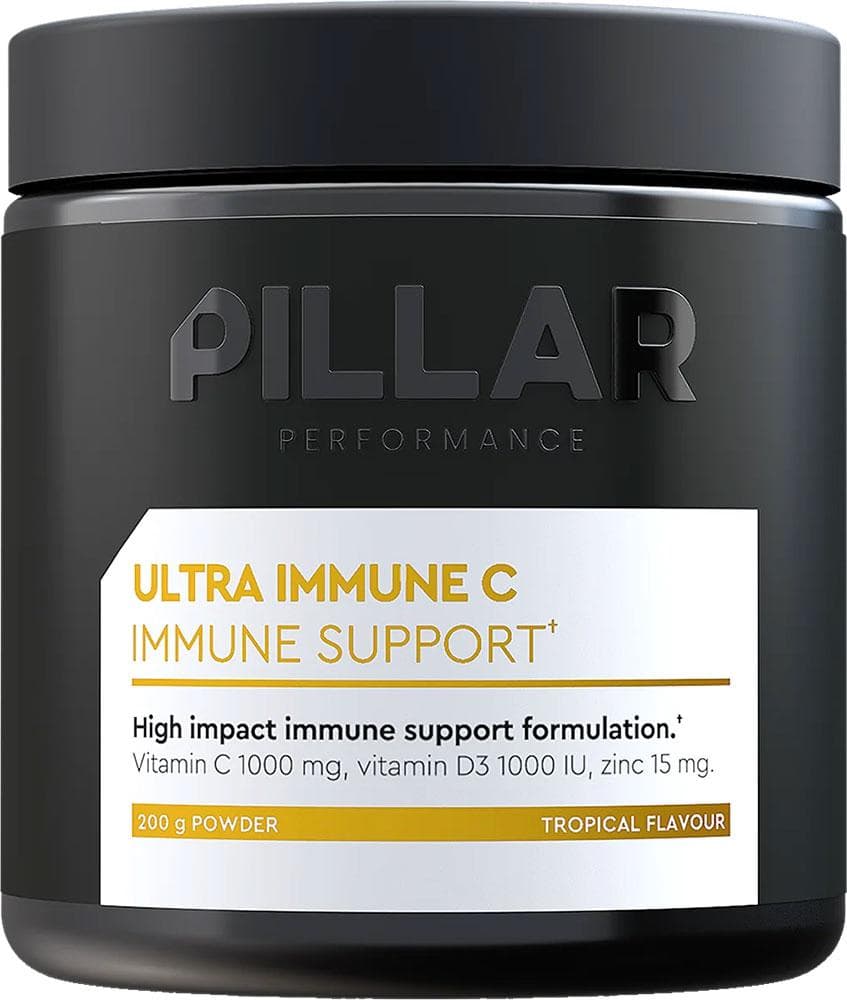
The first item on Elvira Takhauova's list comes with a caveat: vitamin complexes, but only after testing for deficiencies. That distinction matters. Taking something “just in case” solves the wrong problem: part of what you swallow is simply excreted, while a genuine deficiency stays unaddressed, because a general complex covers it at too small a dose. First work out what has actually dropped, then choose the product. Before taking any supplement it is worth consulting a doctor, and that applies to vitamins, to minerals and to everything else on the list.
Protein in the off-season: the nutrient that is easy to fall short on
The second item, in the coach's words, is protein: we often fall short on it, and you can take it not only in the off-season but during the season too. The logic is simple: an endurance athlete needs more protein than someone who does not train regularly, usually around 1.4 to 2 grams per kilogram of body weight per day, and not everyone manages that from ordinary food alone. It is especially hard on days when training finishes late and there is neither the time nor the appetite for a proper meal. A serving of protein here works not as a “sports supplement” but as a convenient way of topping up the daily total.
Magnesium and sleep: recovery starts at night
The third item is magnesium, to sleep well. In endurance sport sleep remains the main recovery tool, and in the off-season that is especially obvious, because this is the time when you can get your bedtime in order without a start list waiting in the morning. Magnesium is involved in the work of the muscles and the nervous system, and some of it is lost in sweat on long sessions, so paying attention to it is justified when volumes are high. The practical approach is usually this: take it in the evening, at the same time each day, as part of a pre-sleep ritual rather than at random whenever you happen to remember.
Collagen for ligaments and tendons: what it actually does
The fourth item on the list is collagen. Ligaments, tendons and joint structures adapt to load more slowly than muscle, and by the end of the season they have accumulated the most micro-damage. Common practice in endurance sport is to take collagen together with vitamin C and in combination with loading, that is shortly before a session or before strengthening exercises, because the tissue only remodels when it is loaded. Without work on strength and stability the supplement changes little: it supports the process rather than replacing it.
How to fit supplements into an off-season week
To keep the list from turning into four tubs on a shelf, tie it to your daily routine. Vitamins and complexes are usually taken in the morning with food, while protein goes wherever protein is objectively lacking: after training or in place of a missed meal. Collagen is tied to training days, magnesium to the evening. A framework like that is easy to keep up for months, and it has a side benefit: a habit built in the off-season survives into the season, when there is no time left for deliberation.
Typical off-season mistakes
The first mistake is starting everything at once. When four new products appear together, there is no way to tell what produced the effect and what caused the discomfort. The second is buying vitamins without testing, because “everyone takes them”. The third is treating supplements as a substitute for food and sleep, when they only work on top of a sound diet and routine. The fourth is dropping training to zero in the off-season and then jumping straight back to full volume. Ligaments and tendons cope with that jump worst of all, and it is the most common cause of injury at the start of a new cycle.
The off-season as preparation for the base period
The point of these weeks is not to do nothing, but to enter the base period without accumulated debts: in sleep, in protein, in strength work, in the deficiencies that show up in your test results. Supplements have a modest but clear place here: they cover what food and the calendar did not manage to cover. The earlier that is done, the smoother the first long sessions of the new season feel.
In the off-season the winner is not the person who bought the most tubs, but the one who first worked out their own deficiencies and then built a simple, repeatable protocol around them. The four items on coach Elvira Takhauova's list give a clear starting point, and decisions about dosage and necessity are worth discussing with a doctor. The PILLAR products mentioned here can be found at spacefuel.kz: in November 2026 they came with the promo code ELVIRA10 for 10 per cent off until 23 November.




FAQ
Which supplements should a runner take in the off-season?
Coach Elvira Takhauova picks out four basics: vitamin complexes after testing for deficiencies, protein, magnesium for sleep and collagen. Before taking any supplement it is worth consulting a doctor.
Why get tested before taking vitamins?
Taking a complex “just in case” does not solve the problem: part of what you swallow is excreted, while a genuine deficiency stays unaddressed, because a general complex covers it at too small a dose. First you need to work out what has actually dropped, and only then choose a supplement.
Can you take protein outside the off-season as well?
Yes, protein can be taken during the season too: athletes often fall short on protein, especially on days when training finishes late and there is neither the time nor the appetite for a proper meal.