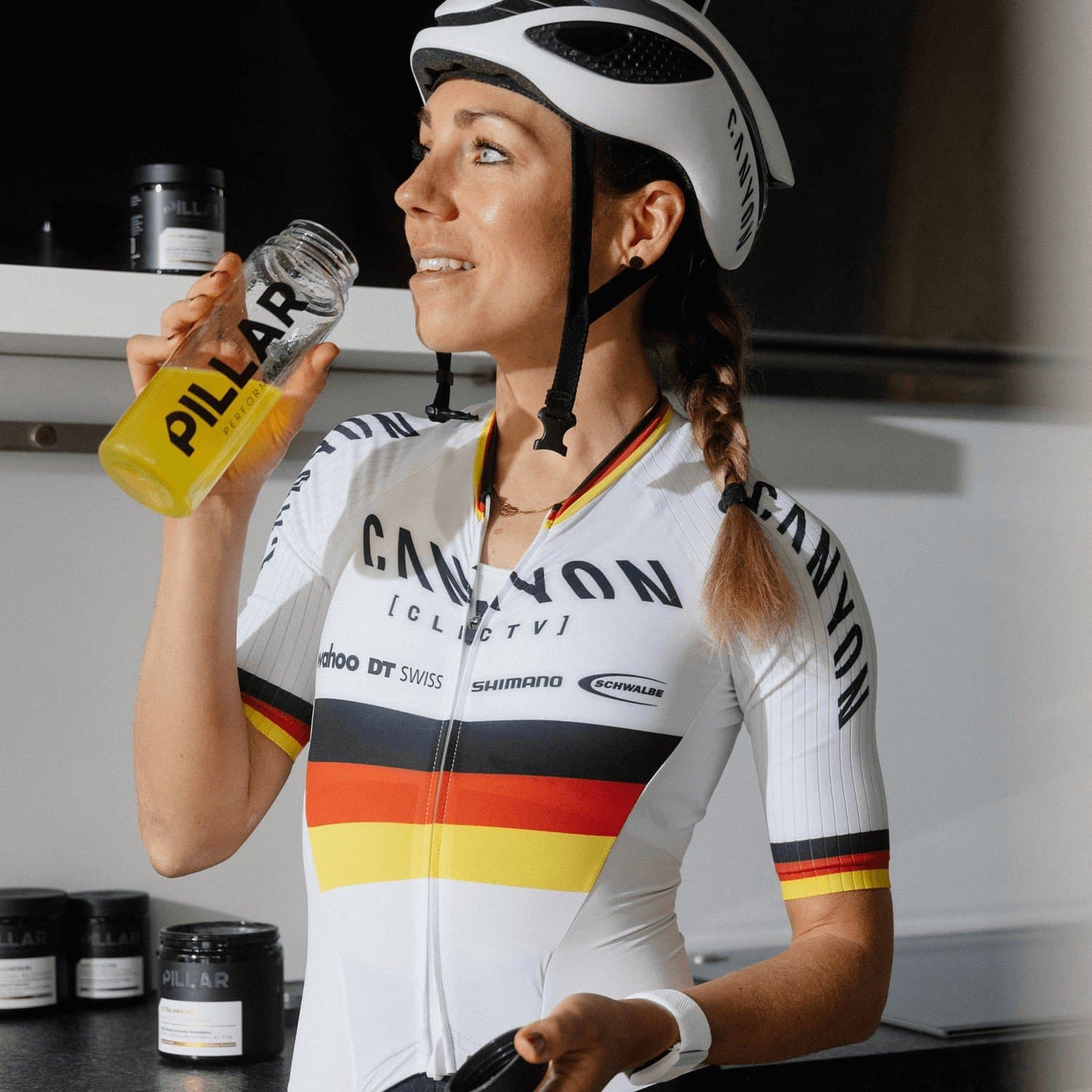
A runner’s immunity in autumn is as much a part of the training plan as volume and intervals. The change of seasons brings swings in temperature, the start of the school year and crowded gyms, which means the risk of catching a cold is higher than usual. Here we look at why the body is more vulnerable during this period, what you can do with your routine and everyday habits, and where nutrients that support immunity fit into the picture, including the PILLAR Ultra Immune C complex with vitamin C, zinc and cystine.
Why the risk of catching a cold is higher in autumn
Autumn is a season of transitions. Mornings are cold, afternoons are warm, and a session that starts in one set of clothes finishes in a soaked one. The start of the school year puts childhood infections back into circulation, and they come home with the schoolchildren. Training moves indoors en masse: gyms, indoor tracks, turbo trainers at the club. Crowding, enclosed spaces and dry air from the heating all pull in the same direction, raising the chance of picking up an ordinary respiratory infection.
Why a week lost to illness hurts
The main problem with a cold for an athlete is not the cold itself but the gap it leaves in training. A week missed through illness sets your form back: the training rhythm is lost, sleep and eating patterns are disrupted, and after recovery it takes several more days to ease carefully back into the load. Between seasons this is especially frustrating, because it is precisely in autumn and winter that the base for spring and summer races is laid, and that base is built on continuity rather than on individual standout sessions.
The window of vulnerability after a long, hard session
Sports physiology has long described the state that follows prolonged or very intense work, when the protective mechanisms of the mucous membranes function worse than usual for several hours. The practical conclusion is simple: the worst possible time for a cold bus, a wet T-shirt and an hour in a packed changing room is the first few hours after a long session or a race. This is exactly where the boring habits pay off: change straight away, eat, get warm, stay out of the wind and do not drag out the journey home.
Vitamin C, zinc and cystine: what PILLAR Ultra Immune C is
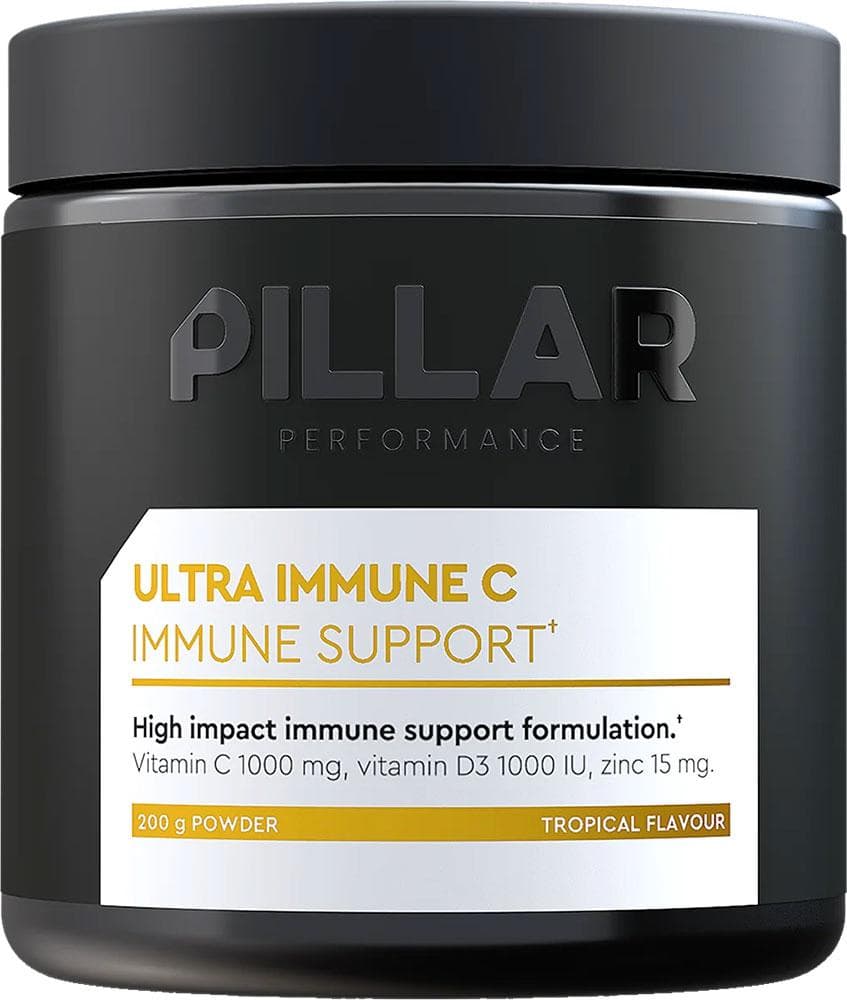
Ultra Immune C from PILLAR is a complex for supporting immunity during periods of heavy load, bringing vitamin C, zinc and cystine together in a single formula. Vitamin C and zinc are classic nutrients associated with the normal functioning of the immune system, while cystine is an amino acid involved in the body’s antioxidant defences. The point of such a combination is to avoid collecting several separate tubs and instead cover your support with one product during a period when training load and everyday stress stack up together.
When an athlete should step up immune support
It makes sense to bring supplements in during periods of raised risk rather than at random all year round. That means blocks with peak volume, training camps, frequent flights and travel, exam season or a crunch at work, sharp changes in the weather, and weeks when someone at home is already ill. The complex should be taken according to the manufacturer’s instructions, and if you have chronic conditions or take medication regularly it is worth discussing it with a doctor in advance. A supplement complements your routine; it does not replace it.
Rest is not only for progress, it is also for staying well
There is a simple idea that athletes are slowest to accept: rest is also what keeps you from getting ill. Sleep is the main recovery tool, and chronic lack of it combined with high volume reliably increases the chance of dropping out of the plan. If extra stress, a flight or a sleepless night turns up in your week, it is wiser to cut one hard session in advance than to lose the whole week to sick leave a few days later. Plan your easy weeks rather than waiting for your body to demand them.
Food and energy: a calorie deficit undermines your defences
A prolonged shortfall in calories and carbohydrates alongside serious volume is one of the most common sources of trouble for endurance athletes. When energy is short, the body starts economising on everything, recovery included. The basics work better than anything exotic: enough calories, a proper serving of carbohydrates before and after long sessions, an adequate amount of protein, vegetables and fruit every day, and drinking throughout the day. Against that background any supplement gives a clear effect; without it, supplements are patching a hole that capsules cannot fill.
Hygiene in the gym and on the indoor track: what actually lowers the risk
In winter training moves indoors, and everyday habits start to matter more. Wash your hands after the gym, do not drink from other people’s bottles, wipe down machine handles and the bars of the turbo trainer, do not rub your face during a strength session, change into dry kit as soon as the work is done, and do not sit in wet clothes while stretching. If someone in the group clearly has a cold, it is better to move your easy sessions outdoors for that week or shift them to the trainer at home.
Train through a cold or rest
The general rule coaches use: go by your symptoms. If there is no fever and the signs are limited to a runny nose or a scratchy throat, short easy work is acceptable, but intervals and long sessions are best left out. A temperature, a cough, aching muscles and general exhaustion mean complete rest, and lingering symptoms mean a visit to the doctor. Come back gradually, starting with easy volume, and do not try to make up for what you missed with double the load: it is precisely the attempt to catch up quickly that most often leads to a second round of illness or to injury.
Continuity matters more than individual strong sessions, so in autumn it is worth investing in sleep, nutrition, sensible training load and simple hygiene, and bringing in nutritional support during the busiest weeks. PILLAR products, including Ultra Immune C, can be found at spacefuel.kz along with the rest of the sports nutrition for runners, cyclists and triathletes.
FAQ
Why do athletes catch colds more often between seasons?
In autumn, swings in temperature, the start of the school year and crowding in the gyms and indoor tracks that training moves into all come together. An additional risk comes from the first few hours after long or intense work, when the defences of the mucous membranes are weakened.
What does PILLAR Ultra Immune C contain?
It is a complex for supporting immunity during periods of heavy load, bringing vitamin C, zinc and cystine together in a single formula. It should be taken according to the manufacturer’s instructions.
Can you train with a cold?
If there is no fever and the symptoms are limited to a runny nose or a scratchy throat, short easy work without intervals or long sessions is acceptable. With a temperature, a cough and aching muscles you need complete rest, and lingering symptoms call for a doctor’s advice.