A pace drop in the second half of a marathon is probably the most common way a race ends with a time that was never in the plan. This piece will be useful for runners preparing for 42.2 km to a target time who want to understand what exactly took those minutes away: nutrition, weather or pacing. The reason for this breakdown is the Turkistan Marathon on 25 October 2026, where athlete Tursungali Alibayev started with a 2:50 plan, finished with 3:08:55 on the clock and took first place in their age group. The case is instructive precisely because nutrition in this race followed the protocol exactly, without a single improvisation, and the time still diverged from the plan.
What happened at the Turkistan Marathon on 25 October 2026
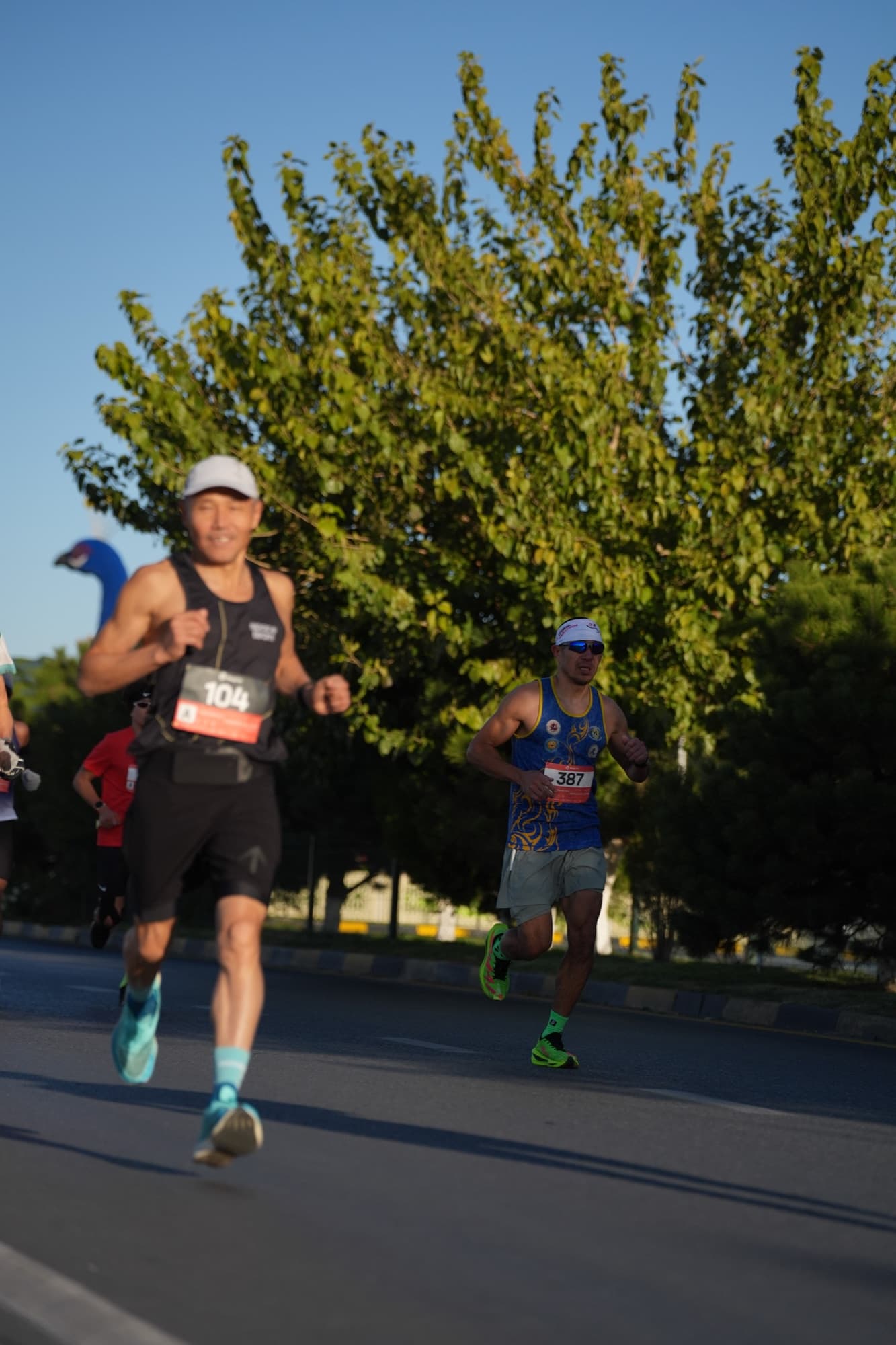
The facts are simple: a 2:50 target, a 3:08:55 result, a win in the age group. The gap between plan and reality is almost nineteen minutes, and the watch data shows where it appeared. The first half was run at a heart rate of 175, and from the 25th kilometre the pace crept out towards 4:50. The weather cannot be blamed that day: +4 at the start and +11 by the finish, which is close to ideal for a marathon. That leaves pacing, and that is exactly what the athlete flagged as the job to fix by spring.

The marathon nutrition protocol: what was in the plan
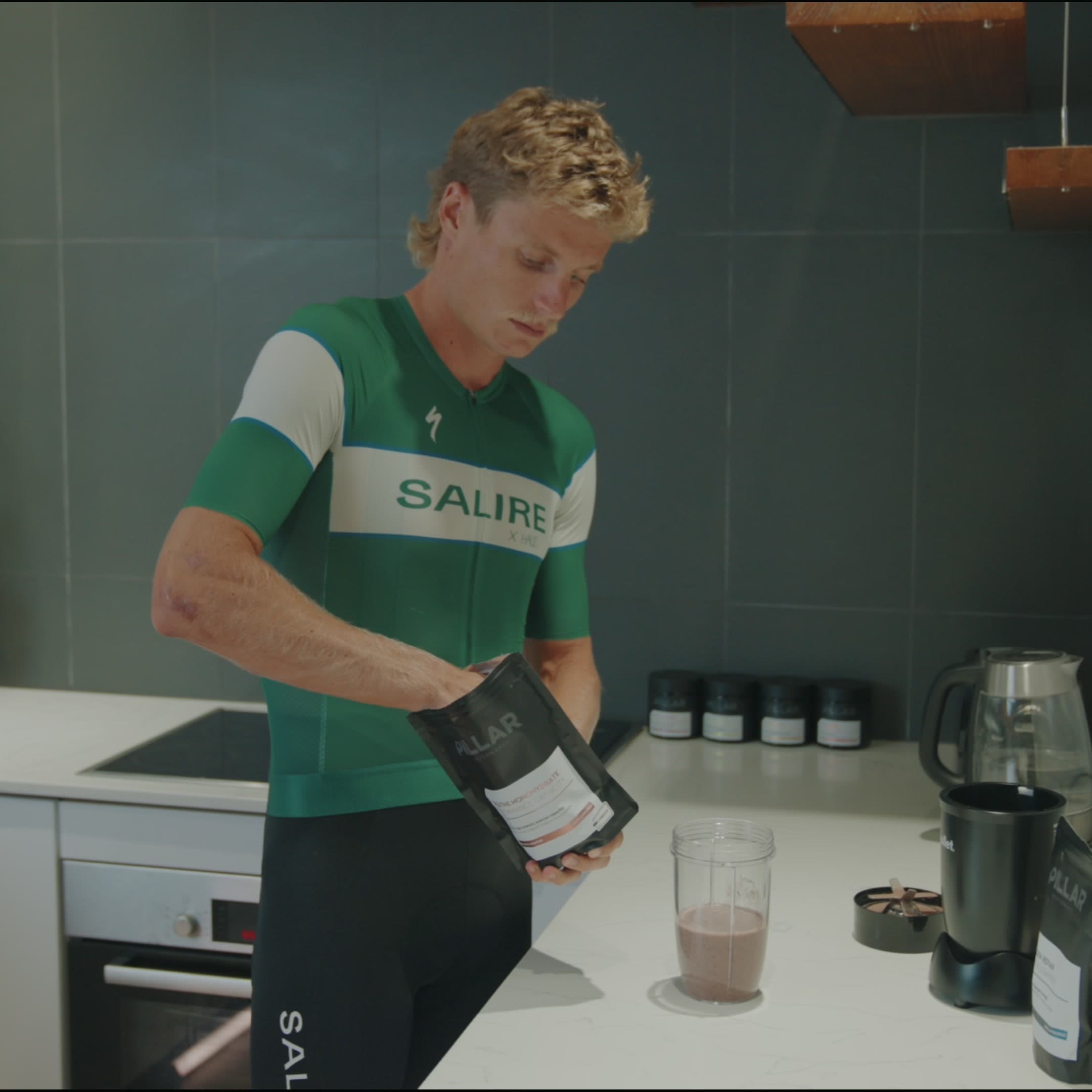
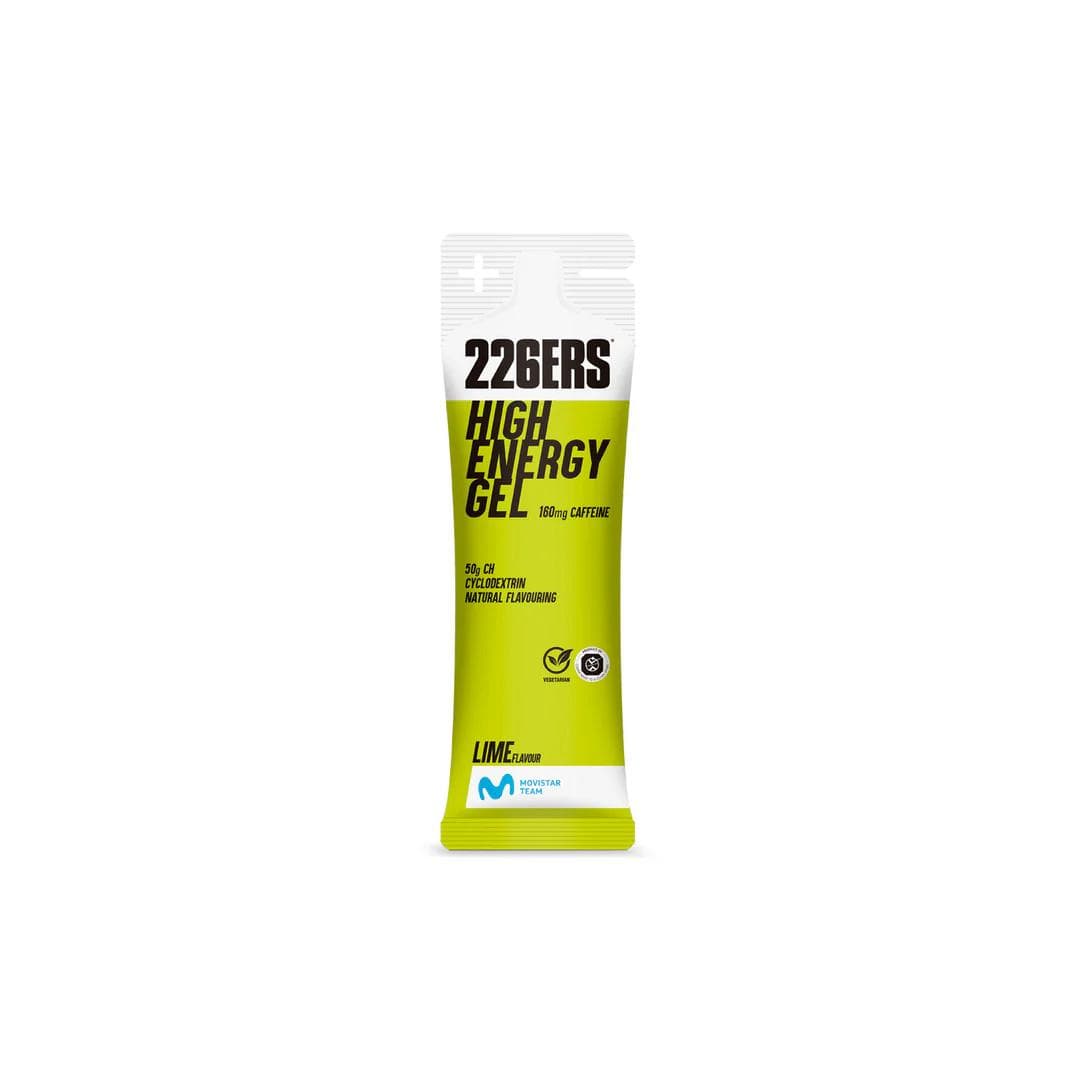
The scheme looked like this: Hydrazero and SUB9 Race Day in the morning, then five High Energy gels at kilometres 8, 15, 22, 29 and 35, caffeine in the second half of the distance, and one SUB9 capsule every 10 kilometres. An Energy MID shot rode along in a pocket as insurance and stayed untouched. What matters here is less the specific schedule than the principle: every intake point is set in advance, by kilometre rather than by feel. A protocol like that removes a whole class of problems from the race, because the decisions were made before the starting pistol, while the head is still thinking clearly.
A heart rate of 175 in the first half: where the minutes go
Early in a marathon the heart rate almost always feels comfortable: glycogen stores are full, the muscles are fresh, the crowd carries you along. The problem is that a marathon is run in a zone close to the aerobic threshold, and any excess over that intensity in the first half is paid back with interest in the second. Cardiac drift adds to it: at one and the same pace, heart rate naturally climbs by a few beats by the 30th kilometre. If it is already at the top of the working range at halfway, there is no headroom left for the drift, and physiologically there is nothing left to hold the pace with.
Why pace drops after 30 km even with perfect nutrition
Gels and electrolytes cover carbohydrate and fluid, but they do not cancel two other limiters. The first is neuromuscular fatigue, when the muscles simply lose the ability to produce the same force on every stride. The second is the accumulated oxygen and mechanical debt from a first half run too fast, which shows up as a loss of running economy. That is why the classic picture looks exactly as it did in Turkistan: nutrition taken on schedule, the stomach fine, energy formally there, and the pace still drifting 20 seconds per kilometre slower than planned.
+4 at the start: when cool weather helps and when it hurts
A range of +4 to +11 degrees is considered workable for a marathon: heat dissipation does not limit the effort and fluid losses are moderate. But a cool start has a trap: the first kilometres feel easy, the heart rate is not subjectively noticeable, and the pace drifts faster than target on its own. Many runners overcook it in weather like this rather than in the heat, because in the heat the body applies the brakes itself. The practical conclusion: the more comfortable the conditions, the more strictly you should stick to the pace you worked out in advance and watch the clock rather than your sensations.

How to tell a nutrition mistake from a pacing mistake
The difference shows in the character of the collapse. A nutrition failure usually arrives abruptly: heaviness or cramping in the stomach, nausea, a sudden emptiness in the muscles, with the pace falling apart over a couple of kilometres and never coming back. A pacing error looks different: the pace slides down gradually, heart rate stays high or even rises, while the head is clear and the stomach is calm. If every planned intake point was hit, the backup fuel is still in the pocket and the schedule broke anyway, the cause should be looked for in the first half of the race, not in the composition of the gel.

Typical first-half marathon mistakes
The most common one: running the first 10 kilometres faster than target pace to “bank” some time, when no such bank exists. The second: pacing off rivals and their age groups instead of your own plan. The third: setting a target time from a best half marathon without adjusting for the distance. The fourth: ignoring heart rate in the first half on the grounds that it will rise anyway. These mistakes are not fixed with nutrition but with discipline in the first forty minutes of the race, when any deviation still looks harmless.
What to change in preparation for a spring marathon
The training conclusions from a scenario like this are fairly standard. Long runs are worth doing with blocks at target marathon pace, while monitoring how heart rate behaves towards the end of the session. It helps to rehearse a negative split, that is, to start deliberately slower than planned pace and speed up in the second half: the habit of tolerating a slow start is only built by repetition. A target time is better checked at a control half marathon than assigned out of ambition. Nutrition does not need changing in the process: if the protocol worked without a hitch, it carries over to the next race as it is.

Why compare plan and reality after every race
A plan-versus-reality breakdown makes training manageable. You record the target time, the actual time, heart rate by segment, pace in five-kilometre splits, the weather, every nutrition intake point and whatever went unused. After two or three marathons a pattern becomes visible in a log like that: for some the stomach fails regularly, for others, as in this case, the first half consistently runs away. Without records every race looks like chance; with records it becomes clear what exactly to train before the next start.
The short version
The Turkistan marathon on 25 October 2026 ended with first place in the age group and a 3:08:55 result against a 2:50 plan. Nutrition worked exactly as intended, and the minutes went at a heart rate of 175 in the first half. That is good news: pacing responds to training and can be corrected by next season, while a ready-made nutrition protocol remains a reliable tool. You can put together a protocol like that for your own distance from the ranges available at spacefuel.kz.




FAQ
Why does pace drop in the second half of a marathon if nutrition went to plan?
Most often the cause is pacing: too high an intensity in the first half is paid for with a slowdown after 25 to 30 kilometres. Gels and electrolytes cover carbohydrate and fluid, but they do not cancel neuromuscular fatigue or the loss of running economy.
How can I tell whether nutrition or pacing let me down?
A nutrition failure arrives abruptly: the stomach, nausea, a sudden emptiness in the muscles. A pacing error looks different: the pace slides down gradually, heart rate stays high, the stomach is calm and every planned intake point was hit.
Can cool weather at the start ruin a marathon?
A range of +4 to +11 degrees is considered comfortable for a marathon, but it is precisely in cool conditions that it is easy to go faster than target pace, because the effort is not subjectively noticeable. The better the conditions, the more strictly you should hold the calculated pace by the clock.