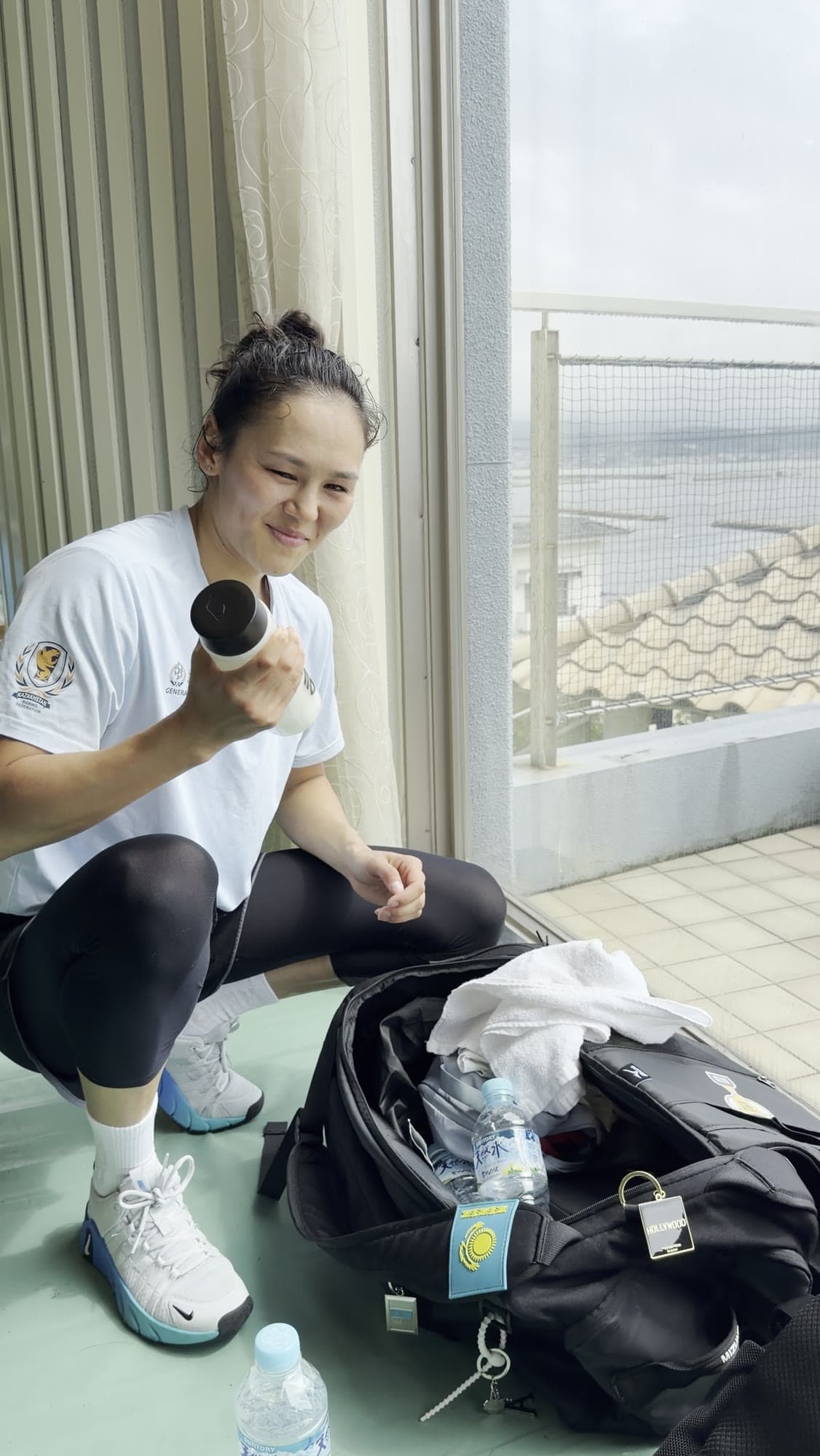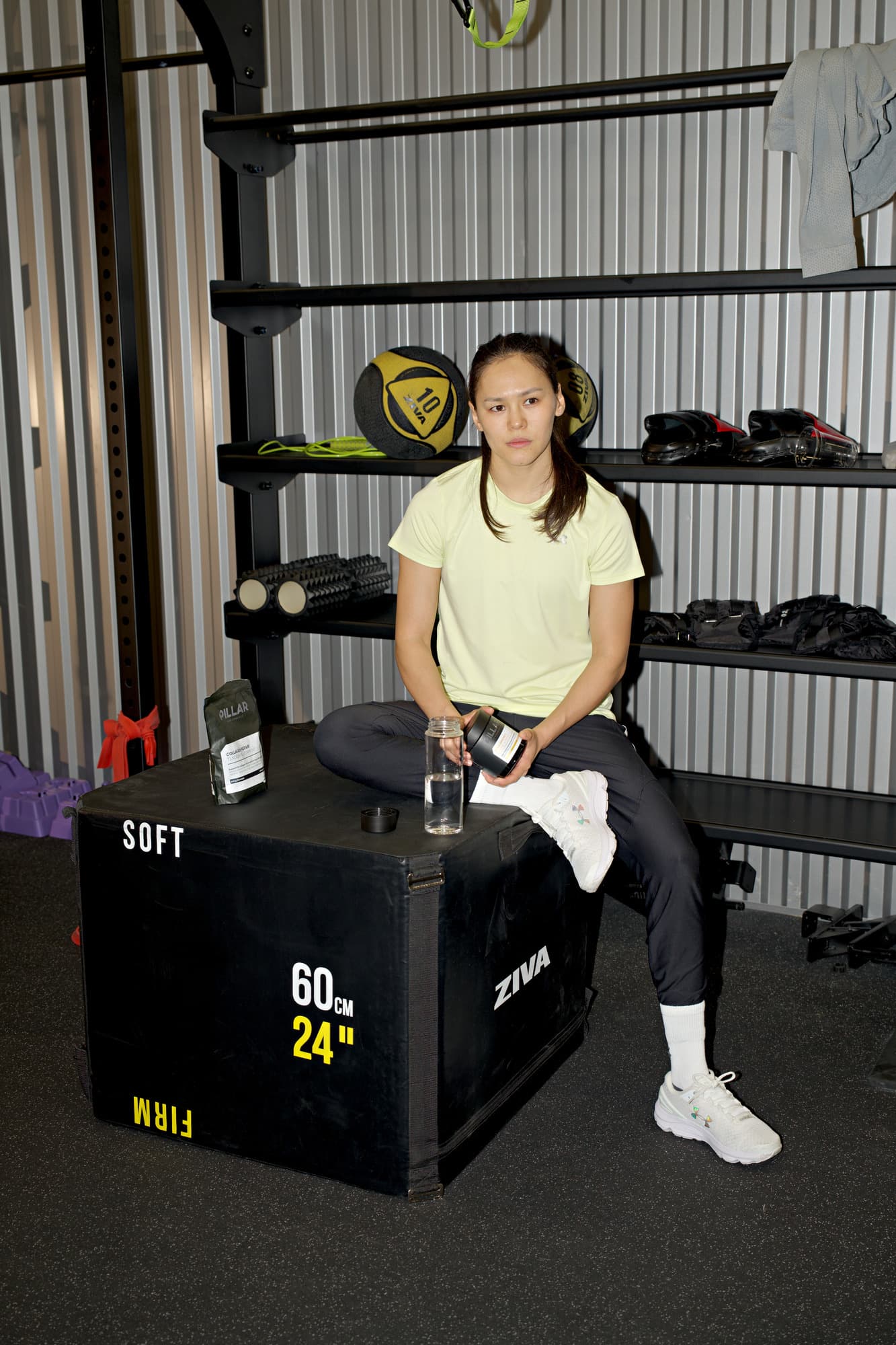
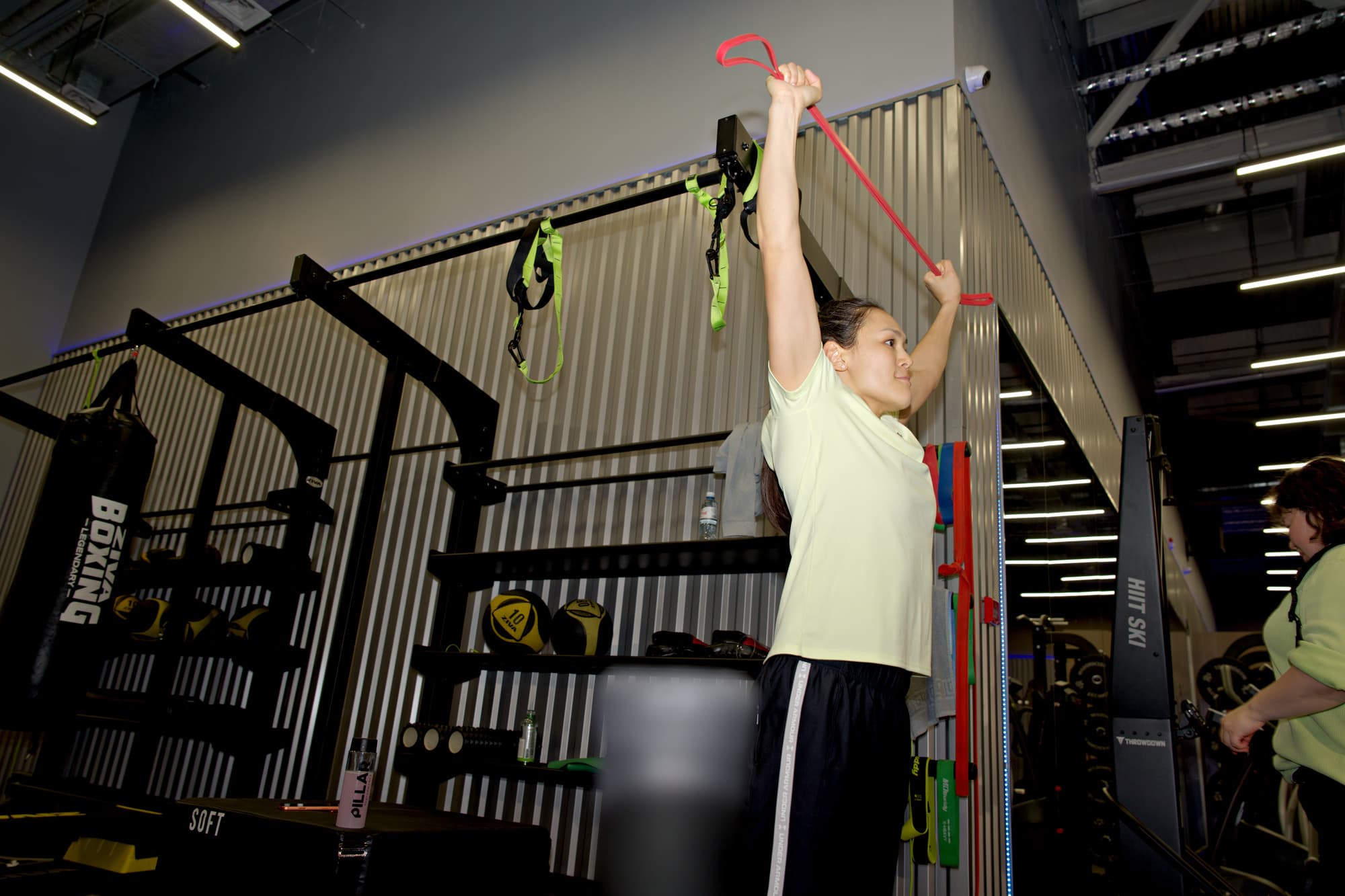
Rehab after an injury or an overload is a time when an athlete still trains, just differently: less impact work, more strength exercises, mobility and technical control. Nutrition in this period often gets reduced to «I will eat less, since I am training less», even though this is exactly when tissues are recovering and remodelling. In November 2026, PILLAR pro athlete Alua Balkibekova, double world champion in 2025 and a bronze medallist at the Asian Games in Nagoya, is training in this mode: striking is off the table for now, so on 11 November the gym session was strength work and rehab. Using her example, we look at what is known about collagen with vitamin C before training, why vitamins C and D and zinc matter in weeks like these, and what you should not expect from supplements. This piece is for athletes recovering from injury and for their coaches.
A break from the ring does not mean rest
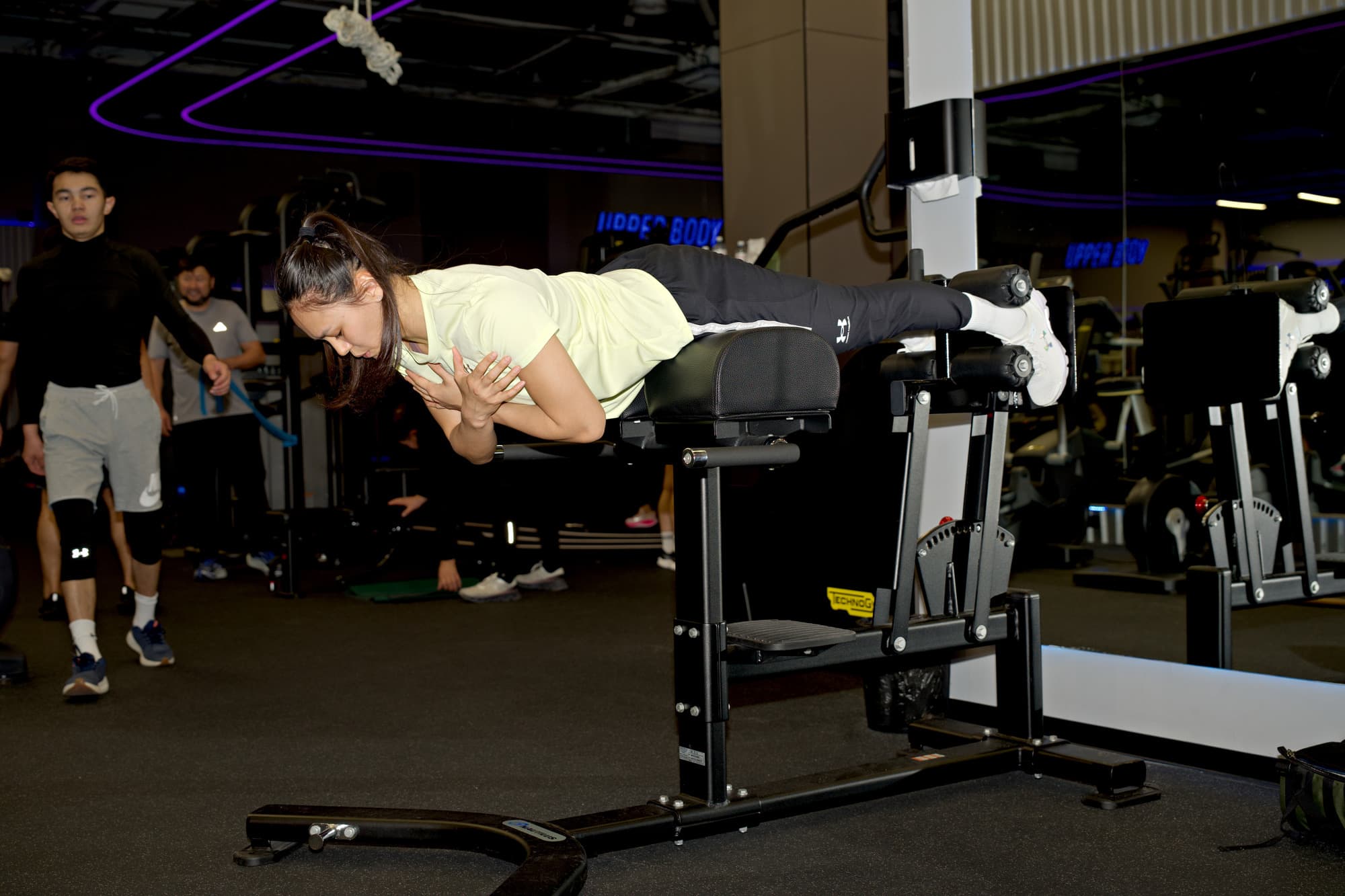
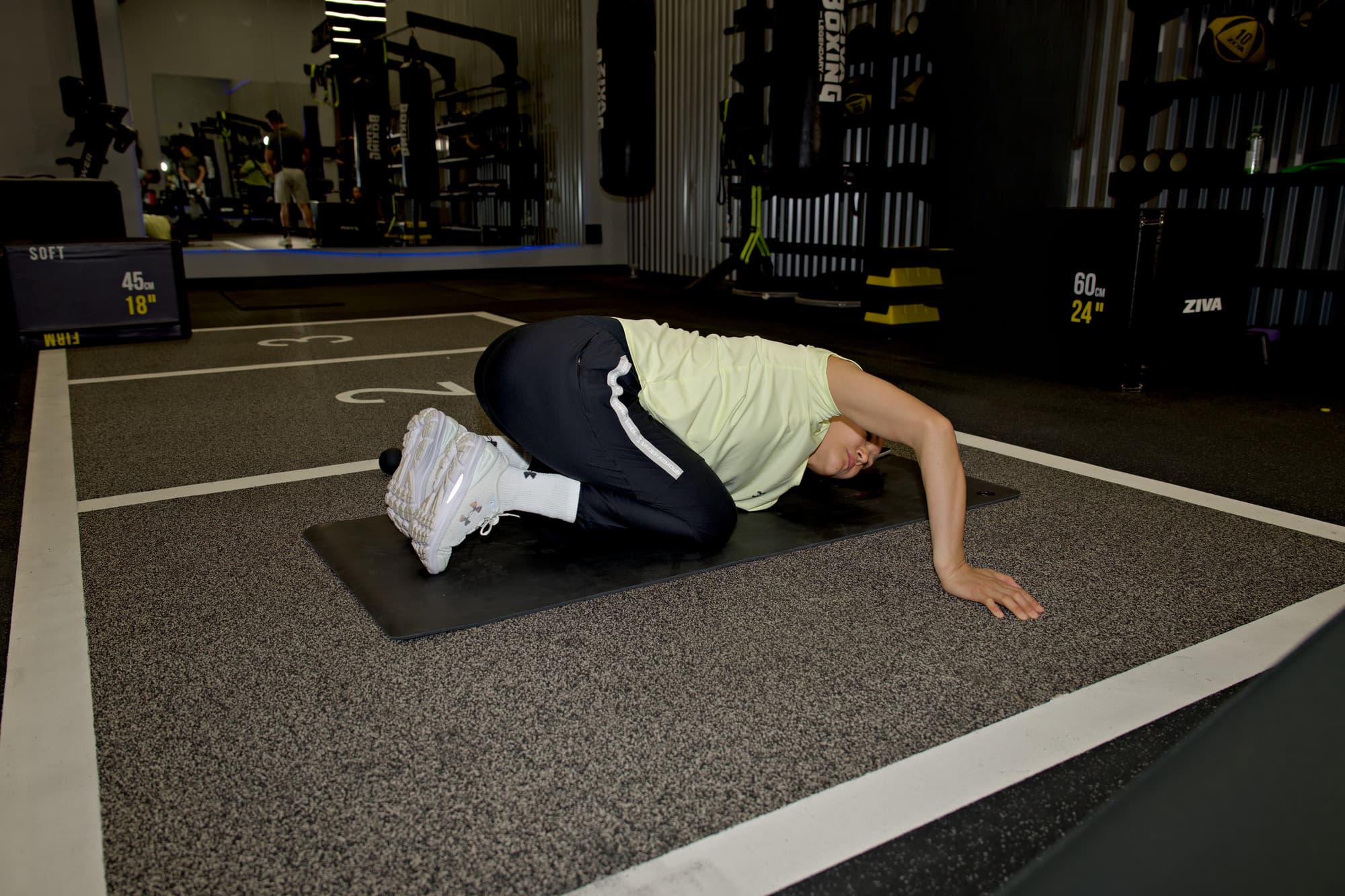
When impact work is temporarily removed, training does not disappear, it changes content. The gym still has posterior chain exercises, overhead band work, stretching and mobility, and control of trunk position. The aim of this period is to preserve strength and prepare the tissues for a return to full load. It is still work, and the body needs energy and building material for it.
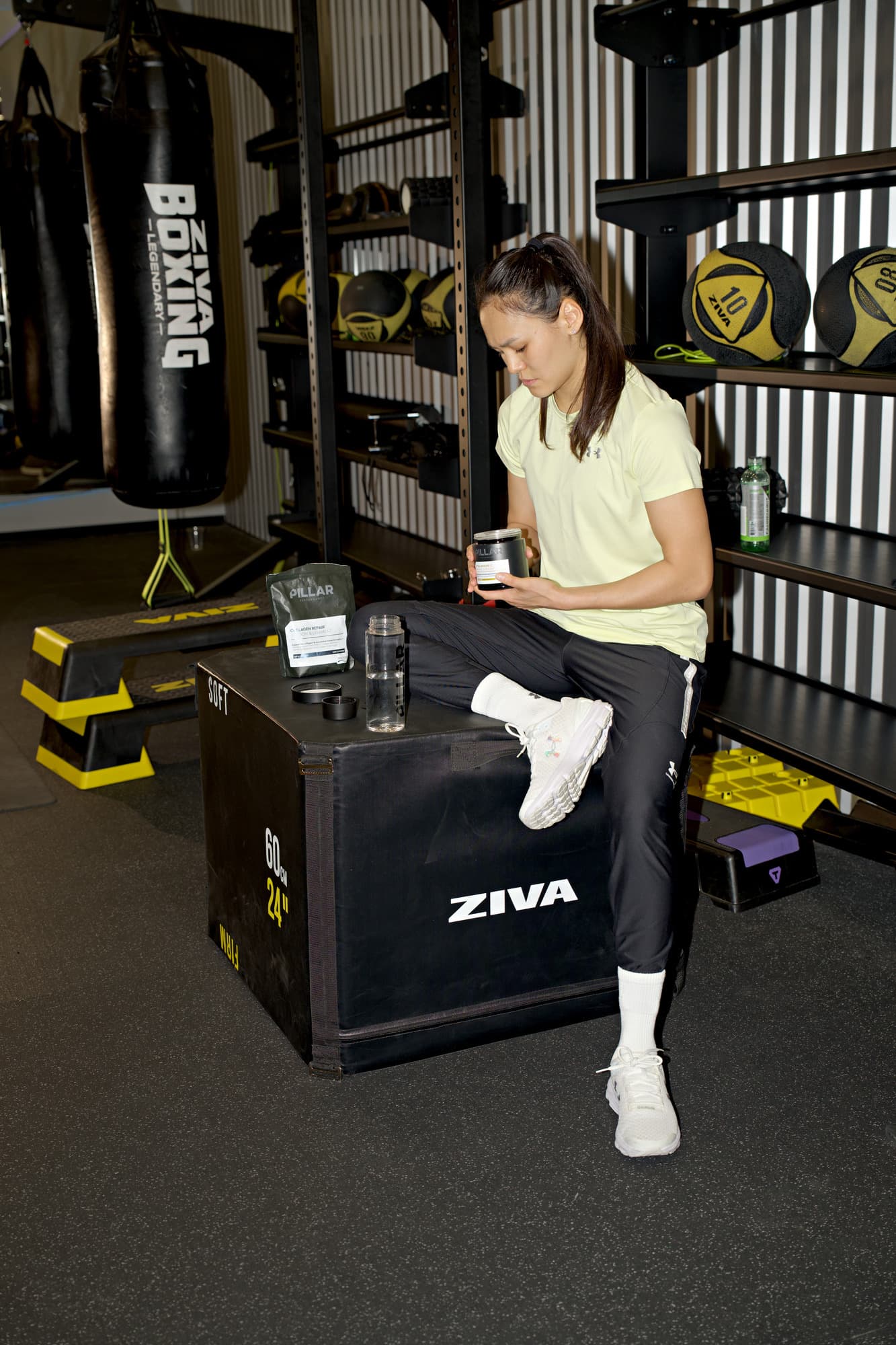
Why you should not cut food sharply during rehab
As training volume drops, appetite and energy expenditure do change, but a harsh calorie deficit during recovery works against the athlete: muscle mass is lost faster at rest, and tissue repair takes resources. For fighters in weight categories, the temptation to «drop some weight while I am not boxing» is especially strong, and it is better discussed with the coach and the team doctor. A practical guide: protein spread evenly through the day, proper meals around sessions, and enough sleep.
Collagen with vitamin C before training: what the research showed
Tendons and ligaments are mostly collagen, and the body needs vitamin C to synthesise it. In a study at the Australian Institute of Sport (Shaw et al., 2017), eight healthy men took gelatin with vitamin C an hour before a six-minute jumping protocol. In those taking 15 g, the blood marker of collagen synthesis was twice as high as in those taking placebo. An important detail: the effect is tied to the training that follows the dose, not to the powder on its own. The sample was small, and this is not a study of injury treatment but a piece of work on how to support collagen synthesis under load.
TENDOFORTE peptides and exercise in Achilles tendinopathy
A second study from the same institute (Praet et al., 2019) tested specific TENDOFORTE collagen peptides in 20 patients with chronic Achilles tendinopathy. All participants followed a calf strengthening programme twice a day for six months, taking the peptides or placebo for three months each in different order. During the peptide periods, tendon status on the VISA-A scale improved noticeably faster. The authors write cautiously that the peptides may speed up the benefit of a well-structured exercise programme. The key phrase here is «combined with exercise»: without a rehab programme, that conclusion does not carry over.
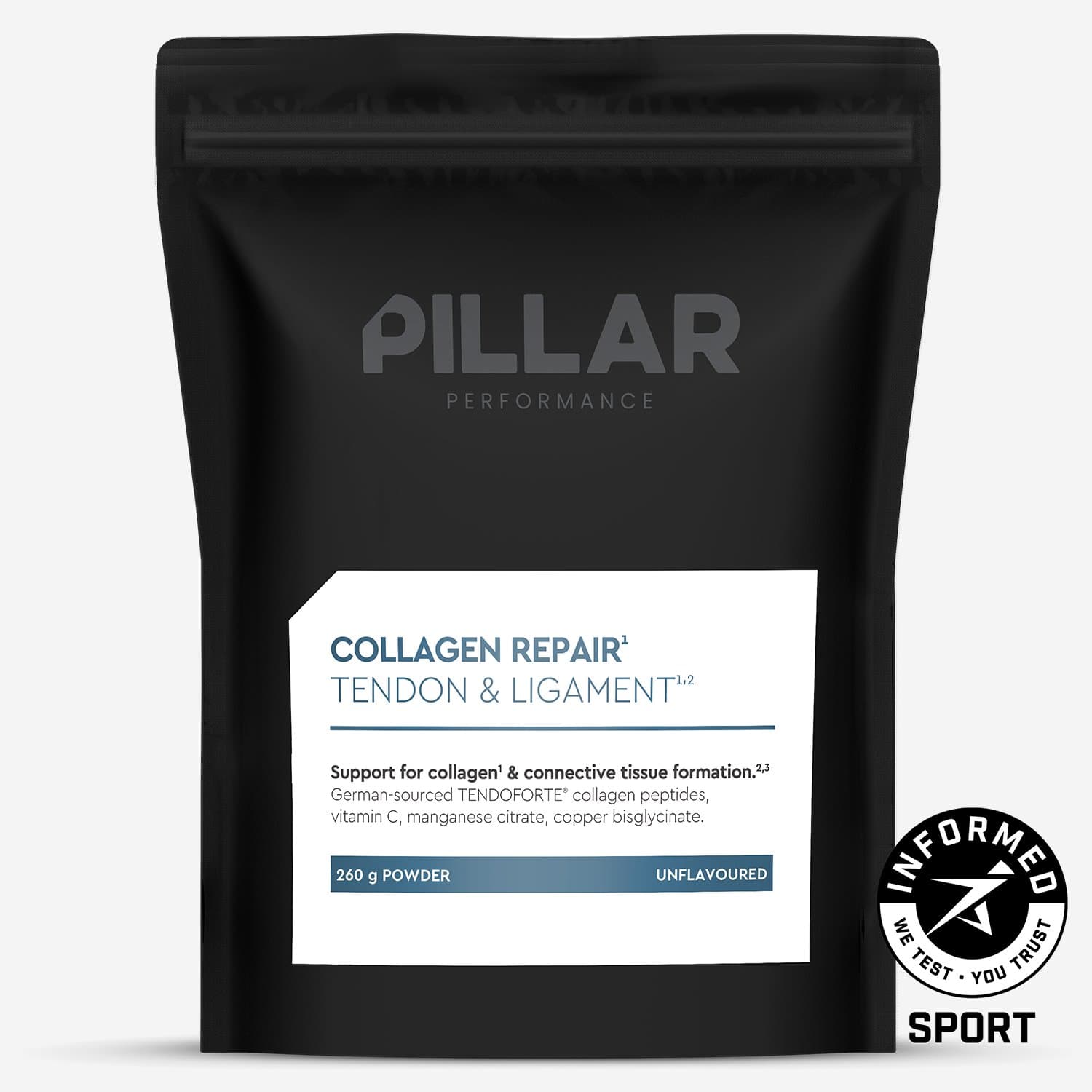
Collagen Repair: what is in it and how it is taken
One scoop of PILLAR Collagen Repair contains 5 g of TENDOFORTE collagen peptides and 80 mg of vitamin C. The powder is unflavoured and goes into water, coffee or a smoothie. The timing logic is the same as in the studies: roughly an hour before training or a physiotherapy session, so that the peak of amino acids in the blood coincides with the load. Tendons turn over slowly, so collagen is taken as a course over several months. Collagen Repair is currently on its way with a new batch, and the product page on spacefuel.kz will show when it is back in stock.
Vitamins C and D and zinc: why Ultra Immune C in loaded weeks
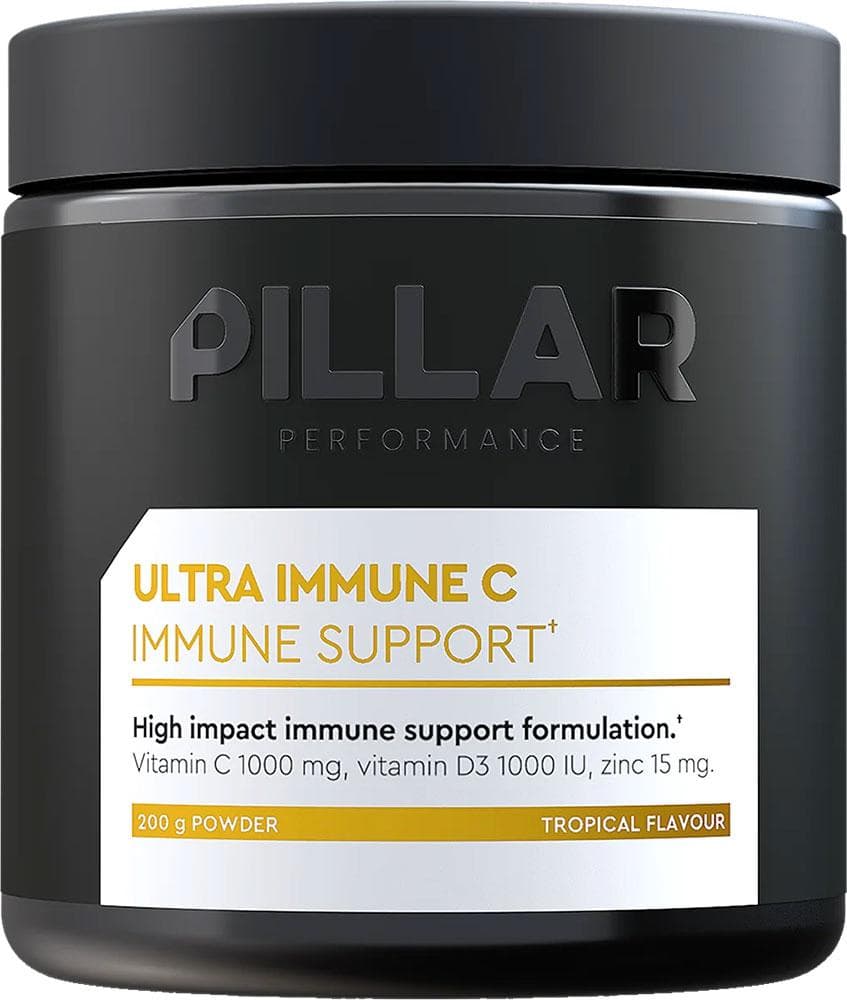
A recovery period often coincides with other demands on the body: flights to training camps, a busy schedule, the cold season. A serving of PILLAR Ultra Immune C contains 1000 mg of vitamin C, 25 mcg (1000 IU) of vitamin D3, 15 mg of zinc and vitamin B2. According to a Cochrane review (Hemilä and Chalker, 2013), regular vitamin C intake does not reduce how often ordinary people catch a cold, but it does shorten its duration slightly, and in people under heavy physical load the studies showed a lower risk of colds. One serving a day, and if you already take vitamin D or zinc separately, it is worth checking your total dose.
What supplements do not do
Collagen and vitamins are food supplements, not medicine. They do not replace diagnosis, a physiotherapist's programme and patience: the timeline for returning to full load is set by a doctor, not by a tub in your bag. Any supplement during rehab should be cleared with your team doctor or a sports physician, especially if you are taking medication. For athletes subject to doping control, certification matters: PILLAR products go through Informed Sport screening, and every batch is tested for banned substances.
How to fit this into a rehab day
If your doctor has no objections, the daily plan is simple. Collagen with vitamin C about an hour before strength work or a physiotherapy session. Ultra Immune C in the morning or during the day, one serving. After the session, a proper meal with protein and carbohydrates, and in the evening sleep without a screen in front of your eyes. A routine like this is easier to keep up if the products sit where the training happens: in your sports bag or in a gym locker.
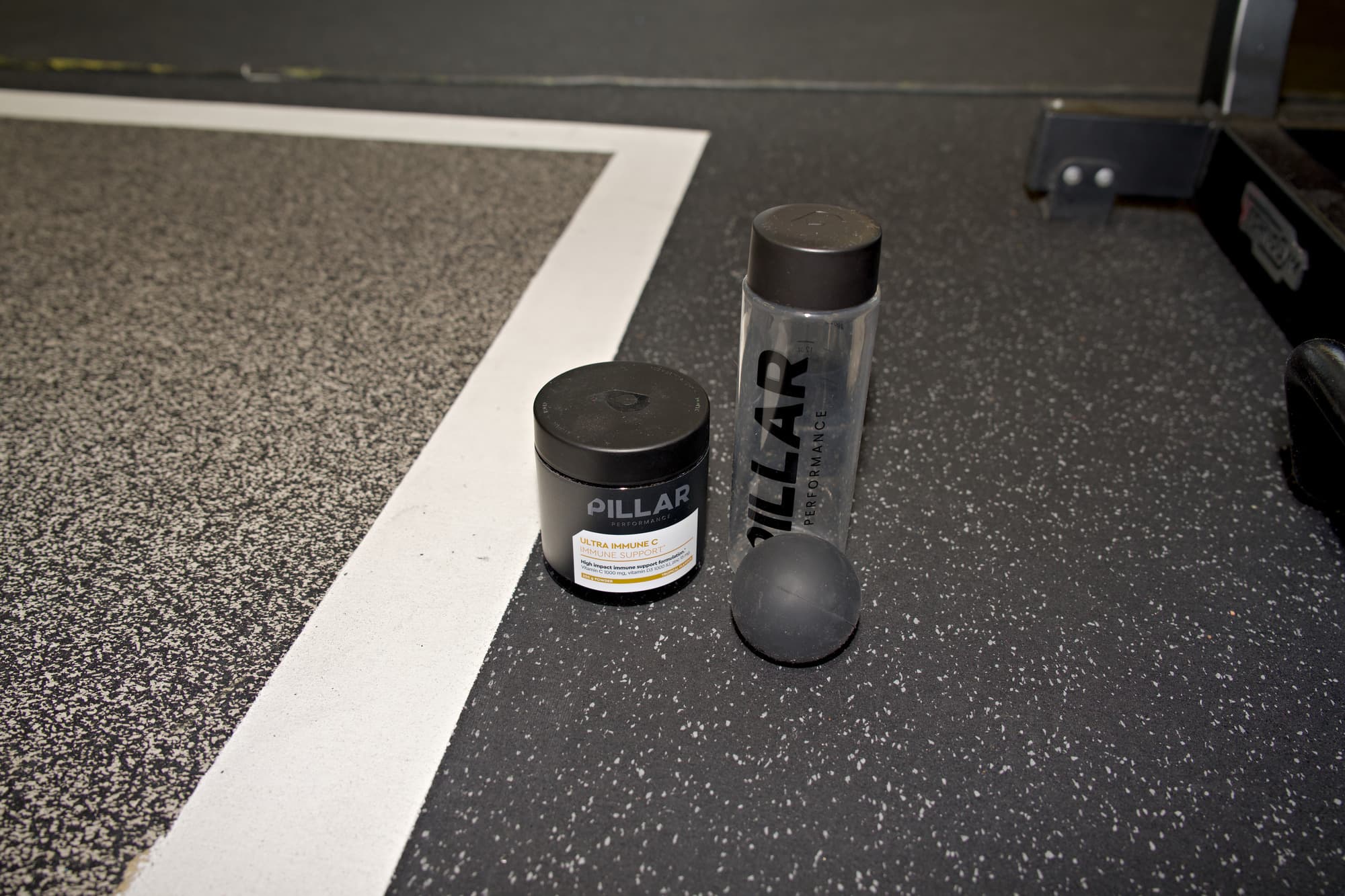
Rehab is a training block too, just with different goals. Nutrition within it should support the work rather than punish you for the pause. Collagen Repair and Ultra Immune C are part of the PILLAR range on spacefuel.kz, along with advice on choosing what fits your schedule.
Sources: Shaw G. et al. Vitamin C-enriched gelatin supplementation before intermittent activity augments collagen synthesis. Am J Clin Nutr, 2017, Praet S.F.E. et al. Oral supplementation of specific collagen peptides combined with calf-strengthening exercises in Achilles tendinopathy. Nutrients, 2019, Hemilä H., Chalker E. Vitamin C for preventing and treating the common cold. Cochrane Database Syst Rev, 2013. Photo: Съёмка SPACE FUEL, 11 ноября 2026
FAQ
How do you take collagen with vitamin C before a workout?
The timing logic is the same as in the studies: roughly an hour before a strength session or a physiotherapy appointment, so that the peak of amino acids in the blood coincides with the load. One scoop of PILLAR Collagen Repair contains 5 g of TENDOFORTE collagen peptides and 80 mg of vitamin C, and the unflavoured powder is added to water, coffee or a smoothie. Tendons renew slowly, so collagen is taken as a course over several months.
Should you cut your food intake sharply during rehabilitation?
A hard calorie deficit during recovery works against the athlete: muscle mass is lost faster at rest, and tissue repair requires resources. For fighters in weight categories the temptation to “drop weight while I am not boxing” is especially strong, and it is better discussed with the coach and the team doctor. A practical guideline: protein spread evenly through the day, full meals around sessions and enough sleep.
Do vitamin C supplements help against colds under heavy training loads?
According to the Cochrane review (Hemilä and Chalker, 2013), regular vitamin C intake does not reduce how often ordinary people catch a cold, but it slightly shortens its duration, and in people under heavy physical load the risk of colds was lower in the studies. One serving of PILLAR Ultra Immune C contains 1000 mg of vitamin C, 25 mcg (1000 IU) of vitamin D3, 15 mg of zinc and vitamin B2. One serving a day, and if you already take vitamin D or zinc separately, it is worth checking the total dose.