Recovery between starts is a question that sooner or later comes up for anyone who enters a tournament with several rounds, or a series of races packed into a tight calendar. The 2026 Asian Games in Nagoya offered a clear example: three professional athletes who work with PILLAR each competed several times over a short stretch and came away with two bronze medals and two place finishes in finals. This article looks at how a recovery protocol between starts is built, what actually works in it, and which mistakes runners, cyclists and combat athletes make most often when a competition is spread over several days.
How the Asian Games in Nagoya went for the PILLAR athletes
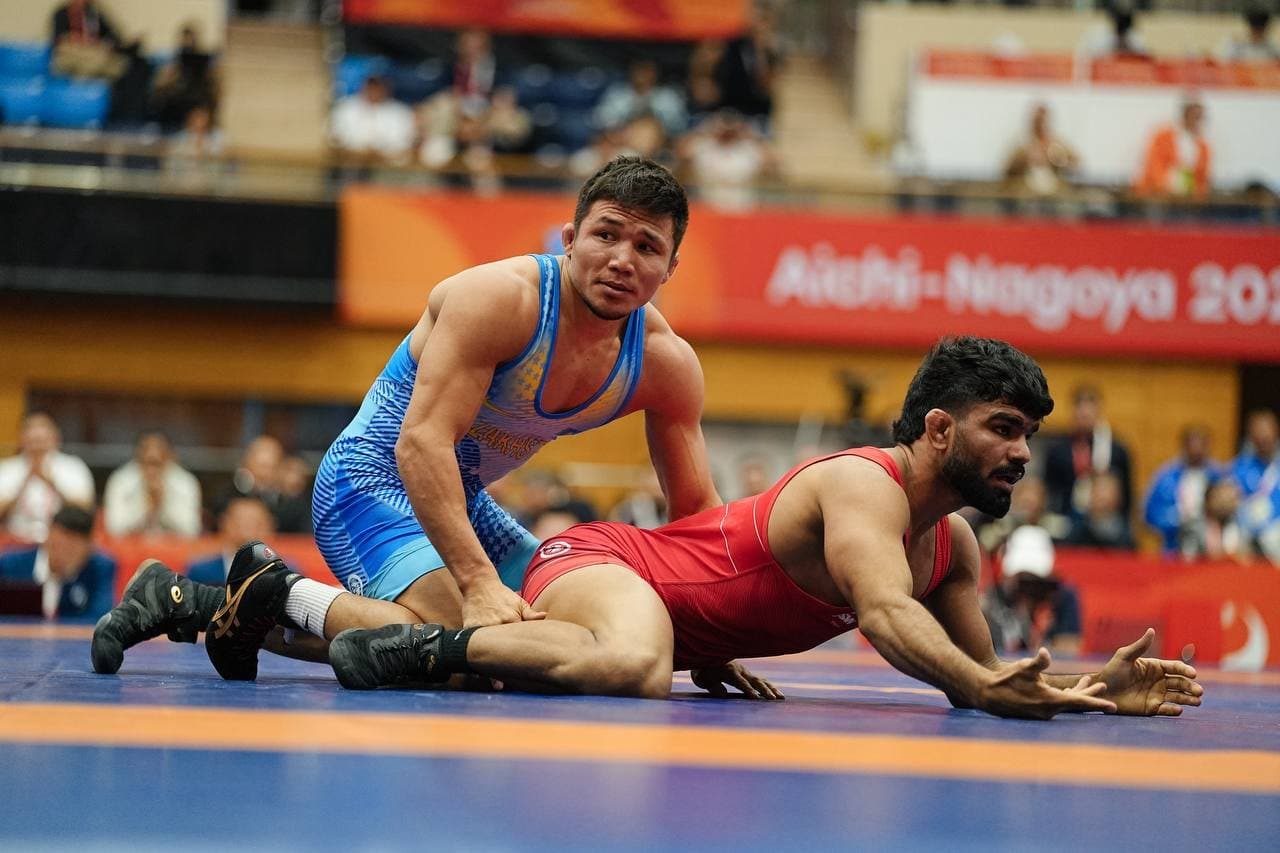
Alua Balkibekova competed in boxing at 51 kg and won bronze: in the semi-final she lost to Thi Nguyen of Vietnam. Nurkozha Kaipanov took bronze in freestyle wrestling at 74 kg, winning the medal bout against Sagar Jaglan of India 5:0; these were his first Games. Maxim Frolovsky reached two finals on the track: sixth place over 10,000 m in 30:22.06 and seventh place over 5000 m in 14:00.60. All three stories share one thing: not a single medal and not a single final was decided on the same day as the first appearance.
Why a multi-day format tests recovery rather than fitness
In boxing and wrestling the road to a medal runs through a series of bouts, and in distance running the programme often combines two events within the same championship. Fitness is already built by this point, and it is too late to change it. What decides the outcome is the reserve an athlete brings to the second, third and fourth start. That is why professional sport plans recovery in as much detail as training blocks: what happens in the first minutes after the finish, what happens that evening, and what happens the morning before the next round.
What happens in the body after a maximal effort
After all-out work several processes run at once. Muscle glycogen stores are depleted, and the harder the effort was, the deeper the drop. The muscles carry microdamage, which reduces the ability to produce force the following day. Losing fluid and electrolytes through sweat affects plasma volume and thermoregulation, and for combat athletes it is also tied to getting back to competition weight. Finally, the central nervous system takes a hit: concentration, reaction speed and the willingness to tolerate discomfort all decline. Recovery between starts means working on all four fronts, not on nutrition alone.
Nutrition after the finish: carbohydrates, protein, fluid and salt
The accepted logic is simple. The less time there is before the next effort, the sooner carbohydrates are needed after the finish: they refill glycogen, and the window when muscles are most receptive falls in the first few hours. Protein is added to the carbohydrates to support the repair of muscle tissue. Fluid is taken in small, frequent amounts together with sodium, otherwise the water passes straight through. If a competition runs for several days, every meal works as part of the preparation for the next appearance rather than as a reward for the last one. There is one mistake specific to this situation: familiar food disappears from the diet because the athlete is in another country, and calorie intake quietly falls.
Sleep and the load on the nervous system between rounds
Sleep remains the most powerful recovery tool, and in a multi-day tournament it is also the most fragile one. Evening starts, flights, time-zone changes and the adrenaline after a bout or a final all push bedtime later. The practical approach used by experienced teams: a fixed time for lights out and for waking regardless of the schedule, a dark and cool room, and no demanding mental work in the hour before bed. During the day between rounds, a short walk at an easy pace and light mobility work help more than extra strength work, which creates new stress instead of clearing the old.
Magnesium, omega-3 and collagen: what supplements do for recovery
The PILLAR team's recovery protocol is built around three products: Triple Magnesium, Ultra Omega and Collagen Repair. Magnesium is involved in muscle contraction and relaxation and in energy metabolism, and the body uses more of it during intense training and heavy sweating. Omega-3 fatty acids support a normal response to the inflammation that inevitably follows hard work. Collagen is used for connective tissue: the tendons, ligaments and joints that take repeated loading in running and in combat sports. Supplements here do not replace food and sleep; they are a tool that covers the gaps when training load is high and recovery time is short.
Informed Sport: why a certified batch matters to an athlete
For a professional, the purity of a supplement is not a theoretical question. Every PILLAR batch is certified by Informed Sport, which means the product is tested for banned substances before it reaches the market. For an athlete subject to anti-doping control this is a requirement, and for a recreational athlete it is a useful signal: certification means the manufacturer controls not only the formula but the specific production run. It is worth checking for that mark on the packaging rather than in the marketing copy.
Racing away from home: the protocol does not change with the country
In Nagoya, Alua Balkibekova's bag held a PILLAR shaker next to the gloves and the flag, and that illustrates the principle nicely: the usual protocol travels with the athlete. At an away start the kitchen, the water, the climate and the schedule all change, so anything that can stay the same is better kept the same. Hence a practical packing list for any race trip: your own shaker, your usual supplements counted out for every day, familiar sports nutrition for the race itself, and a bottle with electrolytes. To that you can add something that does not weigh anything: the signatures from the support board at the Almaty Marathon expo reached Japan before the competition began, and for an athlete abroad things like that work no worse than a nutrition plan.
Common mistakes in recovery between starts
The first: putting off food and drink until the appetite comes back, by which time part of the window has already gone. The second: trying a new food, drink or supplement on competition day that has not been tested in training. The third: making up training volume between rounds so as not to “lose fitness”. The fourth: cutting sleep short to review a performance or to socialise. The fifth: assuming recovery ends with the last finish, when after a multi-day tournament the body needs its own block of easy work and proper sleep.
Two bronze medals and two finals at the Asian Games in Nagoya point to something obvious that is rarely done: the result on day two and day three of a competition is set by how the hours between appearances are spent. Food straight after the finish, fluid with electrolytes, sleep on a schedule, careful work on connective tissue and certified supplements add up to a protocol that applies equally to a tournament and to a series of city races. PILLAR products, including Triple Magnesium, Ultra Omega and Collagen Repair, are available in Kazakhstan at spacefuel.kz.


FAQ
Which medals did the PILLAR athletes win at the 2026 Asian Games in Nagoya?
Alua Balkibekova won bronze in boxing at 51 kg, having lost to Thi Nguyen of Vietnam in the semi-final. Nurkozha Kaipanov took bronze in freestyle wrestling at 74 kg, winning the medal bout against Sagar Jaglan of India 5:0.
What should you do first after the finish if you race again tomorrow?
Take carbohydrates as early as possible to refill glycogen, add protein to them, and drink fluid in small, frequent amounts together with sodium. The less time there is before the next effort, the more critical it is not to delay eating until the appetite returns.
Why does Informed Sport certification matter on sports nutrition?
It means that the specific batch of the product has been tested for banned substances before reaching the market. For athletes under anti-doping control this is a requirement, and for recreational athletes it is a sign that the manufacturer controls every production run.